Preparations continue for cable to Yell for wind farm export

THE PROCESS of gaining consent for a new subsea electricity cable between Yell and the Shetland mainland to allow wind farms to export power is progressing.
Scottish Hydro Electric Transmission (SHE Transmission) has now submitted a scoping report to Marine Scotland to determine the type of studies which will need to be taken to support the eventual marine licence application.
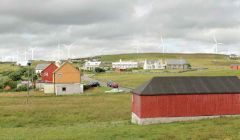
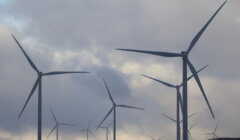
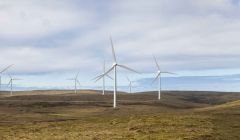
Two wind farms are planned for Yell – the already consented 17-turbine Beaw Field in the south, and the larger Energy Isles in the north west. The latter does not yet have approval from the Scottish Government.
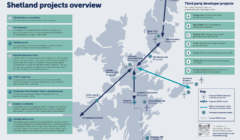
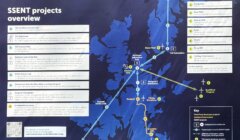
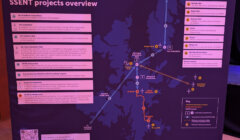
With the 103-turbine Viking Energy wind farm due to come on stream in 2024, as well as a HVDC interconnector between Shetland and the Scottish mainland, there is a need to install a new, larger 132kV transmission network in the isles.
This network is needed to connect each wind farm – including the planned 12-turbine Mossy Hill development near Lerwick – to a new substation and HVDC converter station at Kergord, which are currently under construction.
The two stations form part of the HVDC link project which will allow wind power to be transferred to the national grid – and bring power to Shetland if needs be – through the 260km cable.
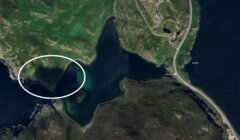
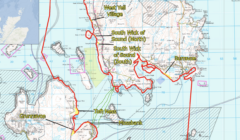
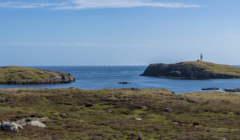
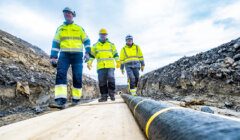
The plan is to install a HVAC (high voltage alternating current) between Burravoe in Yell and Cul Ness, off Lunna, through a 11km corridor.
The report submitted to Marine Scotland notes that the HVAC link will cross a telecommunications cable set to be installed between the Shetland mainland and Yell as part of the R100 project.
But SHE Transmission has agreed an “approximate crossing point” with BT for this.
Three oil and gas pipelines also would run through the area, but the chance of “any disruption or damage to telecommunications cables and pipelines is expected to be low”.
Help keep Shetland’s news open to everyone

Good local journalism takes time, care and people on the ground. Membership helps us keep reporting the stories that matter to Shetland — and keep them free for everyone to read. Members get a weekly newsletter created especially for them, local ads only, and can bookmark stories and join the conversation in the comments.
Public consultation has already taken place, which is in part why the original designated landfall site on the mainland at Firth Ness was dropped in favour of Cul Ness.
The preferred location at Firth Ness was not deemed to be technically feasible due to the safety risks associated with proximity to the Ninian pipeline.
As per process, the scoping report also takes into account other matters like the environment, wildlife and fishing interests.
Keep Shetland’s news open to everyone
Your membership helps us report the stories that matter to Shetland — and keep them free for everyone to read.