Island councils keen to see UK Government support for any SIC tunnel projects
Meanwhile other submissions to a Westminster committee inquiry on Scottish fixed links have come in from tunnel action groups, SaxaVord Spaceport and seafood/salmon organisations

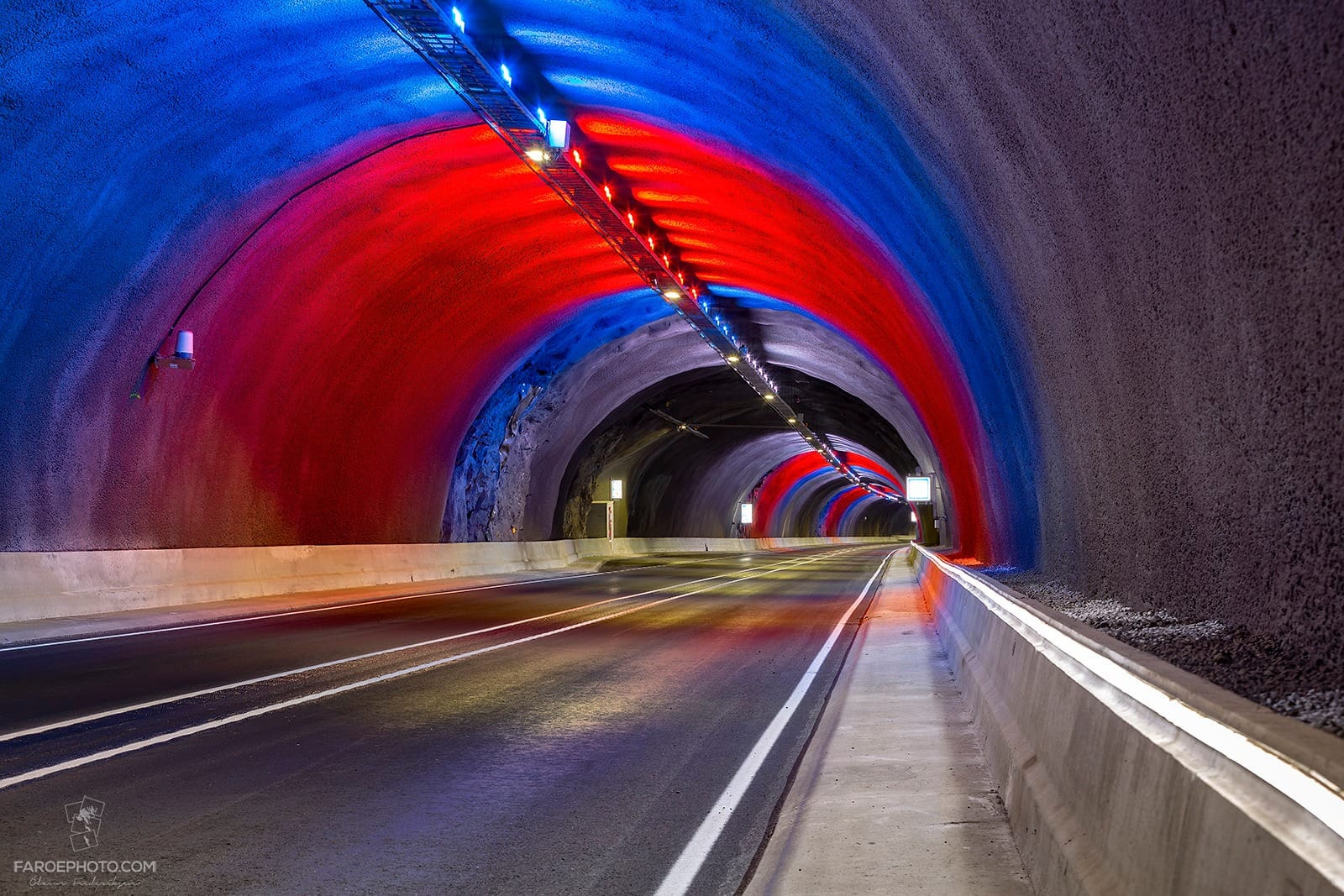
MPs on Westminster’s Scottish Affairs Committee have been “strongly urged” by island councils to recommend that the UK Government gets involved in any Shetland Islands Council (SIC) tunnel projects.
In a joint letter the councils from Shetland, Orkney and the Western Isles wrote to the committee that there is precedent for the UK Government to intervene in transport projects in Scotland, despite it being a devolved matter.
Several other groups and businesses have also made strong submissions to the inquiry into fixed links, including:
- Unst’s SaxaVord Spaceport said current ferry constraints are seen as a “barrier” to international clients and investors
- The Unst Tunnel Action Group and North Yell Development Council said tunnels up to Unst would be beneficial to the UK Government’s defence interests
- Seafood Shetland and Salmon Scotland both said fixed links to Shetland’s North Isles would bring big economic benefits
The UK Parliament’s Scottish Affairs committee has been taking evidence for its inquiry into fixed links in Scotland, with one particular focus on whether there is a role for the UK Government to support such projects.























The committee will also hear oral evidence tomorrow (Wednesday) from island council representatives including the SIC’s depute leader Gary Robinson.
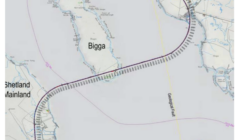
It is this work, which includes a modelling project focusing on Yell Sound, that sees Shetland regarded as relatively well advanced in terms of future fixed links in Scotland, with tunnels to Yell, Unst, Whalsay and Bressay under consideration.
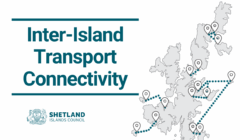
There is a significant milestone moment in the SIC’s exploration of tunnels on the horizon, with councillors due to be presented with an outline business case on future inter-island transport needs in June.
Help keep Shetland’s news open to everyone

Good local journalism takes time, care and people on the ground. Membership helps us keep reporting the stories that matter to Shetland — and keep them free for everyone to read. Members get a weekly newsletter created especially for them, local ads only, and can bookmark stories and join the conversation in the comments.
In their joint submission to the committee, the councils from Shetland, Orkney and the Western Isles said Scotland’s economy is “increasingly moving out of urban centres towards rural and island settings like ours”.
“However our ability to contribute fully to Scotland and the UK’s future is constrained by underinvestment in infrastructure and the continued demographic challenge which poor infrastructure accentuates,” they wrote.
The three councils came together under an island strategic partnership in mid-2025 to negotiate with the Scottish and UK governments on “shared opportunities and concerns”, highlighting growth potential in sectors such as energy, aquaculture, fisheries, tourism and space.
While transport is a devolved matter to Scotland, the island councils said economic activity in the areas is of national importance, while they also highlighted the UK Government’s work in regional growth deals – such as for the islands – and financial support for improvements to the A75 road in mainland Scotland.
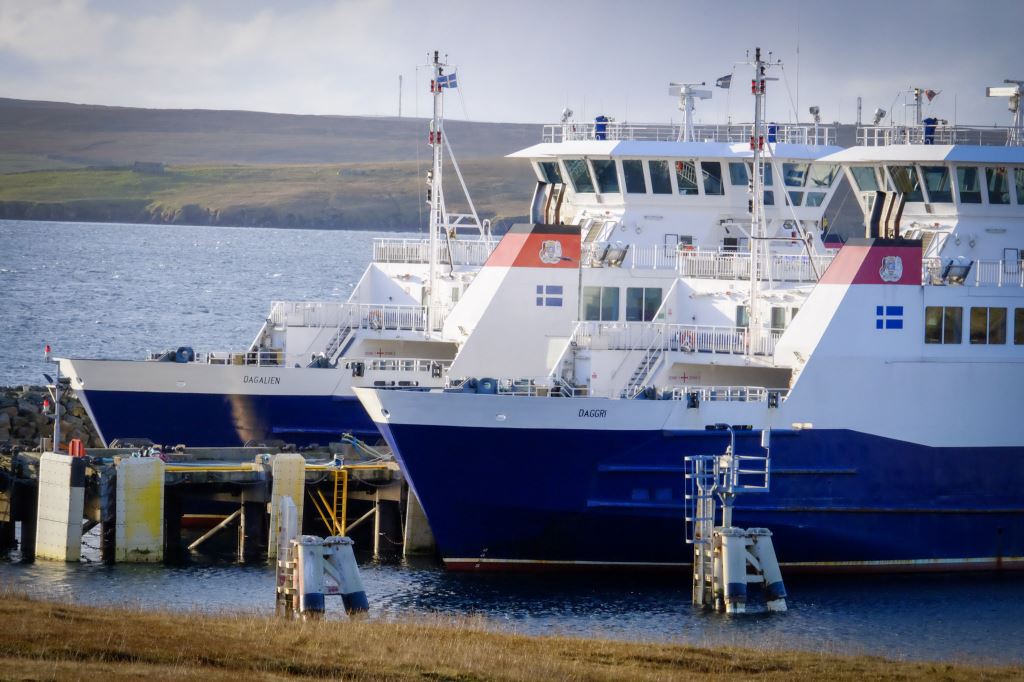
The UK Government also funded the new Fair Isle ferry project to the tune of nearly £27 million through the Levelling Up scheme.
“The precedent is there for the UK Government to intervene if it so chooses,” the councils wrote.
“In the first instance, the Islands Strategic Partnership would strongly urge the Scottish Affairs Committee to recommend UK Government involvement in any Shetland Islands Council-sponsored project for inter-island tunnelling.
“The next stage of this project will require investment well beyond that achievable by a local authority the size of those in our Islands Strategic Partnership, and as islands considering our future options for inter-island transportation we need demonstrable insight and evidence about the viability of tunnelling.
“Such intervention would provide valuable learning and experience for other areas also considering the provision of fixed links in all their potential forms.”
The island councils also said they would anticipate a return on any public investment in terms of “public service efficiency”.
“The cost of bringing ‘remote’ islanders to our centres for education, healthcare, work and onward travel to the rest of the country, is high and increasing,” they added. “Fixed links may give us the opportunity to reprofile aspects of our public service provision.”
The UK Government’s Department for Transport (DfT) responded to the inquiry by saying that the Scottish Government is “responsible for assessing the viability and potential return on investment for fixed-link infrastructure projects in Scotland’s island communities”.
“The UK Government’s role in such projects is limited, but we work closely with the Scottish Government and Transport Scotland to ensure that reserved policy areas and wider UK objectives are aligned,” it added.
“Any involvement from DfT therefore tends to focus on collaboration, capacity building and the sharing of best practice, where appropriate.
“Historically, any UK Government financial contributions have generally been made through UK-wide programmes – such as the Levelling Up Fund or the UK Shared Prosperity Fund – rather than direct funding for individual schemes.
“Where relevant, future support would follow similar principles, respecting devolved responsibilities while promoting connectivity and economic growth across the UK.”
SaxaVord Spaceport in Unst, which is expected to host its first rocket launch this year, has often been highlighted as a nationally important asset which bolsters the case for tunnels to Yell and then Unst.
It wrote: “SaxaVord establishes Unst as a nationally and internationally significant industrial site, and fixed links will consolidate Shetland’s competitive advantage, enabling long-term growth in strategic sectors.”
The spaceport added that fixed links are “not universally appropriate, but for places like Yell and Unst, they would be transformational rather than marginal”.
It continued by saying that the “need to protect space assets is great”.
“Governments around the world are recognising that spaceports are central to national resilience,” the submission continued.
“Sovereign capability with assured access to space is vital both domestically and for key allies. Starlink Satellites were a lifeline to Ukraine, keeping internet access up during Russia’s invasion.
“By ensuring that SaxaVord Spaceport is given every chance of success (with projects like fixed links) and that the UK and its allies have a northern European route to space.”
It added: “Spaceports serve as economic hubs for fostering innovation, economic growth and aerospace technology.
“They attract businesses, research institutions and skilled professionals to the surrounding area. In fragile, remote areas like Shetland this potential to encourage economic growth and development must be grasped and given every opportunity to succeed.”
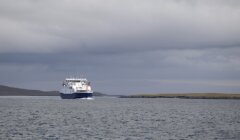
Meanwhile the Yell and Unst tunnel action groups, which have fundraised themselves for tunnel surveys, both wrote to the committee to highlight the fragility of the ageing ferry service and the potential benefits of tunnels.
The Yell group said that people have started to develop an “anxiety” over whether they will make it in or out of the isles due to an increase in cancellations and reduced services, with residents sometimes unable to get to work or to hospital appointments.

The action group also spoke of the potential improvements to depopulation, and the possible long-term savings to the public purse.
The Unst Tunnel Action Group said that although the ferry service has served the island well for the last 50 years, it is “not fit for purpose for the needs of our island in the 21st century”.
With a Ministry of Defence operated remote radar based at Saxa Vord in Unst, the action group said Unst – which used to host an RAF base – is a “strategic defence asset”.
“With the recent increased focus and pledged additional spending on defence, ensuring 21st century transport links to Unst, with 24-hour permanent access to the island, could be a very wise investment for the UK Government,” the action group said.
Meanwhile North Yell Development Council (NYDC) said ferry restrictions are a “significant burden for businesses in terms of cost and time and restricts mobility of labour both for those living on, or operating businesses from Yell, and those seeking to work on Yell”.
It also highlighted the importance of the Cullivoe harbour, which continues to be used by the fishing, salmon and shellfish sectors.
“Both our community and economy are therefore highly dependent on time sensitive, perishable seafood produce, all of which must be shipped from Yell and is subject to all restrictions previously detailed concerning the ferry service,” they said.
NYDC also said tunnels could support greater investment in housing, while it also raised the idea of energy and communication cables running through tunnels instead of on the seabed to improve resilience.
Seafood Shetland said seafood production – both wild-caught from the sea and from aquaculture – provides significant benefits to the Shetland, Scottish and UK economies.
It highlighted for example how 20 per cent of the workforce in Unst, Yell and Fetlar is accounted for by salmon company Cooke, which has nearly 140 Shetland employees.
The organisations said the port of Cullivoe currently ranks ninth in Scotland and 1 in the UK, with demersal and capture shellfish landings estimated to be worth £7 million.
It also said mussels grown in Unst and Yell contribute around 10 per cent to overall Scottish production levels and come to around £1 million in value.
With seafood needing onward travel within Shetland and beyond, challenges with ferries have become more acute, Seafood Shetland said.
It said seafood enterprises supplying local, national and international markets have been “faced with consequent knock-on and grave impacts to their daily operations”.
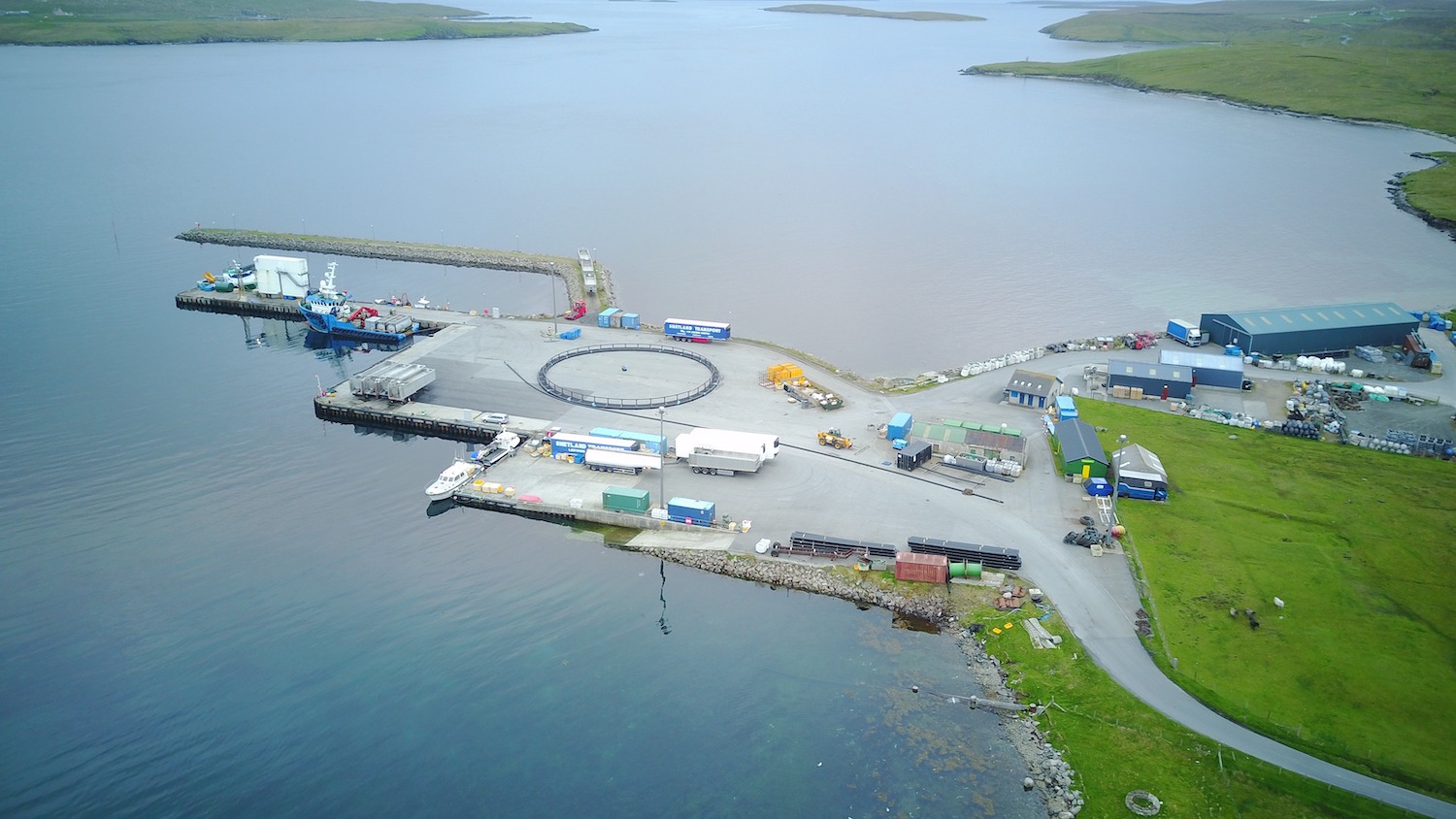
“100 per cent dependable and efficient logistics are fundamental and key to any fresh and perishable food transport, with these initial links critical to supporting the supply chain, while continued and future confidence in economic development can be both diminished and threatened.”
It added that areas like Yell and Unst would “benefit significantly from the creation of fixed links, thus conserving and protecting their current economic prowess, present and future employment prospects, while being in a position to attract prospective new staff to commute from the Shetland mainland more easily, and enhancing wider community support and benefits”.
The organisation also quoted a mussel farmer with operations in Yell, who said working from the island comes with a “major issue from a logistical perspective”.
Salmon Scotland also showed its support for fixed links for Shetland’s North Isles, saying they would “conserve and protect business sustainability, the island’s economic significance and present and future employment prospects”.
“Fixed links would also make attracting new staff easier as they would commute from the Shetland mainland more easily,” the organisation said.
“Salmon Scotland believe that the UK and Scottish governments must work together to recognise the contribution which these northern Shetland isles make to the wider British economy. Therefore the provision of fixed-link infrastructure is essential and government finance should support this investment.”
Highlands and Islands Enterprise (HIE) was another organisation writing into the committee, saying that “quick, accessible and resilient transport connectivity is a crucial enabler in delivering our aspirations for the Highlands and Islands”.
“In our view, fixed link proposals for the Sound of Harris and Sound of Barra in the Outer Hebrides and for some of Shetland’s outer islands (Bressay, Unst, Yell and Whalsay) could help ensure that the benefits of major economic developments are fully maximised, whilst at the same time contributing to the reversal of depopulation trends,” it added.
“Some island communities view fixed links as transformative opportunities, while others feel that the focus should be on prioritising improvements to existing transport modes.”
VisitScotland meanwhile said fixed links could bring a number of positive outcomes.
It added that its ambition is to “extend the season and grow capacity during shoulder periods where capacity allows, but this remains a real challenge for island businesses because of the inherent unpredictability of their operating environment”.
“Although there are several obvious benefits to the potential for fixed links, these must be balanced against the views of the local island population, who may consider fixed links as an intrusion into their island way of life,” VisitScotland added.
The Institution of Civil Engineers said fixed links may offer “significant benefits for some island communities, but their appropriateness must be assessed on a case-by-case basis through rigorous engineering, economic, financial and environmental appraisal”.
Keep Shetland’s news open to everyone
Your membership helps us report the stories that matter to Shetland — and keep them free for everyone to read.