Behind a strange curtain: some comments on the language question
In this essay, Shetland linguist Mark Smith looks at the dialect vs language question and asks: ‘How do we find our place in our world of words?’

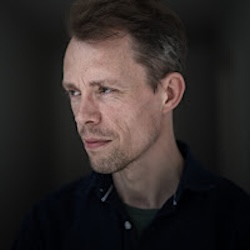
The subject of language has been prominent in Shetland public discourse recently, writes Mark Smith.
The discussion, which was kick-started by the I Hear Dee group, and by the publication of Viveka Velupillai and Roy Mullay’s book Shaetlan: A young language wi aald røts, has centred around the question of whether the thing that people in Shetland speak and write should be classified as a dialect or a language. As a story in the Shetland News of 15 October 2025 reported, I Hear Dee’s work has been a success – what is increasingly called Shaetlan has now gained official imprimatur as a language, complete with its very own ISO 639-3 code. It’s scz, should anybody require the use of it.
The work that has been done to reach this point has been extensive. Viveka and Roy’s book, for example, is coming on for 400 pages, and offers a great deal to anyone interested in the technical aspects of the tongue. Read alongside previous work on the subject, such as T.A. Robertson and John Graham’s Grammar and Usage of the Shetland Dialect and the numerous dissertations and Shetland dictionaries that have appeared over the years, Shetland language enthusiasts have plenty to be going on with. For readers attracted to the relatively specialised approach taken in the Shaetlan volume, the newly revised Wikipedia entry on Shetland Dialect is a good place to start.






















That approach, as a quote on the back of Shaetlan tells us, ‘is rigorously rooted in sound linguistic science’. As I say, that kind of engagement with language will appeal to some, but, in this essay, I would like to suggest that there are other ways in which we might think about the subject too. As someone who has written a book called The Literature of Shetland, and who also tries his hand at creative writing, I inevitably have an interest in the Shetland vernacular. Shaetlan does have a chapter that lists a large number of dialect plays, poetry collections, translations etc, but the volume doesn’t much concern itself with what local writers have done over the last two centuries. Perhaps a discussion about dialect from a more literary point of view can contribute something new to the debate. So, in the following few pages, I’ll say a word or two for the poets.
But before we get to them, I’ll dwell for a moment on what seems to me one of the main ideas of the current discussion: categorisation. Is Shaetlan or Shetlandic or whatever we choose to call it a dialect or a language? Is it to be grouped with English, or should it be placed with some of the Scandinavian tongues? Is it the northernmost variety of Insular Scots, or is it, as the refreshed Wikipedia page has it, ‘a prototypical contact language’? These kinds of classification are no doubt academically interesting, and I suppose they might be useful for anybody seeking ISO approval, but I must admit that they leave me a little cold. Does constructing a terminological box for language really get us closer to what that language actually is?
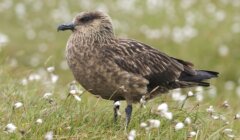
Take the dialect v language question, for example. There’s an implied hierarchy in the distinction that makes me a bit uneasy. The implication is that a dialect is somehow inferior to a language, and that Shetlanders should resist the supposed downgrading. But do dialect speakers (or Shaetlan speakers, if you prefer) really feel an inferiority when they use their native tongue? If a Shetlander sees a tirrick, for example, it doesn’t enter his or her head to call it an Arctic tern. When native speakers use their language unselfconsciously, without hesitation or second-guessing, there is a naturalness, an innate-ness about the utterance. We simply could not put it any other way, without setting off our inner linguistic-wrongness radars. When we use words that feel exactly right, it’s hard to see ourselves speaking in a way that’s somehow denuded or inferior, no matter how the thing we’re speaking is classified. As I say, dialect v language might be a useful academic or administrative distinction, but do ways of communicating and expressing ourselves really compete in the way the implied hierarchy in the question asks? I’m not so sure they do.
Any manner of speaking and writing can, of course, be analysed in technical and specialised ways, and I applaud Viveka and Roy’s efforts in doing so in their book. But when we use words, when we see and hear them in the wild, our relationship with language isn’t really an intellectual or analytical one. When we hear somebody speak, we have an inbuilt, instinctual idea of what feels truthful and authentic. It’s a difficult thing to put your finger on, but people from any linguistic community just know what sounds right in any given context. And, conversely, even though Shetlanders might not like to admit it, our language radars give a loud ping when we hear a non-native trying to speak the local tongue. I’m not sure linguistic scientists will have much time for the notion that we ‘just know what sounds right’, but, as I say, a great deal of our engagement with language operates in some deep-down place, where highly technical linguistic analysis struggles to reach.
Language is a living thing. It lives on the tongue, in the air, on the page. It is a thing we use – to communicate, to express ourselves – and we only get the feel of it when it’s in motion, as it is in a poem, or in a story we hear somebody tell. Putting language into a category, or, as is the case in the Shaetlan volume, breaking it into its constituent personal datives and phonemes and future tenses as we might do in a Latin grammar, is academically worthwhile, but, for me, that doesn’t really get at what the language feels like, at how it does its work on us.
When we hear or read words, they move the air, the mind, the heart. That’s why words are so important, no matter what official status we confer on them.
We are fortunate in Shetland to have a literature that uses the local language so extensively. From pioneering writers such as J.J. Haldane Burgess and James Inkster in the late nineteenth and early twentieth centuries, to contemporary poets like Christine De Luca and Christie Williamson, our literature is brimming with marvellous local words and phrases that Shetland culture would be much poorer without. For anybody who wants to get a feel for the language of Shetlanders, they could do worse than get hold of John and Lollie Graham’s A Shetland Anthology. And, while reading through that volume, folk can remind themselves that almost thirty years-worth of creative writing has happened since it came out. For all that people worry about our dialect disappearing, we are fairly well-served in terms of vernacular writing.
It is illuminating to compare this with the situation in our closest neighbouring archipelago, Orkney. There are, of course, Orcadian writers but, on the whole, the local vernacular has not featured anywhere near so extensively there as it has done here. Orkney’s most famous writer, for example, George Mackay Brown, produced all his work in English. As this quote from 1948 shows, dialect writing is a subject he thought about:
I’m not complaining about the use of Shetlandic by these young
Shetland makars, if in that way they can express themselves better:
but I must say again how difficult it is to come at the meaning
behind the strange curtain of words.
George Mackay Brown
If GMB had been a Shetlander, he may have found it easier to join a vernacular tradition, alongside ‘young Shetland makars’ such as Billy Tait, T.A. Robertson and Stella Sutherland who published their work, as did GMB, in early numbers of the New Shetlander magazine. Orcadian would certainly have been available to him, but, as this quotation suggests, it didn’t offer what he needed for his work. GMB was as Orcadian as they come and, perhaps more than any other author, he really gets at something deep and fundamental about the place, but would he have been able to find the kind of clarity, precision and economy that characterise his writing if he had been trying to use the local words and phrases he heard every day?
Alongside those local words and phrases, GMB had the English language and its literature available to him too. He studied English at Edinburgh University, going on to do postgraduate work on the great Jesuit poet Gerard Manley Hopkins, and the reading he did in those years no doubt fed into his poems and stories. As I say, here in Shetland we have a rich tradition of vernacular writing but, like GMB in Orkney, Shetlanders are in the fortunate position of having other literatures open to them too, if they want to engage with them. For example, Scots writers such as MacDiarmid, Burns and Dunbar feel reasonably available, as do English-language authors such as Wordsworth, Shakespeare or Emily Dickinson. Readers might wonder what I mean by citing Shakespeare here – he never wrote Da Tragedy o Auld Maunsie’s Crø, after all – but, as native readers and speakers of English, the enormous and marvellous tradition of English literature is open to us in a way that it wouldn’t be, for example, to somebody from Spain, Hungary or Iceland.
All these rivers flow into our linguistic world. Whether we codify what is spoken here as a language or a dialect, what Shetlanders have at their disposal are words of diverse origin, an accent, certain ways of putting things. What we have is a way of speaking and writing that Shetlanders, rightly in my view, are proud to celebrate and use, ISO code or not. The question is how we position ourselves in this rich linguistic environment? How do we find our place in our world of words?
To speak personally for a moment, I find it almost impossible to write in Shetland dialect. Even though I speak it every day, whenever I write it down, it feels like a pose, an affectation. This is not because of unfamiliarity, but I find that, whenever I attempt to write in Shetlandic, I struggle to get across what I’m trying to say. For me, using the local language on the page gets in the way of communicating clearly. Would readers of this essay, for example, have stuck with it if it hed a bøn scrieved athin da broadist Shaetlan at I cood tink ta pit apø da paij? I am a born-and-bred Shetlander who is entirely comfortable speaking the local tongue but, when it comes to writing, I am much more at home in English.
Other local writers, however, have a much easier and more productive relationship with the Shetland tongue than me. Vagaland’s best work, for example, tends to be in dialect. He did write in English, but there is a slight stiffness in some of those poems (see ‘Beach of Bright Pebbles’, for example) that we don’t hear in the Shetland stuff. In ‘A Skyinbow o Tammy’s’, or ‘Kwarna Farna?’ the verse is alive and real in a way that the English poems aren’t quite. By tapping into the rich linguistic resource of his native tongue, Vagaland found a form of expression that feels authentic and true. There is a sureness in his dialect writing that he probably didn’t have to think much about. In his best work, Vagaland, just like the example about the tirrick given earlier, could only say things in the way he said them. Try putting ‘Kwarna Farna?’ or ‘Da Sneug Wal’ into English and you’ll see what I mean. If we take those poems out of their native linguistic element, all their energy ebbs away.
As I hope these last few paragraphs show, most writers cull a means of expression from their native linguistic world. They draw on the resources they have to hand, without worrying overmuch about the distinctions and categorisations that linguists are fond of. Putting the right words in the right order is what most writers are trying to do.
Seamus Heaney, for example, grew up in rural Northern Ireland and, like GMB in Orkney, he would have heard and used a rich local speech every day of his life. But, as he says in his extended interview-come memoir Stepping Stones, he was never tempted to write in a Derry dialect, or, for that matter, in Irish. That said, we do hear some of the cadences and rhythms of his home place in Heaney’s work. To get the real idea of that, the only thing to do is read the poems (or, even better, listen to Heaney reading them), but, to give one tiny example of what I mean, here are two lines from his poem ‘Singing School’. Heaney is describing a policeman visiting his father:
His cap was upside down
On the floor, next his chair.
In the second line, Heaney could have written ‘next to his chair’ or ‘beside his chair’, and the meaning would have been the same. But in the last three words I think we can hear something of the speak of his home place. The phrase seems a little odd to us, but it’s probably a way of putting things that would rise naturally in the mouth of somebody from Bellaghy. It’s English, right enough, but spoken with a Northern Irish voice.
Heaney’s writing, despite being in English, somehow feels at slight remove to that country. Partly because of its settings and subject matter, but also because of something that’s harder to put your finger on – something about his way of saying things that was formed in a world where dialect, Irish, Ulster Scots, Latin (at church and school) and English were all in the air – the writing feels inherently of its native territory. Any linguists still reading will be grinding their teeth at the vagueness of all this, but when we read the poems, when we see Heaney’s language in motion, we get a very clear idea of how he, as an Irish writer, situated himself in the rich linguistic world that raised him.
Heaney’s choice of writing Irish poetry in English was his way of finding authentic expression. This is not to say, though, that writers must adopt what might be seen as the colonial tongue to be successful. In 1922, for example, a Scottish journalist called Christopher Murray Grieve adopted the nom-de-plume Hugh MacDiarmid and started to write in Scots. In doing so he tumbled into a new part of his linguistic world and went on to create some of the most memorable and original poems Scotland has ever seen.
Before the birth of MacDiarmid, Grieve had written poems in English, but it was the switch to Scots that really unlocked his creativity. His poem ‘The Watergaw’, for example, has a rough musical energy that puts our vocal organs in a different gear. Try reading it aloud and notice how the deep vowels and rattling r sound in ‘yow-trummle’, for example, or the fricatives in ‘chitterin licht’ really get your speech equipment working. And, like the Vagaland poem mentioned above, it’s illustrative to try Englishing MacDiarmid. If we do that, the life of the thing just melts away.
Although he would go on to write in English (MacDiarmid was never afraid of being contrary), in his early work it was Scots that really drove him on. Drawing on dictionaries of older Scots, on the makars, on (or against) a Burns tradition he saw as having become a parody of Scottishness, and on the speech of his native Borders, MacDiarmid created a poetic language that allowed him to say the things he needed to say.
These brief examples all show writers who drew on the linguistic resources available to them to make their work. When we think about language in this way – as a linguistic world that we find a way of living in – questions of category and classification seem, to me, overly rigid.
Language just doesn’t conform to the borders we try to draw around it.
This drawing of borders can be seen in the rather startling claim made on the I Hear Dee website that what is spoken and written in Shetland ‘is not mutually intelligible with English’. This is to see the local vernacular in a similar way in which we might look at Gaelic or Welsh, where a so-called minority language is set against a bigger, more powerful dominant form that has become increasingly ubiquitous.
There are probably linguistic-science justifications for this, but do Shetlanders really experience this stark linguistic distance when they meet somebody from England? Does somebody from, say, Yorkshire or Kent really think they are hearing a foreign language when they fall in with a person from North Roe, in the way they might if they spoke to an old-timer from Tiree or somebody from Pyongyang? There can, of course, be some dissonance when folk hear an unfamiliar accent or encounter local words they’ve never heard before, but that might be the case when we visit Glasgow, Skipton, Ballyshannon, or anywhere else where speech sounds different to what we’re used to. It might be hard to understand somebody from deepest Newcastle, but it doesn’t mean they’re speaking another language. Sometimes we just have to retune our ear.
In terms of writing, this idea of unintelligibility seems to encourage a prose style that pushes the supposed uniqueness of the Shetland language to something of an extreme, where even familiar English words are given an exotic phonetic form. Because becomes becis, recordings becomes recoardeens, natural becomes naiteral, and so on. These aren’t local words and, if any Shetlander was saying them aloud, their accent and the idiosyncrasy of their pronunciation would be obvious right away. When I read extended prose in what we might call the Shaetlan style, George Mackay Brown’s ‘strange curtain of words’ often comes to mind. As I hope this essay has shown, Shetland dialect is rich and unique, but I’m not sure it’s best served by concocting a prose style that even native speakers might struggle to understand.
Living language, as I’ve tried to get at by looking at a few poets, tends to resist strict categorical demarcation. Speakers and writers in Shetland, if they choose, can open themselves to more than one linguistic and literary tradition. It’s not a question of this language and not that: language is more like a continuum, with speakers and writers drawing on etymologically diverse words and sounds and expressions to best get across what they’re trying to say.
Here in Shetland, we live in a place where various linguistic tributaries give us plenty of water to drink. Whether we choose to write in English or Shetlandic or a combination of both, the challenge for writers is to find a way of saying something that is true.
As I hope I’ve shown, we are lucky in Shetland to have such rich resources for doing that. When we look at the language question from a literary point of view, the distinctions and categorisations that have dominated public discourse in recent months seem to dissolve a little. In the end, what we have are the words.