
Genetic testing scheme planned for people with Whalsay ancestry

A CHARITY-funded project will offer genetic testing to thousands of people with ancestral links to Whalsay as well as Westray in Orkney.
Eight charities are funding the two-year project, which will cost more than £365,000.
The aim is to help identify those who have a higher inherited risk of developing certain cancers.
The project will be led by researchers from the University of Aberdeen and the NHS North of Scotland Genetics Services based in NHS Grampian, and will offer testing for the specific BRCA gene variants which are more common in people with Westray and Whalsay ancestry.
It is a separate to, but builds on, the long running Viking Genes project which is run through the University of Edinburgh.
The new testing programme will begin next year, starting in Orkney and then moving to Whalsay and the rest of Shetland, with an aim to begin to roll out across the Scottish mainland in 2028.




















Anyone with Westray or Whalsay ancestry who is interested in accessing genetic testing should wait for advice on when this becomes available via their local health board.
The Viking Genes team said it supports the project and added that it is was “delighted” to have helped lay its foundations.
However Viking Genes’ ongoing £1 million fundraising is for a larger Shetland screening programme, covering more diseases across a wider range of people.
The new project will be funded by a unique partnership between Friends of ANCHOR and NHS charities across Scotland.
Friends of ANCHOR is contributing £137,000 towards the programme in the Northern Isles. The rest is coming from a range of NHS endowment funds or charities, from Orkney and Shetland to Lothian and Greater Glasgow and Clyde.
It is the first time NHS charities have come together to fund a Scotland-wide project.
Each charity will fund the costs associated with its own geographic region, with Friends of ANCHOR subsidising 87.5 per cent of the costs associated with the roll-out in Orkney and Shetland.
Help keep Shetland’s news open to everyone

Good local journalism takes time, care and people on the ground. Membership helps us keep reporting the stories that matter to Shetland — and keep them free for everyone to read. Members get a weekly newsletter created especially for them, local ads only, and can bookmark stories and join the conversation in the comments.
It is anticipated that around 5,000 tests will be carried out across the Orkney, Shetland, Grampian, Highland, Tayside, Lothian and Greater Glasgow & Clyde NHS areas.
The screening involves a saliva test and will be available to people who may not otherwise have known they were at an increased risk.
There are more than 3,000 variants known in the BRCA1 and BRCA2 genes which can cause an increased chance of cancer.
Around one in 1,000 women across the UK have a BRCA1 variant, giving them a higher lifetime chance of developing breast or ovarian cancer, while men with BRCA2 variants have a higher chance of developing breast or prostate cancer.
At present, BRCA testing in Scotland is only available to people who know of a direct family connection to a variant, or who have a history of breast, ovarian and/or prostate cancer in their family.
However, research has shown that two specific gene changes are more common in people with Westray or Whalsay ancestry, even if they do not know of a family history of cancer.
By identifying people who carry these specific variants before they become unwell, the project offers patients and their families access to genetic counselling, screening, and preventative care.
The project is led by Professor Zosia Miedzybrodzka, service clinical director of genetics at NHS Grampian and professor of medical genetics at the University of Aberdeen, who was recently made an OBE for her services to genetic medicine and research.
“For many years, our team has seen the impact the inherited BRCA variants can have on families from Orkney and Shetland,” she said.
“We know that these specific variants are more common in people with Westray and Whalsay ancestry and this project gives us an important opportunity to identify people across Scotland who may be at higher risk, before they develop cancer.
“Testing can give people knowledge, choices, and access to support. For those who test positive, it means we can offer genetic counselling, further testing, screening, and referral into local genetics services. Most importantly, it creates opportunities for preventative care which could make a real difference to patients and their families.”
The project builds on many years of work by the NHS North of Scotland Genetics Service team and University of Aberdeen researchers, which identified the same specific BRCA variant repeatedly in women from Orkney with breast and/or ovarian cancer.
They used clinical genealogy to show that patients with the variant could be linked to one large family with origins in Westray, and the variant affects one in 25-50 people with ancestors from the island.
Additional research by the University of Edinburgh revealed the population significance of the variant, and highlighted the importance of a second BRCA2 variant, which affects one in 40 people with ancestors from Whalsay.
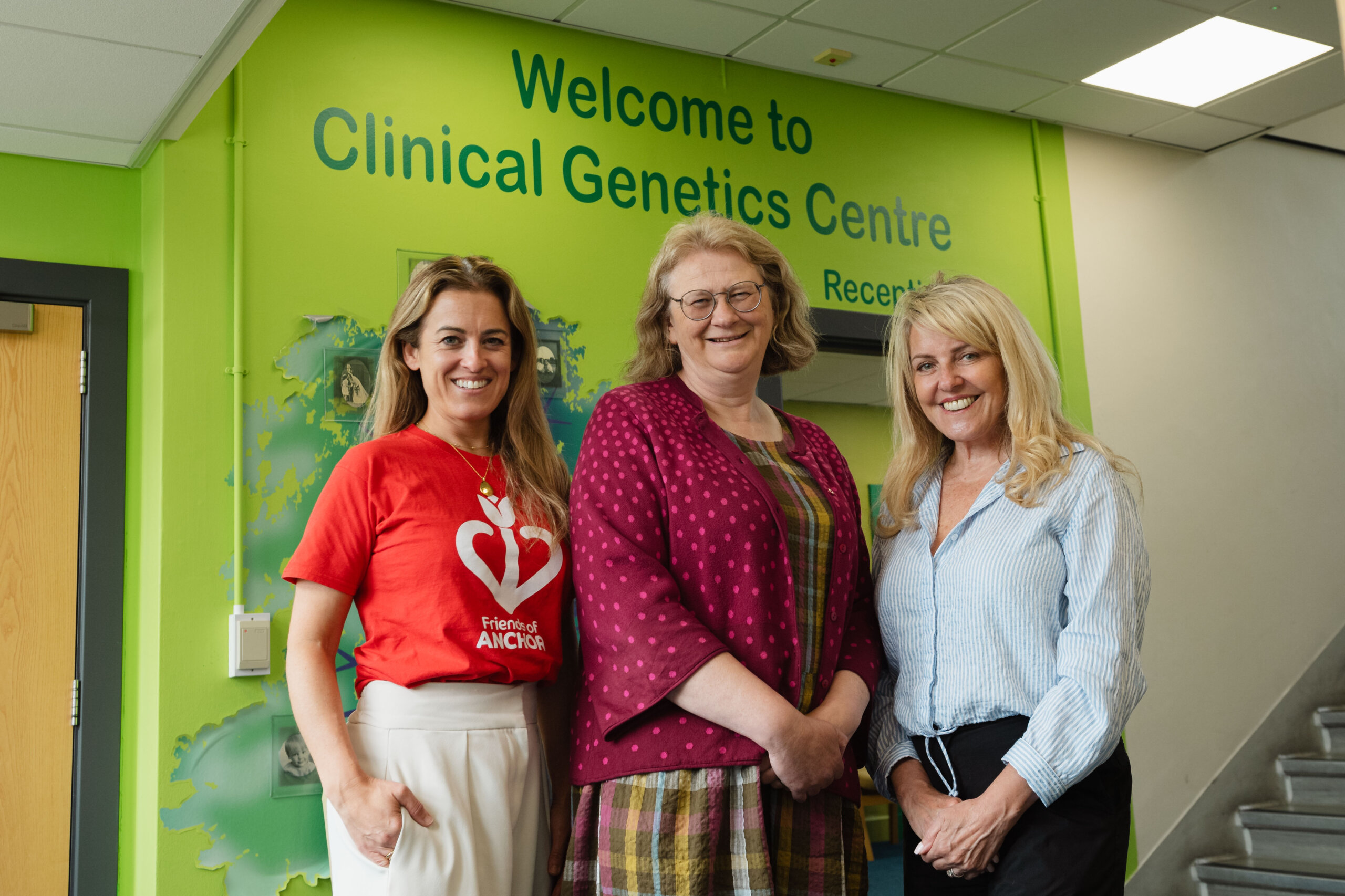
Chief executive of Friends of ANCHOR Sarah-Jane Hogg said: “The goal of this important work has long been to introduce genetic testing Scotland-wide, and thanks to the pioneering efforts of Zosia and her colleagues, the roll-out is imminent.
“This project reflects our commitment to supporting earlier diagnosis, prevention and improved outcomes for people affected by cancer, and this programme will identify people at increased risk earlier and give them access to support and preventative care that could ultimately save lives.”
Lisa Duthie, charity lead at NHS Grampian Charity, speaking on behalf of the NHS charities, said: “For the donors who support our NHS charities, this is a powerful example of the impact their generosity can have.
“Their donations are helping fund work which will identify people with increased risk, support earlier intervention, and create opportunities for preventative care that will save lives.”
The Viking Genes team published a post on its website to explain the difference between the NHS project and its own plans.
It said it supports the NHS screening project and is “proud to have helped lay the foundations for this screen and help change the paradigm to preventative medicine”.
However it said: “While screening is the way forward to reduce risk and deliver more equitable genomic medicine, the NHS screen will be limited, both from the perspective of which variants are being tested and the eligibility for screening. Benefits will only be felt by a small subset of the at-risk Shetland population.”
Viking Genes said its own broader genetic screening project will cover people “people from across Shetland, as well as those who have moved to the islands”.
“The Shetland Community Screening Project will screen for variants causing a variety of diseases, including the iron-overload disorder haemochromatosis and Long QT Syndrome, which can cause fatal cardiac arrest, as well as the BRCA2 variant,” it added.
“We call these actionable genetic variants, because in each case there are treatments or preventative actions that may be taken to ameliorate or avoid the disease.”
Viking Genes also sought to highlight that the BRCA2 variant is not limited only to people with Whalsay grandparents, even if it most common there.
It said half of the known carriers have no Whalsay ancestry, and that people from elsewhere in Shetland are also at risk.
“At the same time, the people of Whalsay are also at risk of other ailments, for instance the fatal childhood disorder Batten disease and the lung disease cystic fibrosis,” Viking Genes added.
“That’s why Viking Genes plans to test for all the most common genetic risk variants in Shetland to allow us to manage those risks in one simple screen.”
Viking Genes said it also plans to include carrier variants in screening which would inform risk in children yet to be born.
It said that establishing a “one stop shop” is the “best and most cost effective way forward”.
“We are supportive of all measures to deliver genetic screening to the people of the Scottish islands, as well as their diasporas, and are proud that Viking Genes played a part in getting to this stage,” Viking Genes continued.
“While both BRCA variants were known to the NHS, Viking Genes measured their frequency for the first time, revealing how very common they are in Orkney and Shetland, and discovered the link to Whalsay. This was a critical part of the evidence base to allow this targeted screening to go ahead.
“In summary, the Shetland Community Screening Project will go beyond the narrow geographic and disease focus of the Whalsay BRCA screen to identify a much broader range of genetic risks across the entire Shetland population.
“We are excited to deliver a comprehensive and inclusive community screen that reduces inequalities in risk through delivery of preventative medicine across Shetland, as soon as we have the funding together.”
Information about cancer symptoms and how to reduce your chances of getting cancer is available from the NHS Inform website.
People worried that they might have cancer should read the advice on NHS Inform and consult their GP.
More information on BRCA1 and BRCA2 and breast, ovarian, and prostate cancer in families is available via the NHS, Macmillan Cancer Support and Breast Cancer Now. Detailed information about eligibility for breast cancer assessments is available from Breast Cancer Now.
Friends of ANCHOR offers practical and emotional support to oncology patients and their loved ones in the north-east. Full details of its wellbeing support can be found on the Friends of ANCHOR website.
Emotional support is also available to patients and their families from Maggie’s and CLAN Cancer Support.
Keep Shetland’s news open to everyone
Your membership helps us report the stories that matter to Shetland — and keep them free for everyone to read.