Shetland must not be sacrificed to meet demand elsewhere

Shetland Islands Council’s renewed focus on tunnels and long‑term transport links is overdue. With an ageing inter‑island ferry fleet and years of underinvestment, islanders rightly ask why these conversations are only happening now.
I also draw attention to petition PE1864, which calls for stronger protection, genuine community consultation and clear commitments on local benefits before any major infrastructure decisions proceed.
The feasibility study must deliver, not sit on a shelf. A similar exercise decades ago failed to secure the much‑needed transport investments; this time must be different.
One or two tunnels, plus two urgently needed replacement ferries, would show long‑term planning turning into action. Before any next phase goes ahead, communities need binding promises on local benefits, infrastructure investment and lasting safeguards.
Shetland is an outstanding natural environment and one of the UK’s most important seafood producing regions. Fisheries and aquaculture make up around a third of the local economy; more fish is landed in Shetland than in England, Wales and Northern Ireland combined.























The islands produce over 36,000 tonnes of salmon a year (about a quarter of Scotland’s total) and more than 90% of Scotland’s farmed mussels — enough for well over 140 million meals. Unlike much of the UK, Shetland exports more than it imports, making a significant net contribution to the Scottish and UK economies. Protecting this productive region should be a national priority.
Across Scotland, 40 National Scenic Areas protect exceptional landscapes, including island communities such as Fair Isle, Hoy and South Uist. Yet mainland Shetland — a UNESCO Global Geopark and a nationally important seafood area — has no equivalent designation.
Ofgem‑funded schemes help remove or underground transmission infrastructure in protected areas, paid for by consumers, yet Shetland households face some of the country’s highest electricity costs and constrained grid capacity. This exposes a wider north–south disparity in planning, funding and policy outcomes that disadvantages remote Scottish communities and must be addressed.
Recent events in England — where water companies are being brought back under public control after years of asset mismanagement — underline the consequences of policy failure.
If England is reversing privatisation to protect the public interest, Scotland must ensure remote communities like Shetland are not left bearing disproportionate costs for national infrastructure needs.
Many residents now feel consultations are a tick‑box exercise on predetermined proposals. Projects such as Viking Energy have left unresolved concerns about transparency, decommissioning, restoration and ancillary works including substations, access roads and borrow pits.
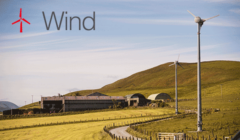
Shetland already generates substantial renewable energy; the issue is export capacity, not generation. Further industrialisation intended to serve demand elsewhere should not proceed while existing energy remains constrained and local communities bear the costs.
Using Shetland to meet demand for other regions without clear, binding local benefits deepens regional inequality and is unacceptable.
Ofgem and NatureScot often point to government policy when explaining decisions. Public bodies must do more than enable development: they must protect consumers, communities and the environment. Net zero must also safeguard landscapes, peatlands, habitats and wildlife that took centuries to form; many proposed developments have only limited lifespans and can cause irreversible harm.
Ministers and regulators must pause approvals and commission an independent review now. Stop all major transmission and large‑scale energy consents affecting Shetland until that review addresses cumulative impacts, grid capacity, consumer fairness, community benefit and statutory landscape protection — including urgent consideration of National Scenic Area status.
The review must confront north–south disparities exposed by recent policy failures (from energy pricing to England’s water company buybacks) and deliver binding, funded commitments on transport, housing and local infrastructure so communities genuinely benefit. Political stability matters: with four prime ministers in five years, a new Prime Minister committed to this review is essential to secure the long‑term action Shetland needs.
Shetland has powered and fed the nation for decades; it must not be sacrificed to meet demand elsewhere without fair recompense and lasting safeguards. If protecting the Cairngorms is right, protecting Shetland is imperative — and ministers must ensure policy, funding and planning reflect that duty now.
Regina Irvine
Whalsay