More tunnel cost estimates released ahead of key council meeting next month

THE ESTIMATED cost of tunnels to Unst and Whalsay have now been released after community events on inter-island connectivity drew to a close.
The capital cost of a tunnel between Yell and Unst has been quoted at £303 million. For Whalsay, this reaches £427.5 million.
The whole package of estimated costs, including construction, pre-construction and risk/contingency, totals £487 million for Whalsay, £402 million for Yell, £345 million for Unst and £255 million for Bressay.
Estimated gross operating and maintenance costs over a 60-year period range from £44.4 million for Bressay to £92.5 million for Whalsay.
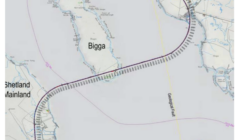
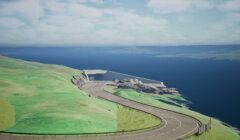
A proposed alignment for Whalsay sees a tunnel run under Linga Sound. It would be 8.2km long, forming part of a 9.8km road corridor.
For Unst, a 5.3km long tunnel forming part of a 6km road corridor has been proposed, connecting areas near the Gutcher and Belmont ferry terminals.
The message from Shetland Islands Council (SIC) and transport consultants this week has been that no option is cheap – even if the decision is made to stick with ferries.
























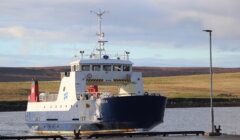
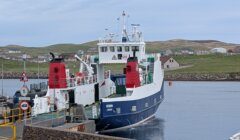
This is because there would be ferry replacements and potential port infrastructure improvements required, in addition to ongoing running costs and maintenance.
The figures appear to show that tunnels into Yell, Unst and Bressay would come with less long-term cost than ferries, while in Whalsay only ‘business as usual’ ferries would require less spend than a tunnel.
A series of community engagements were held in the islands this week ahead of a significant full council meeting on 30 June.
At this meeting elected members will decide on the options for future connectivity for Yell, Unst, Whalsay, Bressay, Fetlar, Skerries, Papa Stour and Foula.
Event materials show that if there was a tunnel between Yell and Unst, Fetlar could be served by a dedicated ferry.
In June last year, the council also agreed to commission a fixed link model (FLM) study from consultants Stantec and COWI, using Yell Sound as a ‘test’ case.
Help keep Shetland’s news open to everyone

Good local journalism takes time, care and people on the ground. Membership helps us keep reporting the stories that matter to Shetland — and keep them free for everyone to read. Members get a weekly newsletter created especially for them, local ads only, and can bookmark stories and join the conversation in the comments.
That study involved input from three globally experienced contractors, consulted the financial community, and concluded that the tunnel is buildable and investable.
Council leader Emma Macdonald said: “When islands have fixed links like causeways, bridges and tunnels, they experience repopulation, economic growth and a reduction in average age.
“Doing nothing is not an option in Shetland. We have islands depending on old, unreliable, carbon-heavy ferries, which are depopulating and continually at risk of ferry breakdowns.
“I look forward to the debate in the chamber later in June, where we’ll consider all the options before us.”
Andy Sloan, executive vice president UK and international at COWI, said: “We know that the tunnels can be built. From an engineering perspective it is relatively straightforward. The real challenge is whether we as a nation take a short-term or long-term view.
“As our global experience tells us, people will be attracted to live in remote and rural places if they are easy to get to, easy to get around, digitally connected and with job opportunities and an affordable standard of living.
“Fixed links can change how people in Scotland live, work and travel. They can reverse depopulation, provide vital services and support economic growth. Once Scotland builds its first tunnel, it will never stop.”
Keep Shetland’s news open to everyone
Your membership helps us report the stories that matter to Shetland — and keep them free for everyone to read.