
History in a wird: the origins of ‘reestit’

AFTER a longer break the I Hear Dee project’s History in a Wird series is back, this time exploring the origins of the word ‘reestit’.
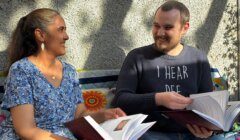
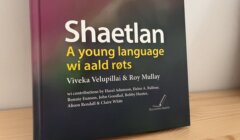
Run by linguist Dr Viveka Velupillai and native Shaetlan speakers Roy Mullay, Julie Dennison, Andrew Blance and James Stewart, the I Hear Dee project aims to document and describe the contemporary use of the distinctive language variety.
In researching the history of the local tongue, the I Hear Dee team is regularly unearthing fascinating twists and turns, which Shetland News is very happy to share to give it a wider audience.
History athin a wird. Da snüds an wups idda vaige o a wird is fascinatin.
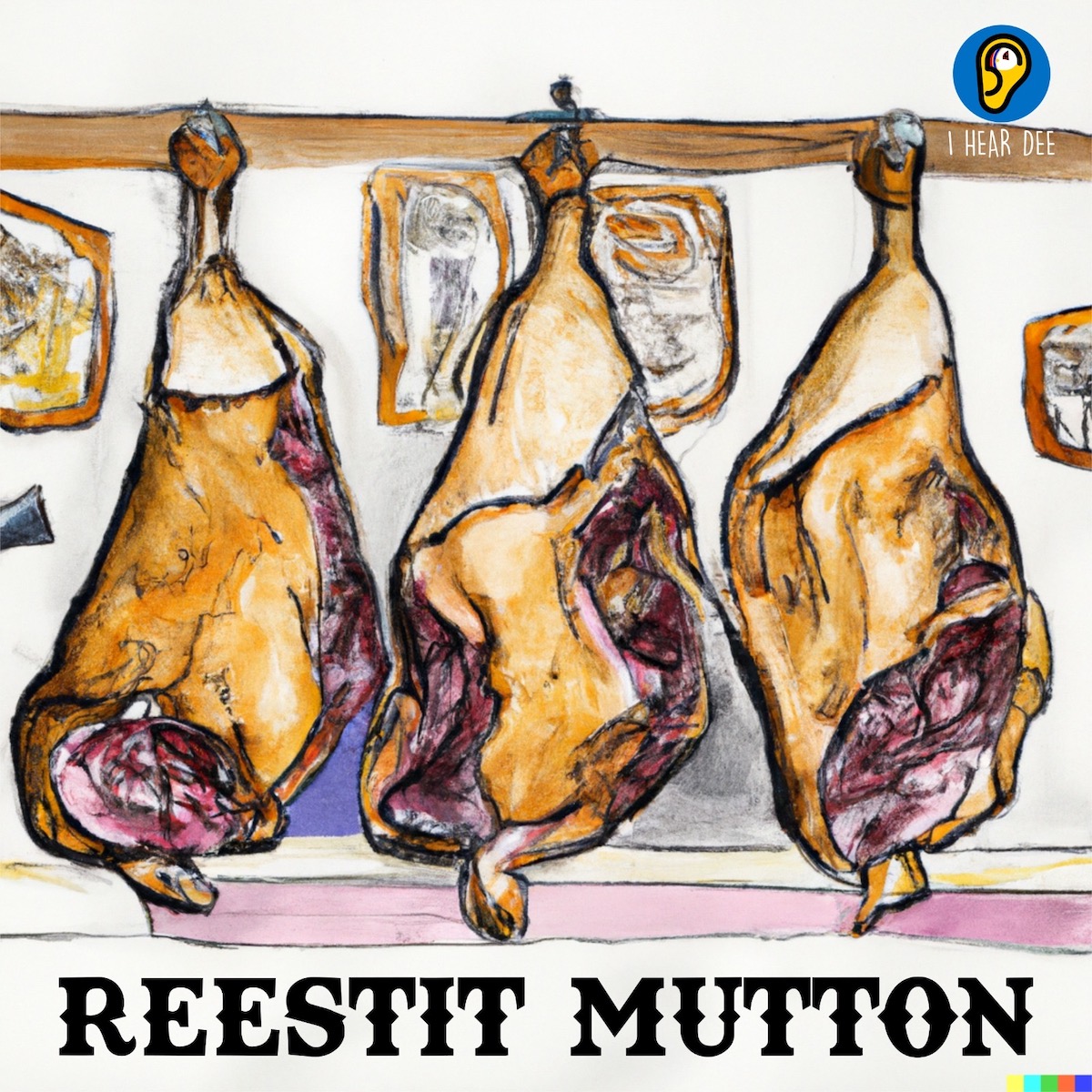
Idda herthol o da caald, raa an dark Yül, naethin can baet a bowel o haet reestit mutton soup. Da wird reestit is maed a full roond trip o da Nort Sea.
Da Aald Scots reist ‘tae smok dry, cure’ is attestit fae 1508. Hit micht be a Scandinavian lonn: Da., No. riste, Sw. rista aa means ‘tae cook ower a grid’, an Faer. ræst ‘air dry, hing cure, ferment’ is braaly closs ti’ da Shaetlan an Orcadian reest ‘cure, dry ower haet’.

























Da ultimate origin fir dem aa is MLowGmn. rôsten / MDu. rôosten ‘tae rosst’, fae Aald Saxon *rōstian, an hit ultimately comes fae Proto-Germanic *raustijan ‘tae rosst’.
Da wird evolved tae mean whit da fleish itsel wis rosstit or cured apün firbye, maist affen a grid or framewark o some kind. In Shetland dat wis a widden framewark whar da mutton hang tae cure it bi smok-dryin it.
Da reestit mutton, dan, is laekly tae be a Hansa lonn aroond da Nort Sea, whar ivvry community is taen an cheinged da meaneen ti’ da wye o wirkin wi it at wrocht best in dat plaess.
Help keep Shetland’s news open to everyone

Good local journalism takes time, care and people on the ground. Membership helps us keep reporting the stories that matter to Shetland — and keep them free for everyone to read. Members get a weekly newsletter created especially for them, local ads only, and can bookmark stories and join the conversation in the comments.
And here is the English translation:
In the depth of the cold, raw and dark winter nothing can beat a bowl of steaming reestit mutton soup. The word reestit has made the full round of the North Sea.
The Old Scots reist ‘to smoke dry, cure’ is attested since 1508. It might be a Scandinavian loan: Da., No. riste, Sw. rista all mean ‘to cook over a grid’, and Faer. ræst ‘air dry, hang cure, ferment’ is very close to the Shaetlan and Orcadian reest ‘cure, dry over heat’.
The ultimate origin for them all is MLowGmn. rôsten / MDu. rôosten ‘to roast’, from Old Saxon *rōstian, which ultimately comes from Proto-Germanic *raustijan ‘to roast’.
The word evolved to also mean the item that meat was roasted or cured on, typically a grid or a framework of some kind. In Shetland that was a wooden framework where the mutton was hung to cure it by smoke-drying.
The reestit mutton therefore seems to be a Hansa loan around the North Sea, where each community has adapted the meaning to the kind of process that suited the place best.
Keep Shetland’s news open to everyone
Your membership helps us report the stories that matter to Shetland — and keep them free for everyone to read.