Parliament committee calls for big increase in community benefit payments and to make it mandatory

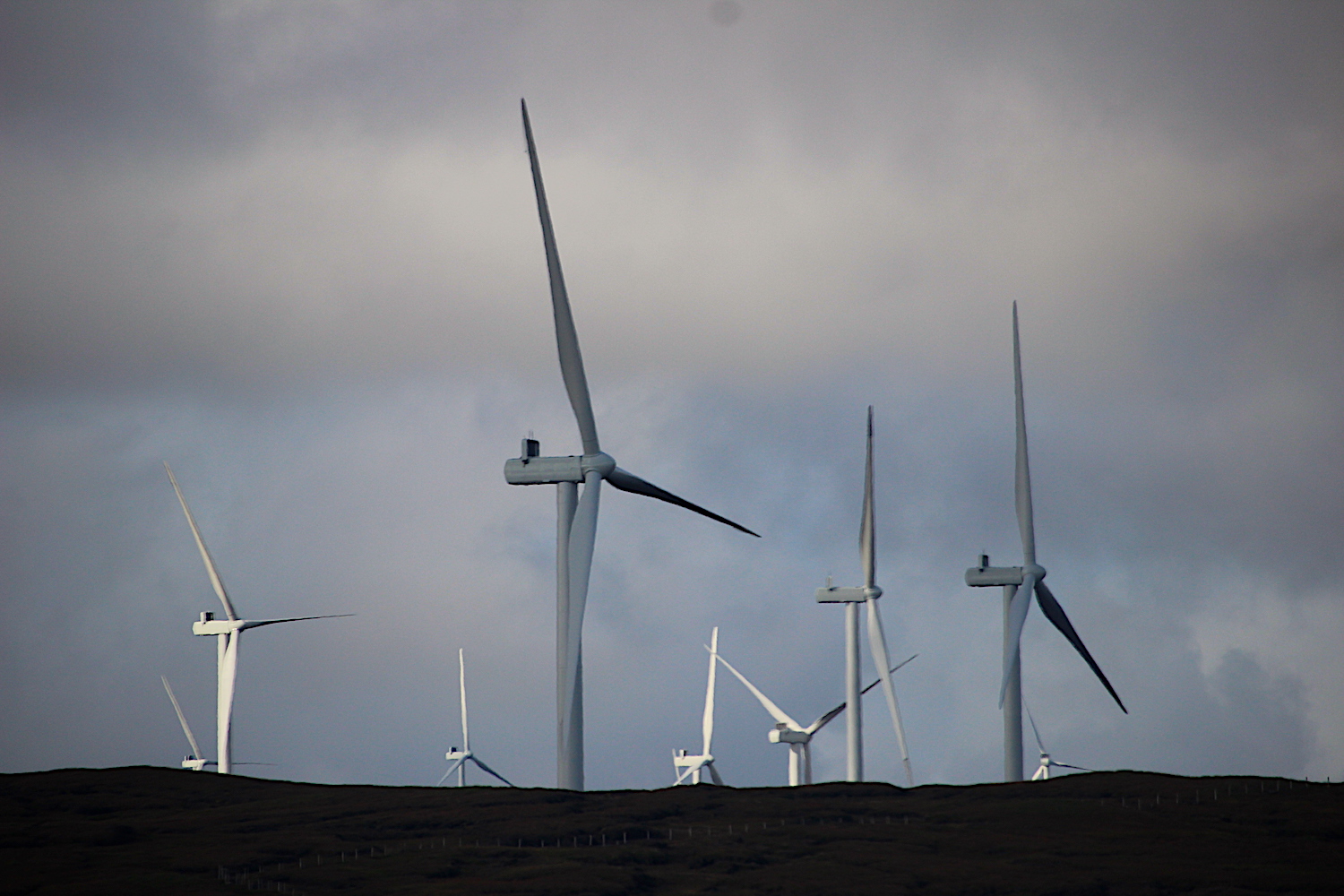
PROPOSALS by the UK Government to make community benefit for new energy infrastructure mandatory at a level of £5,000 per installed megawatt (MW) have been condemned as “insufficient”.
Currently all benefit payments to communities hosting renewable energy projects across the UK are voluntary with an expectation, in Scotland at least, that these should be in the region of £5,000 per MW.
However, a proposal by the UK Government to make such payments mandatory at £5,000 per MW does not go far enough, according to Westminster’s Scottish Affairs Committee.
The parliamentary committee is urging the government to increase such compensation payments to between £10,000 and £12,500 per MW, index linked.
They warn that rural and remote parts of Scotland are already hosting a disproportionally high number of new energy projects with the risk that the credibility of the energy transition is being undermined.
As energy policy is reserved, any decision to introduce legal requirements for developers to provide community benefits would rest with the UK Government.






















In its report, published today (Thursday), the committee highlighted that “clean power targets will only succeed if communities experience the transition as something that is being done with them and not to them”.
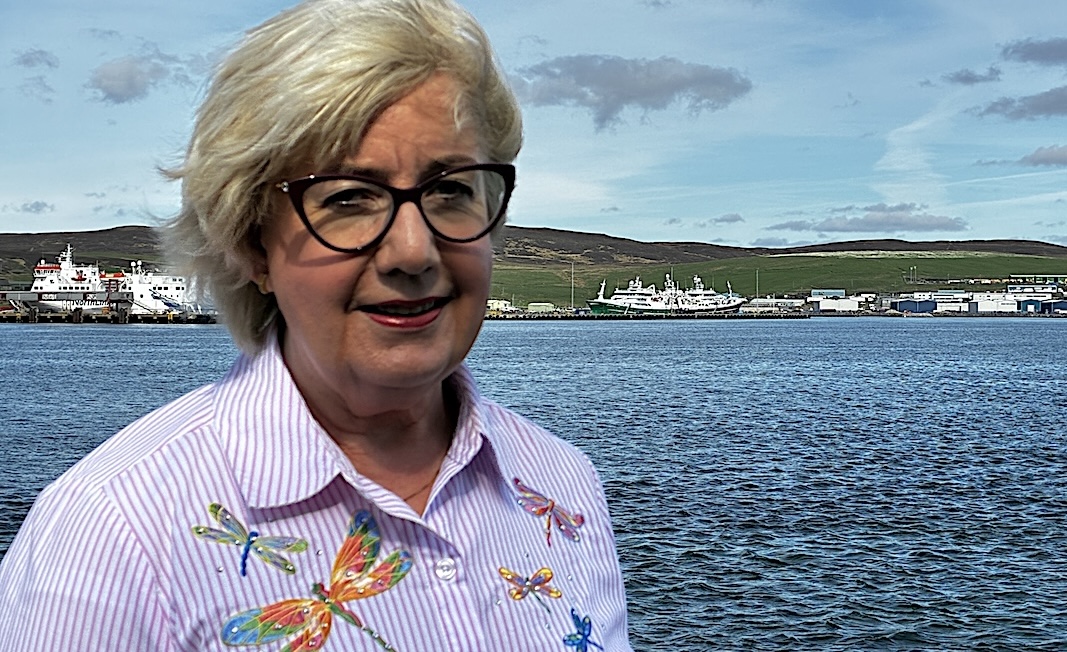
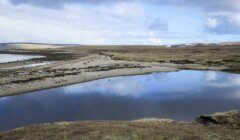
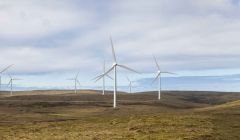
Photo: Hans J Marter/Shetland News
The committee, chaired by Glasgow West MP Patricia Ferguson, also called on the UK Government to ensure that electricity standing charges are the same across the country, and to ensure that community energy projects have a fair access to market including grid connection.
While welcoming the government’s commitment to making community benefit mandatory, the MPs on the committee are clear that the proposed policy does not go far enough.
Help keep Shetland’s news open to everyone

Good local journalism takes time, care and people on the ground. Membership helps us keep reporting the stories that matter to Shetland — and keep them free for everyone to read. Members get a weekly newsletter created especially for them, local ads only, and can bookmark stories and join the conversation in the comments.
They emphasise that meaningful community benefits can go beyond financial payments and urge the government to ensure community benefits schemes are flexible and responsive to local needs, and could include housing, skills training and local job creation.
Recent proposals by the Scottish Government to increase voluntary community benefit from £5,000 to £6,000 has already been dismissed by some as “laughable”, while a Ferret investigation earlier this year revealed that the average community benefit payment paid in Scotland is just £2,758 per MW.
Ferguson said: “We’ve concluded that the Government’s proposed mandatory community benefits scheme doesn’t go far enough.
“Communities must receive fair compensation for shouldering the burden of the energy transition – especially when many are already experiencing fuel poverty. We think fair compensation would be between £10,000 and £12,500 per MW per year.”

Daniel Gear of local energy consultancy Voar said the committee’s suggestion of a community benefit between £10,000 and £12,500 per MW was more “significantly ambitious” than current levels, and what has been proposed by the Scottish Government.
“However, there does seem to be an obvious omission from this report’s conclusions, and that is the absence of any recommendation or examination that host community earnings be linked to the revenues that the turbines themselves are generating, rather than simply being based and the number of turbines installed,” he said.
“In my view, revenue-linking is more equitable, as it means the windier the place, and the more the wind is stripping heat from people’s homes, the more scope there is for host communities to earn a better return from the harnessing of that resource.”
Gear said Voar made the recommendation to Shetland Islands Council (SIC) last year that a ‘“floor-and-ramp” model should be adopted, which would provide a minimum guaranteed payment ‘floor’, based on installed capacity, with a ‘ramp’ payment component, which would be based on a percentage of project revenues.
“This model was subsequently adopted by the SIC, and has since been adopted by Community Land Scotland, and the Scottish Community Coalition on Energy,” he continued.
“The conclusions arrived at in this report appears to miss that opportunity somewhat, and as a result, may not go far enough to find a viable path toward consent from the people of Scotland.”
Gear said this was also a “critical opportunity” to establish and signal the “vastly increased ambition levels” for community ownership of energy.
“But it again falls short of this in my opinion,” he said.
“Shetland came within a hair’s breadth of community ownership of the equivalent of 200MW of Viking’s capacity. Had the support structures that exist today been in place then (e.g. GB Energy, etc.), I have no doubt that this level of ownership would have been realised.
“And yet, the ambition levels for community energy still seem to be being repressed, or at least chronically underestimated and boxed into very small-scale community projects linked to individual community buildings etc.
“This is, in my view, the single largest issue of consent in the context of energy – if the host communities don’t feel like they have ownership and control of the big things, it won’t matter how high community benefit payments go, consent will not be achievable.”
Gear also said it was notable that there was no discussion related to heat networks or thermal storage, which “clearly have an important role to play in the context of Scotland’s clean and equitable electricity system, in the form of grid services”.
“Overall, the report identifies a number of challenges and barriers that we have previously articulated associated with achieving a fair deal for Scotland, but the recognition of the opportunities and of the higher ambition levels that are required in the context of community ownership and consent are somewhat lacking.
“There is also a conspicuous absence of witnesses informing the report from this part of the world – perhaps this is an opportunity for subsequent parliamentary committees.”

His views were echoed by Green councillor Alex Armitage who said: “Though the report pays lip service to community-owned energy, my issue with the report is that it also supports the model of corporate-owned energy development, with “community benefit” agreements.
“We know that this model of development provides at least 30 times less resource to local communities than the model of community ownership.
“If government stays on the fence and supports both strategies of development, large corporations will easily overpower communities and dominate the physical and economic landscape.
“A responsible government needs to get off the fence, stand up to the power of corporations and intervene on behalf of communities. Government can provide the capital, legal and technical support to allow local communities develop their own energy infrastructure.”
The committee report also raises concerns about higher-than-average standing charges in Scotland and calls for urgent reform to create a fairer system, with standing charges made consistent across all UK regions.
While welcoming the UK Government’s ambition to expand community and locally owned clean energy through the Local Power Plan, the report warns of a “disconnect” between this and the practical reality in Scotland.
Current Transmission Impact Assessment thresholds mean that much of the transmission grid is effectively allocated until 2035, leaving community energy projects at a “near-standstill.”
In a written submission to the committee, the UK Government’s Department for Energy Security and Net Zero said that GB Energy’s Local Power Plan will “enhance existing support to community energy”.
“It will do this through partnering with, and providing funding and support to, local and combined authorities – as well as community energy groups – to roll out renewable energy projects and develop up to 8GW of cleaner power,” it added.
“Scottish Government has established the Community and Renewable Energy Scheme (CARES), through which communities can access funding and advice to invest in or develop their own renewable energy projects.
“The Department’s Officials have held positive initial talks with their counterparts in the Scottish Government about the design and implementation of Great British Energy and are working to ensure that the company and the Scottish Government’s existing community renewable energy schemes dovetail together and complement one another.”
Keep Shetland’s news open to everyone
Your membership helps us report the stories that matter to Shetland — and keep them free for everyone to read.