Why read? Why not read?
Ahead of World Book Night on Thursday, in this viewpoint piece Shetland Library team leader Catherine Jeromson reflects on the benefits of reading in an increasingly digital age

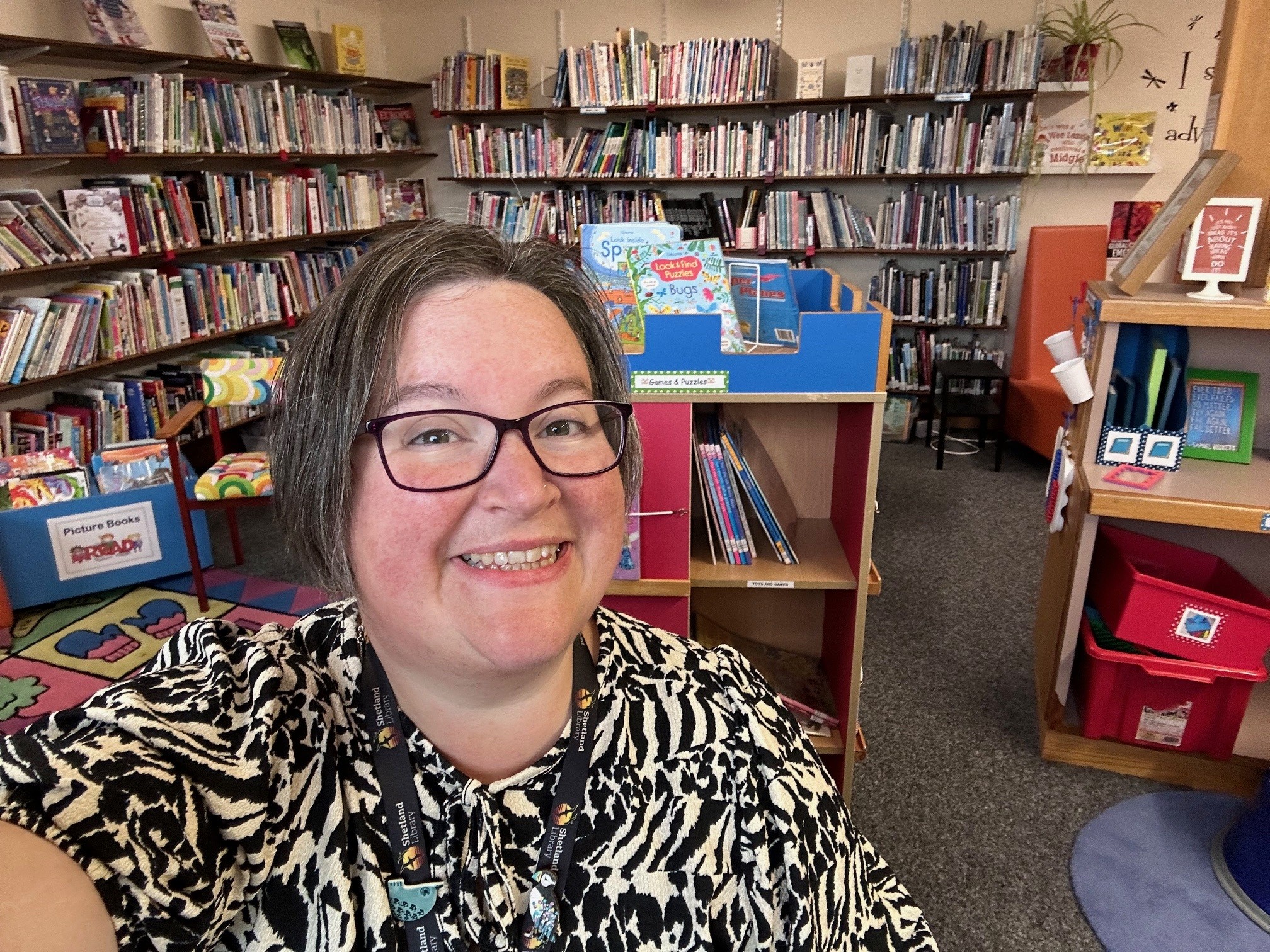
“HOW can you be a Librarian, but have never read any of the Harry Potter books?”
I lost count of how many times I used to be asked this, incredulously. My excuses included: I’m not into wizards; I’m an adult and it’s a children’s book; or I saw the first film and I’m not that fussed. What was the big deal?
Then I read all seven books during lockdown. Over 20 years since the first book was published and I now finally understood. Escapism. The power of imagination. How the written word can stir so many emotions. I too am now suspicious of anyone who hasn’t read the Harry Potter books.
According to data from The Reading Agency, only 53 per cent of UK adults consider themselves regular readers. The National Literacy Trust reported that in 2025, the percentage of children and young people who told us they enjoyed reading was its lowest in 20 years. Just 1 in 3 (32.7 per cent) children and young people aged 8 to 18 said that they enjoyed reading in their free time in 2025.
























2026 was declared the National Year of Reading by the Department for Education, in partnership with the National Literacy Trust, as part of a nationwide effort to restore reading to its place in everyday life. At a time when fewer people are turning to books as a source of enjoyment, the initiative serves as a reminder of reading’s power to broaden horizons, sharpen thinking, and offer immediate, personal reward.
I was recently going through airport security, and I was stopped for a bag search. I joked with the staff that it was no doubt due to the hardback book I had in my hand luggage, and how it is an unusual item to be carried around these days. I needn’t have joked.
Help keep Shetland’s news open to everyone

Good local journalism takes time, care and people on the ground. Membership helps us keep reporting the stories that matter to Shetland — and keep them free for everyone to read. Members get a weekly newsletter created especially for them, local ads only, and can bookmark stories and join the conversation in the comments.
My choice of pastime was indeed exactly what had triggered additional screening. When asked “Do you have any sharp or dangerous objects in your hand luggage?”, I’d failed to consider the sharp-witted, dangerously distracting read that I had packed.
Since then, I have been acutely aware of how rare it is to see people reading physical books in public. On public transport or in waiting rooms, what you will see instead are people with headphones in, listening to music or podcasts, or – more often than not – focused on the glowing screen of a smartphone.
We read more than we think we do – messages, articles, posts, emails, an Up Helly Aa programme – but reading a book feels different. It requires a different kind of focus and attention. It offers depth in a culture that rewards speed.
Yet, when I ask friends, “Have you read anything good lately?”, many tell me they “don’t have time to sit down and read”. It’s an interesting concept – that reading requires stillness, and that stillness is somehow a luxury, or worse, a waste.
As Matt Haig points out in his book Notes on a Nervous Planet – “The problem, clearly, isn’t that we have a shortage of time. It’s more that we have an overload of everything else.”
The rising popularity of audiobooks is testament to those who can multitask. I usually listen to an audiobook when I go out for a walk, and I have been known to extend my route if I am getting to a crucial plot twist. Thus ticking the boxes for both my physical and mental well-being.
The benefits of reading are well-documented. Children who are read to from birth establish a close relationship to the person reading to them and they associate stories with comfort. As they grow, reading to your child develops their speech, language and literacy skills. Research shows that children who read for pleasure regularly achieve higher attainment across subjects and show stronger wellbeing outcomes.
In The Reading Agency’s 2025 report ‘State of the Nation’s Adult Reading’, data revealed that identifying as a regular reader is not just associated with significant wellbeing benefits, such as the ability to sleep well or relax easily, but also an increased sense of community belonging. It also highlighted that those identifying as ‘non-readers’ are more likely than regular readers to feel lonely, anxious, or depressed.
How can that be? In a world where technology means that we can connect with each other more easily than ever before, why do we feel so disconnected? In his book The Anxious Generation: How the Great Rewiring of Childhood is Causing an Epidemic of Mental Illness, Jonathan Haidt states “This is the great irony of social media: the more you immerse yourself in it, the more lonely and depressed you become.”
Constant comparison to a somewhat unreal reality, somewhere between fact and fiction.
At the heart of the National Year of Reading campaign is a simple idea: “Go All In” on what you already love. Whether it’s music, football, baking, family time, or science fiction, the promotion encourages people to see reading not as a task, but as a way of deepening their interests and connecting more meaningfully with the things that matter to them.
I am always pleasantly surprised when someone, who I presumed wouldn’t have much time for books, tells me about what they’ve found out from a recent read. Yet this makes a lot of sense. If you are interested in something, you would want to find out more about it. For example, I have a family member who is well-known in the local music scene. He isn’t your stereotypical “bookworm” but has read a lot of biographies of his favourite musicians, amongst other things.
It can also be comforting to read a book, where the author describes a relatable situation in such clarifying detail that you feel you have a shared experience. It can make you feel less isolated and less alone. I have experienced this when reading poems from Donna Ashworth. I can’t say I have always been a big fan of poetry, but her words have made me feel seen and understood during difficult times. The other comfort is escaping entirely into a fictional world of imagination and possibility.
What makes you a “reader”? Well, if you have ever lost yourself in a story, learned something that changed your perspective, or simply taken a moment to focus on words instead of the noise around you – then you are indeed a reader.
And in a world that rarely stops moving, choosing to read – even briefly – might be one of the most valuable habits we can reclaim.
Shetland Library is celebrating World Book Night on Thursday 23 April. The library is open late until 8pm and offering the opportunity to browse their basement collection in the former library building at St Ringans, an area usually closed off to the public, from 5pm-6.30pm.
People also invited to take part in the World Book Night Reading Hour 7pm-8pm. This national moment was created by The Reading Agency to encourage everyone in the UK to stop what they are doing and spend one dedicated hour reading.
Keep Shetland’s news open to everyone
Your membership helps us report the stories that matter to Shetland — and keep them free for everyone to read.