
Navigating parliamentary waters
In this ViewPoint contribution Shetland MSP Hannah Mary Goodlad explains why she will attend Saturday’s Energy Convention as an elected representative but not as a government minister

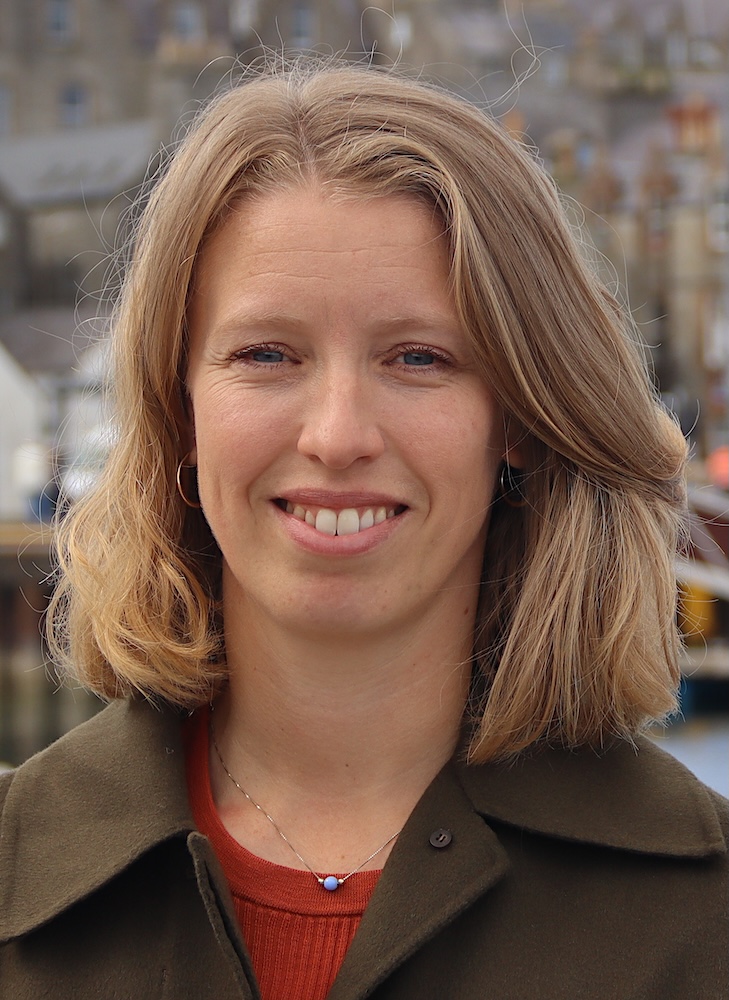
As you would expect there has been lots for me to take on board since the Scottish election result was announced back in May, and I left for Edinburgh the very next day. Much of this has been related to the rules and directives that underpin our parliamentary system.
As we would presume, there are strict protocols applied by parliament when an individual is given the honour of representing their community as an MSP, but this is even more true when you are also afforded the privilege of becoming a minister.
At a time when many politicians around the world have changed the way in which they behave in public office (not always for the better) the strict focus placed on training entrants to the Scottish Parliament on compliance with the Members Code of Practice and, for those also becoming a Minister, the Scottish Parliament’s Ministerial Code, is hugely reassuring.






















These codes are based on a fundamental principle that the individuals acting within the parliament can, and should, be held to account for their behavioural practices and standards of propriety in public office, and they are there to ensure fairness, integrity and accountability.
A key element of these requirements, is that my dual roles of being Shetland’s MSP and being Scotland’s minister for public finance, must be kept separate. This rule applies to all Scottish ministers. In other words, a virtual wall must be maintained between these two activities, ensuring that I remain highly conscious of which hat I am wearing at any one time.
As such, government ministers cannot make decisions on projects or policies specific to their own constituency. This is particularly relevant to my ministerial portfolio, which covers planning at a Scottish level. This prevents ministers from being able to use their powers from unfairly benefitting their own constituency.
This is a good thing, and Shetland will have benefitted many times over the years from planning ministers not being able to unfairly reward their own constituencies to the detriment of others.
Then why is a seat at the table a good thing for Shetland, you may ask, when such restrictions are in place. The answer is simple. An MSP, who is not a minister, would act as a backbencher in government. This is an important role, powering the parliamentary ship forward, but it is a role with less influence than that of a minister, who can steer policy by influencing their parliamentary colleagues from within, at the highest level.
A backbench MSP, who is not of the governing party, would have even less influence and so my ministerial role is an important opportunity for Shetland.
What these restrictions also do not prevent, is a minister holding a strong and impassioned view, as I do, that planning structures and decisions can and should be made to shape a better future for Scotland and for Shetland.
I have been given a mandate by the people of Shetland on the principle that decisions that impact our homes, our communities and, indeed, our lives, should being pushed down to make sure that they are taken at a level as close to their consequences as possible.
This is what increased autonomy is all about: the more local the development project, the more local the decision-making body. This is particularly true regarding choices made about the future of energy production.
The feeling that we, as islanders, have insufficient control over the consenting process for energy developments in and around our Islands, is one that I share.
That, as part of the current government, I have the opportunity to push for more control for communities in Scotland (including Shetland), by making changes to the planning and consent processes at play, and for the long-term, is the kind of opportunity that inspires me – this is what I am here to do.
Increasing community control, engendering community wealth, and building autonomy for local communities are some of my key political aims, and being given a key role in the heart of government makes these goals all the more achievable.
As your MSP, I also remain committed to promoting legislation which will incorporate powers to ensure a level of local ownership of future energy projects in Shetland; which allows for local control of development planning approval consents; which addresses grid access for community energy projects; and which ultimately contributes to lower energy costs across our islands.
In my opinion community benefit is no longer enough for energy developers basing themselves in Shetland, and we must start to think of who ultimately can lay most claim to owning Shetland’s natural resources.
We may need help to develop these natural assets into viable energy sources for our homes and business, but they can no longer be seen as free for the taking.
See also:
Community councils to lobby politicians on energy development concerns