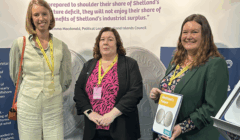

Community benefit on the agenda as GB Energy officials visit Shetland
Chief executive will visit Sullom Voe oil terminal and Garth and Viking wind farms


OFFICIALS from GB Energy will meet Shetland Islands Council this week to discuss how island communities can benefit more from renewable energy.
Senior representatives from GB Energy, including chief executive Dan McGrail and chairman Juergen Maier, will visit wind farms, the Sullom Voe oil terminal and meet with the council to hear directly about the isles’ energy opportunities and challenges.
They will also visit the Brae Rural Energy Hub, which is due to open tomorrow (Wednesday).
The three-day visit will see GB Energy officials meet members of the media later this week as well.
GB Energy is a publicly-owned company which was set up by the Labour government to accelerate the UK’s transition to renewable power.
It drew immediate criticism in Shetland after leaving the isles off a map of the UK in its strategic plan, which was published late last year.
‘Staggering but not surprising’ – Shetland omitted from government energy map of UK
























Then-Scottish election candidate Hannah Mary Goodlad called it “staggering, but not surprising” that Shetland was missed off the map – which came on a page about onshore energy developments in the UK.
The map was later fixed.
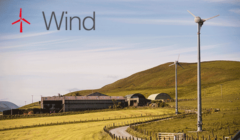
GB Energy officials will this week visit two of Shetland’s onshore energy projects, namely the Garth wind farm in Yell and the Viking wind farm.
The company said the Shetland visit would allow its team to “explore community ownership, local energy systems, workforce transition and ways to ensure island communities benefit from renewable energy”.
“This is an opportunity for Great British Energy to better understand constraints including grid connectivity and energy affordability, while identifying opportunities for collaboration,” it added.
GB Energy’s chief executive McGrail said that Shetland had played a role in the UK’s energy story for decades, and has the “skills, infrastructure, natural resources and community ambition” to remain at its heart in the future as well.
Help keep Shetland’s news open to everyone

Good local journalism takes time, care and people on the ground. Membership helps us keep reporting the stories that matter to Shetland — and keep them free for everyone to read. Members get a weekly newsletter created especially for them, local ads only, and can bookmark stories and join the conversation in the comments.
“This visit is about listening to the people who understand Shetland best,” he said.
“We’re particularly interested in understanding how communities can benefit from the energy they help produce, how local energy solutions can be scaled up, and how we can support a transition that creates opportunities while building on the incredible skills that already exist here.

“Great British Energy is for every part of the country. By spending time in Shetland, seeing projects firsthand and understanding both opportunities and challenges, we’ll gain valuable insights that will help shape how we work with communities and partners across the UK.”
GB Energy’s chairman Maier said Shetland was a “powerful example” of how Britain could turn “its clean energy potential into lasting industrial strength”.
He said Shetland combined “exceptional natural resources with deep engineering expertise, significant infrastructure and a highly skilled workforce”.
“But the opportunity is not simply to generate more clean power,” Maier said.
“It is to use that power to support new industries, strengthen domestic supply chains and create good, skilled jobs, while ensuring communities share in the benefits.
“Shetland already has strong foundations. By building on its existing capabilities, the islands can help show how the energy transition delivers real economic value for local people and the wider country.”
Keep Shetland’s news open to everyone
Your membership helps us report the stories that matter to Shetland — and keep them free for everyone to read.