
Community ownership key as GB Energy visits isles
Senior councillor says the government owned company is ‘potentially the partner’ needed to lower local energy bills

IT WAS perhaps good timing that GB Energy made a visit to Shetland this week just as the industry was placed back in the spotlight after the approval of the Jackdaw gas field off Aberdeen.
But while it has been oil and gas in the headlines in recent days, government-owned company GB Energy is all about clean energy.
During a day of visits in Lerwick yesterday (Thursday), chief executive Dan McGrail was also keen to stress the importance of community ownership in renewables.
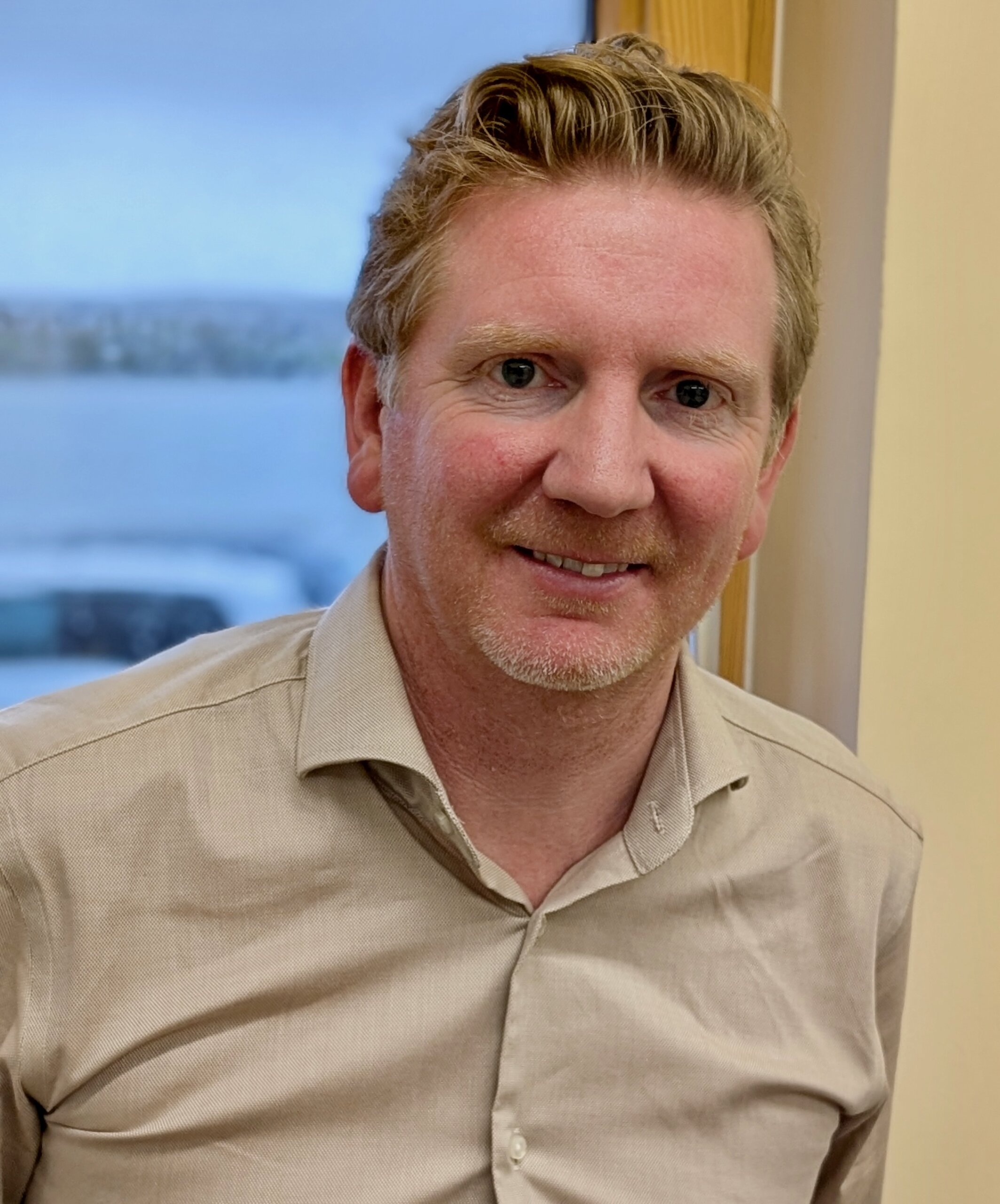
“Public ownership of energy with purpose is what we say,” he tells Shetland News when asked what exactly GB Energy’s role is. “The simple point is that giving the public a stake in the energy transition is just a good idea.”

























It appears the GB Energy team also had a constructive meeting with council representatives, with elected member Moraig Lyall saying the company is “potentially the partner we have been needing” to create a way to lower local people’s energy bills in the future.
McGrail leads what is described as Britain’s publicly owned energy company, launched by the Labour government under the premiership of Sir Keir Starmer. A month ago its Aberdeen-based headquarters was formally opened by King Charles.
Among the aims is to accelerate the deployment of clean energy, with an emphasis on increasing local and community ownership, while it has been backed with a financial commitment of billions from the UK Government over the lifetime of the current parliament.
During their visit to Shetland, representatives from the company headed to Sullom Voe Terminal and the newly opened Brae Rural Energy Hub, as well as two local wind farms – SSE’s 103-turbine Viking development, and the five-turbine Garth wind farm, run by the North Yell Development Council.
The disparity in size of the two wind farms is there for all to see, but the payment out to the community in benefit – £2.2 million a year from Viking, for instance – can be similar.
McGrail says Shetland is unique in that it has “deep heritage” in oil and gas, while hosting a “world class piece of infrastructure” in Viking (which stood idle yesterday).
But he suggests Viking is “not being fully exploited, which I think creates a degree of tension – people are rightly asking why is my energy bill so high”.
Garth wind farm, McGrail adds, “isn’t just about clean kilowatts, but it’s about homes, it’s about building industrial facilities, it’s about getting more young families to live in the area”.
“It just kind of goes beyond this wind farm, and I think that’s really inspiring.
“So for all of that, we’re here to learn about what’s worked well, what’s not working, and we’re keen to understand how we can play our part to help try and tackle some of these challenges and boost the community energy in particular.”
When asked if Viking or Garth align more with GB Energy’s way of thinking, McGrail replies that both do.
There is a strategy in place which is at one level about “utility scale wind farms”, he adds.
“Our interest in them is to look at how we might use public land to build more projects [in Britain] that are like Viking – maybe not as big, but utility scale projects.
“But at the same time, we’ve set a really ambitious target to support a thousand community energy projects.
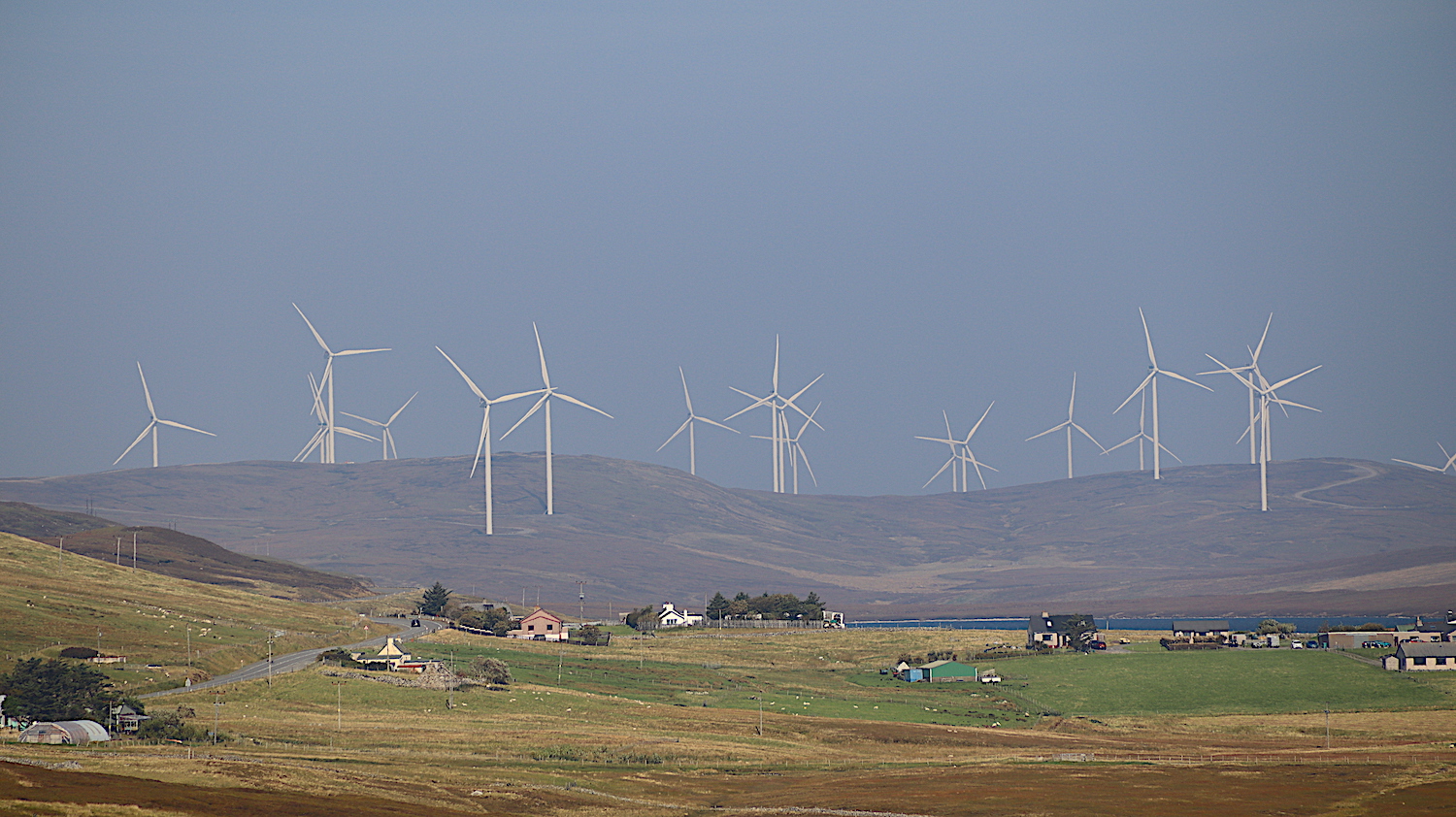
“What’s been done at Garth, and I’ve seen also on other islands around Scotland, and on the mainland…I think Scotland’s really got a leadership role in having exploited the resources and turn that into wealth for communities.”
It is “bloody windy”, he says with a smile, referring to exploiting natural resources – although as Shetland News speaks to him it is bloody rainy too, having been soaked on the way into the building.
But while it can be blustery, McGrail acknowledges that a key frustration for islanders is the time Viking spends constrained – the turbines unable to turn due to bottlenecks on the grid down south.
This comes at a cost too, with the grid operator having to pay constraint payments to the developer – with many millions spent to date for Viking being turned off.
So how do you get beyond that tension? “I think for me the way you get over the challenge is you need to find a way to channel the benefits of low cost energy back to people here locally,” he replies.
“I think the lesson is that community ownership has this unifying effect – it’s our wind farm, it’s our solar farm, it’s our battery…it has a different meaning to people, and I think those are things that we’re looking to explore.”
McGrain neither agreed or disagreed with criticism that the industry-standard £5,000 per megawatt community benefit for onshore wind farms was not enough – again pointing to the merits of community ownership instead, adding that gives people more of a say too.
GB Energy was in town as the UK Government announced approval for the Jackdaw gas field to the east of Aberdeen on Wednesday, with a decision pending on the Rosebank oil development to the north west of Shetland.
McGrail says GB Energy’s commercial focus is on renewables, which is “very much an energy transition story”.
But one way oil and gas fits into the company’s thoughts is through supply chains.
“The supply chain is mutual,” McGrail continues, “and therefore the health of the supply chain in the long run is important for the success of renewables.”
Although Jackdaw in isolation means little or nothing to Shetland, what also got announced by the UK Government at the same time – to perhaps slightly less fanfare – was plans for a new energy wealth fund, which will use tax revenues from North Sea oil and gas to invest in renewable and low carbon energy projects.
At face value, this seems to fit snugly with the ethos of GB Energy – but McGrail concedes it is too early to speak in any depth about the new fund, which is set to open with a £2 billion injection from government.
“The policy has just been announced, and we’ll work with partners in government and other public institutions to work out that should look like and how that plays into our existing strategy as an energy investor,” he says.
It is worth noting too that more onshore wind is coming in Shetland, near Lerwick and in Yell, while there is e-fuels production proposed at Sullom Voe Terminal as well as plans for two ammonia plants, formerly owned by Statkraft – and that is not even mentioning the large offshore wind farms which could be installed east of the isles.

The GB Energy chief was speaking not long after a meeting with council representatives, including environment and transport committee chair Moraig Lyall.
Speaking later on Thursday, the councillor said she felt their meeting was a positive one. “They clearly understand the frustrations that arise from Shetland producing so much energy whilst enduring high levels of fuel poverty and electricity bills that are well above other parts of the company,” she said.
“The objective of the pitch was to encourage them to work with us to demonstrate how surplus energy can be better shared and used more efficiently.”
Lyall felt the GB Energy delegation was receptive to the idea of using Shetland as a test-bed for finding a mechanism to give local residents cheaper electricity in areas where this is constrained power.
“It could make something that has been talked about for years, the ‘Shetland Tariff’, a reality,” she said.
“They also very appeared very interested in community projects. What we need now is for the talking to translate into action and for the council to work with GB Energy to see the progress people in our community require.
“Put in simpler terms we want to find a way to get folk’s energy bills down and after years of talking it does feel like the door is opening to that becoming possible.
“GB Energy are potentially the partner we have been needing to create a mechanism to make it happen. Hopefully there will be follow-ups in the immediate future to move things forward.”