



Sovereign Nation of Shetland calls for removal of all Viking Energy wind turbines
Campaigner Stuart Hill’s group says it will launch investigation into ‘authority’ of decision to approve wind farm

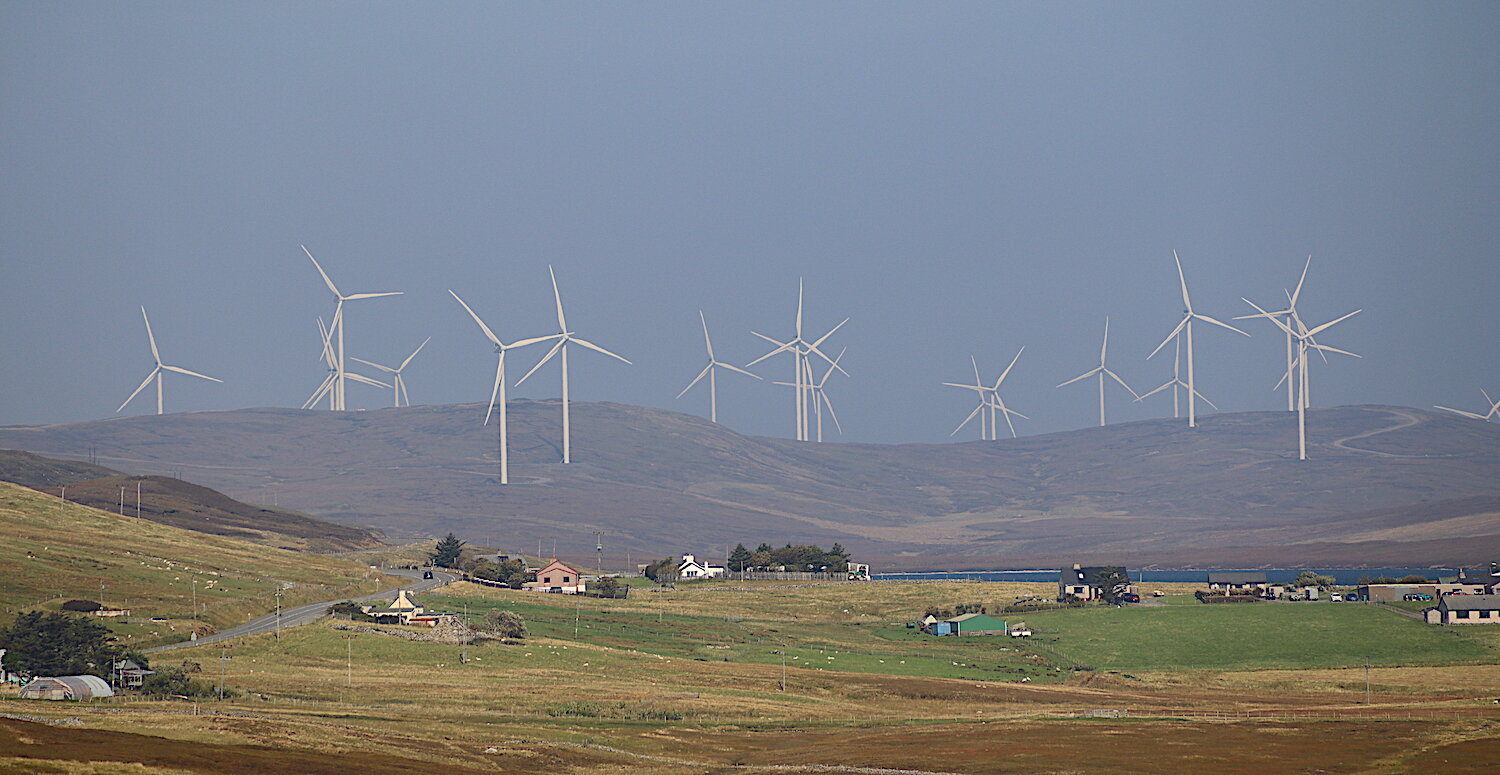
THE SOVEREIGN Nation of Shetland (TSNS) has called for the removal of all of Viking Energy’s 103 wind turbines and the “restoration of the affected environment”.
The group, led by veteran campaigner Stuart Hill, has launched a public programme calling for an investigation into the Viking Energy wind farm, and the eventual “environmental restoration” of the land it sits on.
It has said it would pursue, where justifiable under applicable law, the decommissioning and removal of all of Viking Energy’s wind turbines.
TSNS said that it had sent a formal evidence request letter to developer SSE, and would be pursuing financial information, maintenance records, environmental monitoring reports and the findings of an investigation into a damaged turbine blade.
It said it had has also requested the documents “establishing the authority relied upon” for the wind farm.
TSNS said in its statement that it would seek to establish whether there was “lawful authority” for the Viking project to go ahead.
























Hill has long claimed that Shetland is not part of Scotland or the United Kingdom.

The group said Scottish ministers had granted the project principle consent, and that Shetland Islands Council owned the land on which some of the 103 turbines stand.
It has questioned “what establishes the underlying authority to exercise those powers in Shetland”.
In a campaign statement published on its website, the group said that Viking was just its “starting point”.
The 103-turbine 443MW Viking wind farm has long proved controversial, and experienced legal challenges prior to being built.
The wind farm went live in August 2024.
TSNS said that Shetland’s natural beauty, clean waters, wildlife, fisheries, crofting and landscapes were an “inheritance beyond monetary value”.
Help keep Shetland’s news open to everyone

Good local journalism takes time, care and people on the ground. Membership helps us keep reporting the stories that matter to Shetland — and keep them free for everyone to read. Members get a weekly newsletter created especially for them, local ads only, and can bookmark stories and join the conversation in the comments.
“Every year, the Voar Redd-up demonstrates the willingness of Shetlanders to protect their environment,” it said.
“But what happens when the threats come not from discarded rubbish, but from industrial development on a scale capable of transforming the islands?”
The group said it intends to establish “who benefits from Shetland’s industrialisation, who bears the costs, what environmental damage is occurring, and what legal authority is relied upon”.
“Our declared objective for Viking Energy is the lawful removal of its 103 turbines and restoration of the affected environment,” TSNS said in its campaign statement.
“We will pursue that objective through evidence and lawful procedures. Viking is our starting point, not the limit of our undertaking.”
The group said it would look to investigate how much Viking Energy had received in constraint payments since it went live in August 2024, and “who pays those costs”.
Constraint payments are given to energy companies when they are asked to reduce their output because excess energy cannot be used by the National Grid.
TSNS said it wanted to know “who receives the profits, and how much remains in Shetland” – adding this all occurred while fuel poverty “remains a serious problem” in the isles.
It claimed that the Viking project had “altered land, peat and watercourses”, and the group said it would investigate the condition of that environment and the effectiveness of monitoring and restoration.
Environmental concerns around the condition of the Burn of Lunklet, which was affected by run-offs from a nearby borrow pit during wind farm construction, and turbine blade erosions were raised by TSNS.
“Shetland’s land, waters and wildlife are not simply resources to be exploited for the greatest financial return. They are our home and inheritance,” it said.
“We do not question the right of businesses to pursue legitimate commercial interests. We question whether the arrangements governing those interests are lawful, accountable and consistent with the wishes of the people whose lives they affect.
“Above all, does Shetland want this industrialisation in the first place, and has its implementation been lawful?
“Shetland’s future should not be treated as a foregone conclusion. It deserves to be determined openly, lawfully and with the people of Shetland at its centre.”
SSE has been approached for comment.
Keep Shetland’s news open to everyone
Your membership helps us report the stories that matter to Shetland — and keep them free for everyone to read.


