
‘One in a Thousand’ – an ode to the richness of communities
Both screenings of Brian Goddard’s snapshot of the ‘ordinary folk’ of Burra and Trondra later this month are sold out but further events are planned in community halls

IF YOU believe that everyone has a mysterious world within them that inspires, excites and motivates them to be alive you would define this as their passion, writes Alex Purbrick.
Everyone has something they are passionate about, and when you see someone living their passion, doing something that they love then they seem to enter a timeless place of pure joy and childlike bliss.
In Shetland there’s many ordinary folk who are passionate about something and doing extraordinary things which might seem simple to some, but when we take the time to look and listen to their passions, they become truly remarkable and beautiful.
Burra based photographer and sound recordist Brian Goddard has gathered a snapshot of the ‘ordinary folk’ of Burra and Trondra into a celebratory film One in a Thousand, a realistic, contemporary glimpse into local folk’s passions and pastimes through portraits of their daily lives as spoken in their own words.

























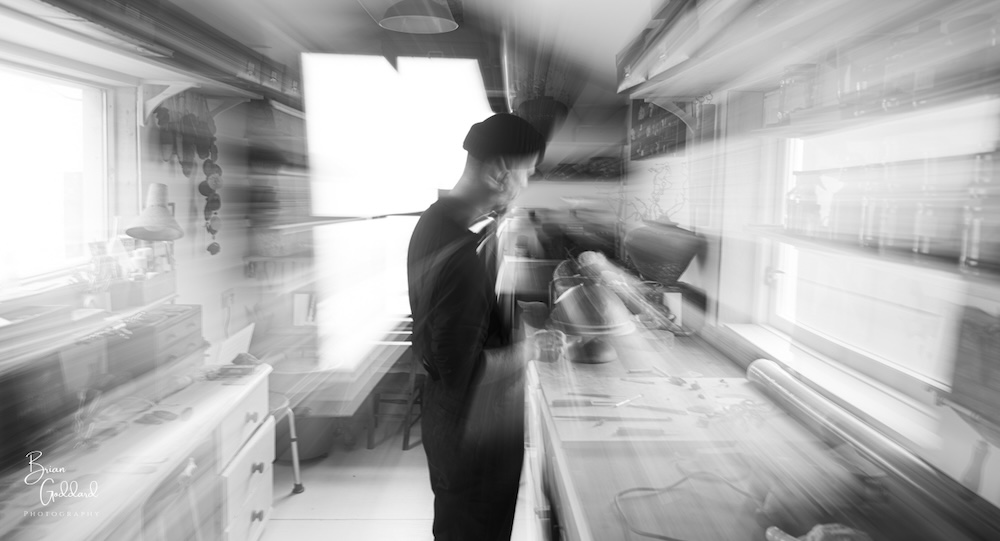
This is no ordinary documentary but rather a still image film, 40 minutes in length; photography accompanied by audio recordings, more commonly found in art films or experimental short films.
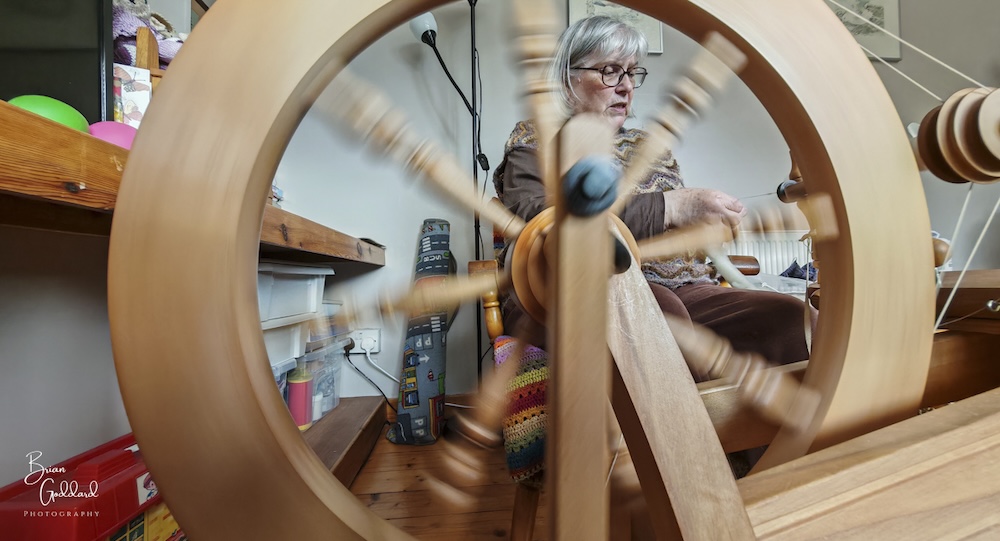
As a form of storytelling it’s powerful, and Brian has used some dramatic photography to capture the essence of how intimately people’s passions are intwined with the natural forces and seasons of Shetland.
He explains how he “wanted to explore the slower nature of the still image in this era of heavily cut, fast paced moving imagery. Stills-with-sound invite the viewer’s imagination…more than film – so that we are not spoon fed a narrative.”
Brian and his wife Margaret moved to Burra four years ago having previously lived in Uganda where Margaret worked as a hospital doctor. Brian feels there are similarities between Uganda and Shetland in that the cultures are very relationship centred.
Help keep Shetland’s news open to everyone

Good local journalism takes time, care and people on the ground. Membership helps us keep reporting the stories that matter to Shetland — and keep them free for everyone to read. Members get a weekly newsletter created especially for them, local ads only, and can bookmark stories and join the conversation in the comments.
“People in Uganda ask where you are from, how is your health, who is your family, just like folk do in Shetland, rather than the usual Western question of ‘what do you do for a living?’’
Brian was inspired to record the stories of the folk that call Burra and Trondra their home. A mixture of five born and bred Shetlanders and five incomers.
Although how long does an incomer have to live in Shetland before they become a ‘Shetlander’? A debatable subject for another article perhaps!
As Brian comments, some incomers have moved here recently like himself, and others have lived here for almost 40 years.
He talked to almost 30 people about his idea to record their stories and whittled the numbers down to 10, basing it upon the premise that he “wanted people who don’t necessarily have a voice and are not commonly heard.
“There are some big voices in the community but with the quieter people there’s more of a human connection, more intimate sharing.”
Funded by Shetland Arts Commissioning Fund in early 2026, Brian has spent the year recording the ten portraits.
An eclectic mix ranging from Filip, who hails from the Czech Republic and who was drawn to Shetland by the ‘otherworldly landscape’, unravelling the many natural clay veins in the soil and making inspiring pottery, to local legend Tommy Isbister, who at 90 years young is still following his passion of boat building and fiddle making.
Other local characters who love being out in the landscape are Kate, whose iPhone photography makes her stop and look intimately at the glowing pink tang on the beach or the unexpected shapes and colours within the land and sky, and Sandra who scours the beaches for Grottie Buckies to collect, which she says, “puts her in a happy place!”
What is so special about One in a Thousand is that the film shares precious glimpses into the intangible cultural heritage of Shetland, simple daily acts of living that are closely tied to how folk relate to their home and land.
Fishing was central to life in Burra and Trondra and it’s easy to forget that they are islands and before the bridges were built in 1971 connecting them to the mainland, they were self-sustaining communities and folk did not often travel to ‘da toon’ because roads were poor and they had mostly everything they needed on the island.
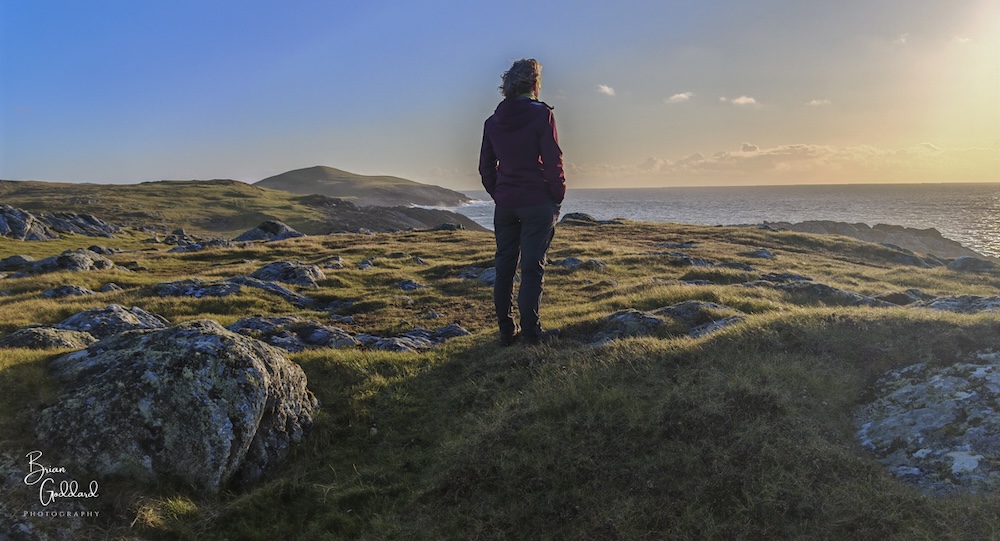
Jimmy who has had a peerie fishing boat and worked with creels since he was a young man shares how Hamnavoe “used to be full of fishing boats but there’s only three or four now since the brig was built.”
Fishing is in his blood and even as an older man, being out in a boat is his passion but it is also his heritage.
The self-sufficient mindset continues through Joyce, whose love of spinning and knitting reflects her joy at being mair basic and seeing the magical process of fleece from sheep transformed into garments to be treasured and passed on.
Even though she feels there are and have always been ‘threats’ from the madness of the outside world, the traditional threads of knitting, spinning and fishing hold folk steady to their identity and their home.
These passions of ordinary folk are what sustains a community, small threads that bind us together on this archipelago, reminding us of our place, who we are and how precious the land and sea are to our existence.
One in a Thousand is an ode to the richness of the Burra and Trondra communities, but it also pays homage to the diversity that shapes us as individuals.
When we share our commonalities, we realise we are more similar in our expression of our passions than we are different, and maybe that’s what makes us all Shetlanders.
One in a Thousand is showing at Mareel on Saturday 28 and Sunday 29 November.
Saturday’s showing will have an introduction by Brian before the film followed by a Q & A after the film.
Both events are sold out, but further community screenings are planned in Burra and Trondra in January and February 2027, and probably also in other community halls at a later date.
Keep Shetland’s news open to everyone
Your membership helps us report the stories that matter to Shetland — and keep them free for everyone to read.