

‘Weight lifted off’ Peterson as Shetland Arts found to have breached employment and equality law
Shetland Arts had denied the claims made against it in an employment tribunal and said it is ‘considering the next steps’

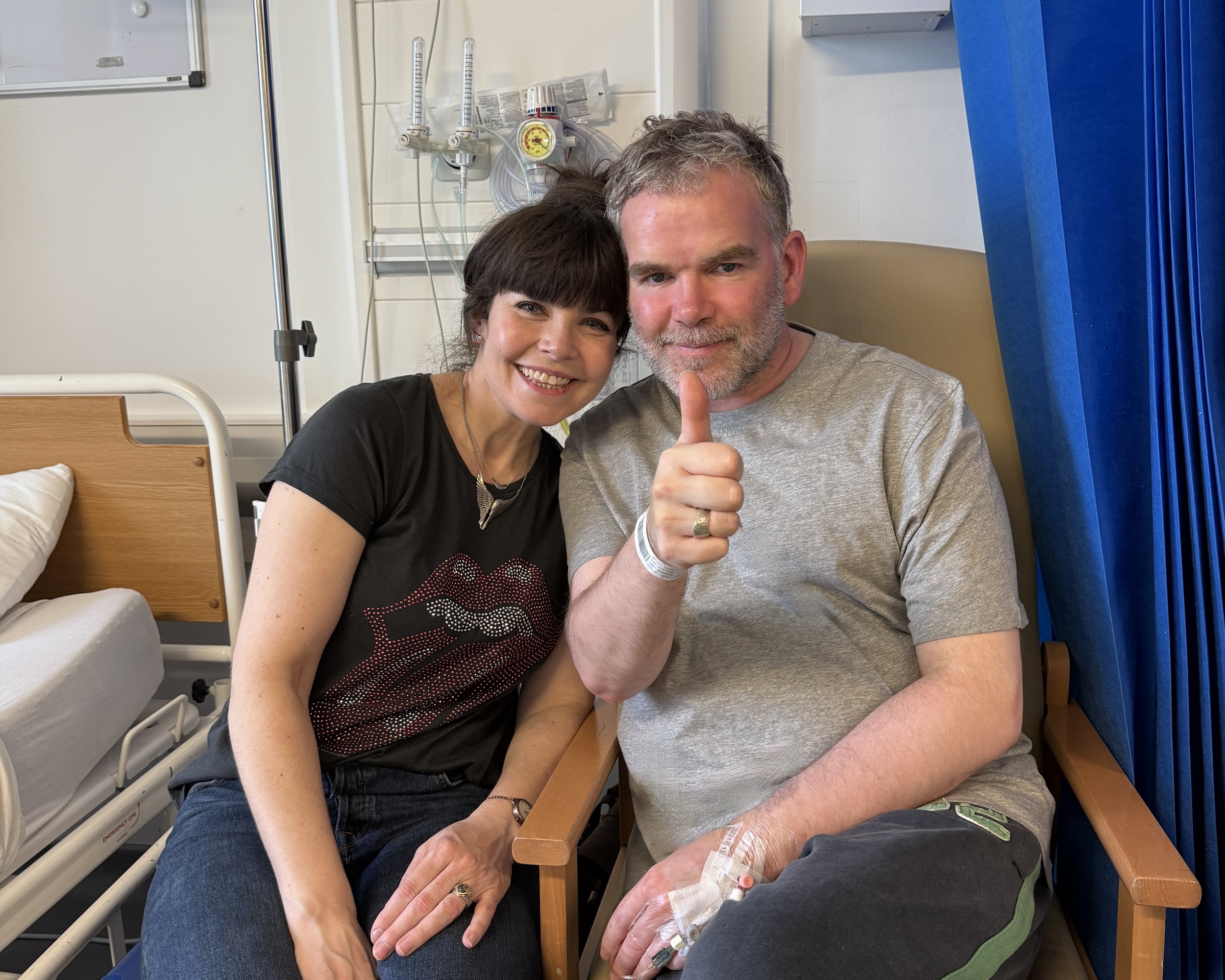
SHETLAND Arts discriminated against its longest-serving member of staff by refusing to pause his redundancy process days after he learned he had a brain tumour, an employment tribunal has ruled.
The tribunal unanimously found that “no reasonable employer would have acted” as Shetland Arts did when it turned down Bryan Peterson’s request to delay his leaving date so he could explore applying for ill health retirement instead of taking voluntary redundancy.
Fifty year old Peterson, who was diagnosed with a grade four glioblastoma, was found to have been unfairly dismissed last year, and Shetland Arts was found to have breached the Equality Act through discrimination arising from disability.
During the tribunal process Shetland Arts – a charity funded by Shetland Charitable Trust and Creative Scotland – had denied claims that it breached the equality and employment rights acts.
Separate claims of direct discrimination, indirect discrimination and failure to make reasonable adjustments were dismissed.

























A spokesperson for the arts charity said it “fully acknowledges” the employment tribunal’s judgment.
“We are reviewing it with our advisers and considering the next steps,” they said.
“We cannot comment further at this stage.”
Members of the tribunal reached a unanimous decision that Shetland Arts breached equality law by not agreeing to extend Peterson’s employment for the rest of his notice period to allow for consideration of ill health retirement after the tumour diagnosis.
Instead, he had to go through the voluntary redundancy process which he had previously agreed to prior to learning about the possibility of ill health retirement.
Reacting to the judgment, which was delivered earlier this month after a hearing in Aberdeen in October, Peterson said in a statement to Shetland News that his sole focus was on “doing things properly, legally and ethically”.
Peterson’s wife Karlin Anderson represented him at the hearing, which came just weeks after his second brain surgery.
Help keep Shetland’s news open to everyone

Good local journalism takes time, care and people on the ground. Membership helps us keep reporting the stories that matter to Shetland — and keep them free for everyone to read. Members get a weekly newsletter created especially for them, local ads only, and can bookmark stories and join the conversation in the comments.
“I make jewellery. I’m not a lawyer,” she said in response to the judgment. “But I was fighting for my husband, who is fighting for his life.”
Peterson had worked for Shetland Arts for 17 years when he collapsed with a seizure at work on 21 March 2025. He was unresponsive for around ten minutes, was taken to hospital and was signed off.
The long-term consequences then were unknown, but he had challenges with speaking and reading.
Three weeks later, at a meeting in Peterson’s home while he was signed off work, Shetland Arts chief executive Graeme Howell raised a planned organisational restructure with the employee and said he “might need him to engage with that while he remained away from work”.
The tribunal called that a “surprising position to have taken at that stage” given Howell’s knowledge about Peterson’s condition, although the employee had agreed to participate in the consultation.
At the same meeting, Howell told Peterson he would stay on full pay until the end of ‘may be fit to work’ note from a GP – which, the tribunal said, he appeared to present as a “form of concession by him”.
The judgment said Peterson’s contract, which Howell had signed, entitled him to six months on full pay and six months on half pay. Howell told the tribunal he had forgotten about the term.
The tribunal found that Howell’s evidence on this point was not reliable, and described the way he answered as “disingenuous”.
A week later, Howell confirmed Peterson’s post of learning and outreach lead was at risk of redundancy.
He was given three options: apply for a lower-paid role open only to staff at risk, potentially compete with other candidates for a new and more senior role, or take voluntary redundancy.
In early May Peterson accepted voluntary redundancy, with his employment scheduled to end on 31 May.
Peterson kept Howell updated on his condition throughout, and the tribunal said Howell was “clearly aware” of his cognitive challenges.
The tribunal found Shetland Arts, however, could not reasonably have known Peterson was disabled – which the judgment said happened from the date of his seizure – until late May.
But it said the seizure, and the early suspicion it may have been a stroke, “ought to have raised the issue” in Howell’s mind of whether Peterson was disabled, and that seeking medical advice was “what we would expect from any reasonable employer”.
An occupational health appointment had been arranged to assess Peterson’s fitness for work, but Shetland Arts cancelled it on 19 May without telling him after the voluntary redundancy had been agreed.
The tribunal said the only explanation for not telling Peterson was that Howell had forgotten – “a surprising matter to have forgotten about” given the circumstances.
On 23 May Peterson had a second seizure, and days later an MRI scan revealed a growing brain tumour.
Five days later he told Shetland Arts and asked for his termination to be paused so ill-health retirement under the Local Government Pension Scheme could be explored.
After seeking advice, Howell replied that the payroll had been processed and could not be cancelled and refused the request the following day.
The tribunal said the refusal came “very quickly indeed”, without investigating any alternative or considering what agreeing would have cost, and that Howell “did not give to any real extent reasons for the decision”.
The judgment did say that in evidence Howell explained that he “took the decision in the best interests” of Peterson.
But it found the payroll arrangements could have been “very easily unwound” – as one of Shetland Arts’ own witnesses had confirmed.

The judgment said that Peterson “did not seek to alter the restructure process, or indicate a desire to be considered for another position” at that point.
He appealed the refusal on 30 May, and Shetland Arts trustee Susan Mail – who has since left the role – rejected the appeal on 12 June having “considered all of the information available” to her, writing that she was “unable to reverse the redundancy decision at this stage”.
The tribunal said Mail’s position was contradicted by evidence from another Shetland Arts witness and “by common sense”. It called her explanation for the decision to refuse in a letter to Peterson “somewhat nonsensical”.
It added that Mail noted how Peterson had not been informed of ill-health retirement, but he had “argued that there had been an obligation to do so”.
The judgment continued by saying that Mail said in evidence that she had taken the decision on the basis of the best interests of Peterson.
But it added: “It appears to us that she closed her mind to the issue of the claimant being a disabled person, and the duties that may require to be considered that arise from that.”
Peterson, who had now left Shetland Arts, underwent awake brain surgery on 16 June.
He was ultimately granted ill-health retirement in September 2025, but Shetland Arts had told him that because he was no longer employed, any pension “would not include the enhancement that might apply if ill health retirement had occurred during active service”.
The tribunal said the experience of its two lay members was “very clear” in that “all reasonable employers would have deferred the prospective date of termination at the very least, if not paused the whole process of termination, in order to allow proper consideration of ill health retirement”.
Shetland Arts had denied every claim against it, arguing that Peterson had not been dismissed because he had accepted enhanced voluntary redundancy terms.
However the tribunal judgment noted that “voluntary redundancy is a dismissal”.
Shetland Arts argued that if there had been a dismissal, it was fair – while it also contended that there had been no breaches of the 2010 Equality Act.
The tribunal accepted there had been “genuine and meaningful consultation” with Peterson in April and May, and said it was “cognisant of the difficult position” the charity was in, including having no in-house HR [human resources] support.
It said all the witnesses who gave evidence were “clearly seeking to do so honestly”, with “little dispute” over the primary facts of the case.
Instead, the case focused on the “decisions made by the respondent [Shetland Arts] and the reasons for their doing so, including what they knew at the time”.
The tribunal – an employment judge and two lay members – said they appreciated there had been an agreement for voluntary redundancy, but added that the position “materially changed” after the second MRI scan and subsequent diagnosis of a tumour.
Peterson said in response to the judgment that he had only ever asked for an “open and honest conversation, so that the right thing could be done”.
“I still believe it could all have been put right on day one,” he said.
Much of his preparation was done at CLAN House in Aberdeen, during radiotherapy and chemotherapy.
“Between treatments, I was researching international brain tumour treatment and Scottish employment law,” he said.
Peterson – who is also an elected councillor and holds the position of convener of Shetland Islands Council – said he had waived his right to privacy to “put it all on the public record in the hope that it can be useful for people in the future”.
Anderson said the case had taken a year and a half to reach the stage of a hearing.
“When Bryan was diagnosed with a grade four glioblastoma, we were told most patients will live between 12 and 16 months,” she said. “We waited longer than that for justice.
“The hearing came just weeks after Bryan’s second brain surgery, and with the weight of the tribunal on top of that, he couldn’t represent himself at that point. So, with two weeks to go, I stepped in.”
“For two days in front of the tribunal, it was Karlin versus Shetland Arts’ solicitor, its chief executive and its former chair,” Peterson added.
“She is my hero, and I am so proud of her. I am also very glad she is on my side – I would not want to cross her.”
The tribunal thanked the representatives from both parties, and said Anderson’s role as a lay representative was “not an easy one in any case but particularly so in the present circumstances”.
Anderson said Peterson still believed in Shetland Arts and counted many of its staff as friends, adding: “This was never a complaint against Shetland Arts’ work or its staff. But he doesn’t recognise the organisation he joined in the way he was treated.”
Peterson thanked the community for its support, adding “only a very close circle knew what we were facing”.
“Yet so many of you helped without knowing it. There were times we almost gave up. Your love kept us going. Earlier this year we said we felt carried by Shetland and the wider world. Now, more than ever.”
“When the hearing finished, I watched a weight lift off Bryan,” Anderson said. “He’s more himself than he’s been in a long time.
“We shouldn’t have had to fight this battle as well as the cancer battle. But a judge and two panel members heard everything, and all three agreed that what happened to Bryan was wrong. That’s vindication. And Bryan is still here to hear it.”
The ruling, made following deliberation on 2 November, decides liability only. Compensation, including for pension loss, will be decided at a further hearing next year.
Shetland Arts’ funder Shetland Charitable Trust said the matter was an “internal issue for a funded body” and therefore not a matter for the trust to comment on.
Keep Shetland’s news open to everyone
Your membership helps us report the stories that matter to Shetland — and keep them free for everyone to read.


