


Warning of transport ‘chaos’ as energy charter approved by councillors


CONCERNS have been raised by a local councillor over the impact a visiting workforce could have on transport during the construction of future energy developments in Shetland.
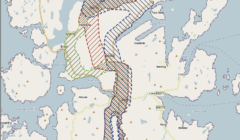
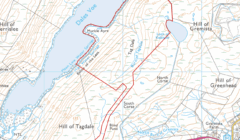
North Isles member Robert Thomson said there could be “chaos” on the ferries to Yell, where there are two wind farms planned in addition to a substation and overhead lines.
He also said there could be “huge problems” on transport links from Aberdeen as well, amid a suggestion that SSEN’s future Shetland projects could require a peak workforce of around 1,500.
Thomson said there could be up to 500 people working in Yell, but there are hopes to accommodate workers on the island.
Yell has been targeted as one location for possible SSEN ‘legacy housing’, which is when homes are given back to community use once workers have left.



























The topic of transport was raised by Thomson during discussion on Shetland Islands Council new energy charter, which sets out “key expectations” from investors when it comes to undertaking developments in Shetland, including the energy transition.
No developers have signed up to the charter yet, but discussions are planned after it was approved on Wednesday.
Environment and transport committee chair Moraig Lyall said that from her own talks with company representatives, SSEN may view it as something they could sign up to.
At the meeting on Wednesday councillors also approved the establishment of a Shetland energy programme sounding board, which is set to take over from work on a draft Shetland energy strategy.
Lyall however pushed for people with an environmental perspective to be added to the board.
Economic development manager Tommy Coutts said the new charter brought together years of previous work, particularly on the energy transition.
Help keep Shetland’s news open to everyone

Good local journalism takes time, care and people on the ground. Membership helps us keep reporting the stories that matter to Shetland — and keep them free for everyone to read. Members get a weekly newsletter created especially for them, local ads only, and can bookmark stories and join the conversation in the comments.
He said it does not create new policy or confer any new powers on the SIC, but sets out a number of priorities developers are expected to uphold.
Coutts said the priorities reflected core themes such as fairness, affordability, environmental protection and community benefit.
For community benefit the recommendation is for five per cent of gross project revenue for onshore wind, with a guaranteed minimum payment of £7,300 per megawatt a year.
This is greater than the current national guideline of voluntary payments of £5,000 per megawatt. For the 443MW Viking wind farm in Shetland’s Central Mainland, this results in around £2.2 million in community benefit a year.
There are also recommendations for 2.5 per cent of gross project revenue for floating offshore wind and other developments like hydrogen and carbon capture/storage.
The recommended guaranteed minimum payment in the charter for floating offshore wind is £5,000 per megawatt.
These figures mirror community benefit principles endorsed by councillors last year.
Other aims of the charter include ensuring the local community is heard and local needs are considered, and that there is joined up thinking when it comes to developments.
The charter will be led by EmPowering Shetland which includes the SIC, Highlands and Islands Enterprise (HIE), UHI Shetland, Lerwick Port Authority, the Shetland Net Zero Energy Forum and the Norn Engineering Alliance.
Thomson, however, questioned why transport is not mentioned in the charter document.
He referenced Statkraft’s two wind farms planned for Yell, and SSEN’s proposed substation and transmission work, and that impact this could have on ferries.
Regarding workers’ transport to and from Shetland, he asked if encouraging the use of charter fights could be raised to minimise disruption on public transport.
Future energy and climate change manager Claire Ferguson said it was a good suggestion, and said the hope from the charter was to tackle “unintended negative consequences” from development.
She also said the hope was for developers to engage at the earliest possible stage.
During debate, depute leader Gary Robinson welcomed the report and said the former SIC energy strategy – which never got beyond a draft – possibly reinforced a belief in the community that the SIC had more powers than it does.
He said the strategy left the SIC “hostage to fortune” and said the charter approach was a “much better one”.
Robbie McGregor meanwhile said he hoped “community equity is taken into consideration, as opposed to the sums that we get in community benefit”.
“Also, the energy costs for Shetland should also be a matter for consideration,” the SNP councillor added.
Meanwhile Lyall said it would be “remiss of us” not have environmental representation on the EmPowering Shetland group.
Development committee chairman Dennis Leask also said it was important to get the charter out and active and warned that the “industry is starting to pass us by”.
Keep Shetland’s news open to everyone
Your membership helps us report the stories that matter to Shetland — and keep them free for everyone to read.