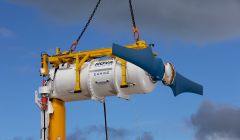

Transport, heating and rocket fuel the focus of new tidal energy hydrogen study


MORE details have been released about a new study which will explore the potential of producing hydrogen and oxygen from tidal energy turbines in Shetland.
As previously reported, Nova Innovation has secured just over £130,000 for the project through the Scottish Government’s Hydrogen Innovation Scheme.
It operates a 600kW tidal energy array in Bluemull Sound and has plans for a 15MW array in Yell Sound.
Sullom Voe Terminal operator EnQuest has also received funding for a study into producing hydrogen from treated water.
The tidal study will see Nova Innovation lead a consortium to look at the potential of producing green hydrogen and oxygen from its turbines in Shetland.
Hydrogen and oxygen are by-products of the electrolysis process. Industrial levels of hydrogen production in Shetland has been mooted in the future using wind power.
The Nova study will explore the use of hydrogen and oxygen for transport, domestic heating and industry in Shetland – including potentially rocket fuel for use by the SaxaVord Spaceport in Unst.


























The contract will see Nova and partners (the University of Strathclyde, Shetland Islands Council and Ricardo Energy) investigate potential markets for both the hydrogen and oxygen produced from electrolysis.
Oxygen is already used in aquaculture in Shetland and has the potential to be used for a 100 per cent renewable rocket fuel.
Nova said that unlike conventional hydrogen production methods that rely on fossil fuels, “green hydrogen generated from renewable power is a clean and sustainable alternative that has the potential to revolutionise the energy industry and forms a key part of the Scottish Government’s energy strategy”.
It also has two wind farms in the offing – the already consented Beaw Field and the proposed Energy Isles development, with both led by Norwegian company Statkraft. Yell already hosts the five-turbine Garth wind farm which is run by a local community group.
Help keep Shetland’s news open to everyone

Good local journalism takes time, care and people on the ground. Membership helps us keep reporting the stories that matter to Shetland — and keep them free for everyone to read. Members get a weekly newsletter created especially for them, local ads only, and can bookmark stories and join the conversation in the comments.
The project will be advised by an industrial steering group of local Shetland companies featuring SaxaVord Spaceport, Cooke Aquaculture and Voar Energy.
Nova Innovation CEO Simon Forrest said: “We are delighted to have won the GHOST [Green Hydrogen and Oxygen Supply from Tidal Energy] Project, which will enable us to explore the potential for producing green hydrogen and oxygen utilising tidal power.
“We believe that green hydrogen will transform the energy industry, deliver huge benefits for the people of Shetland with heat and transport, as well as creating the possibility of green space mission.
“With the opportunity to bypass electricity grid constraints, hydrogen is a promising route to market for tidal energy and other renewables.
“The study will provide us with valuable insights into the role of green hydrogen and oxygen across Shetland.”
SaxaVord Spaceport CEO Frank Strang added: “We are delighted to be involved in this innovative project, which aligns perfectly with our aspiration to create Europe’s leading sustainable spaceport and look forward to supporting Nova and the team.”
Keep Shetland’s news open to everyone
Your membership helps us report the stories that matter to Shetland — and keep them free for everyone to read.