Hands of time turning again on Scalloway clocktower

IT HAS been a long time coming – around eight years, in fact.
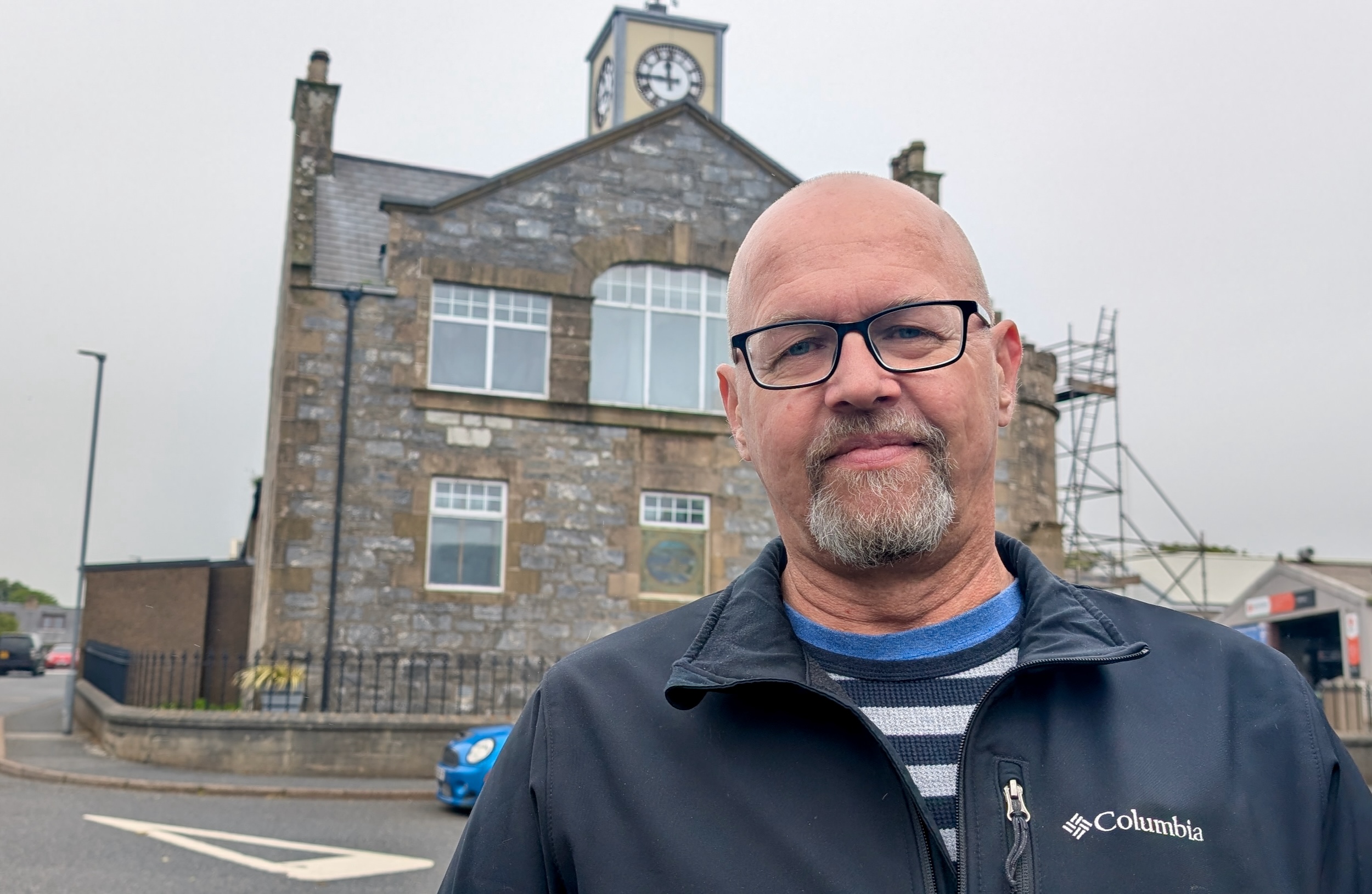
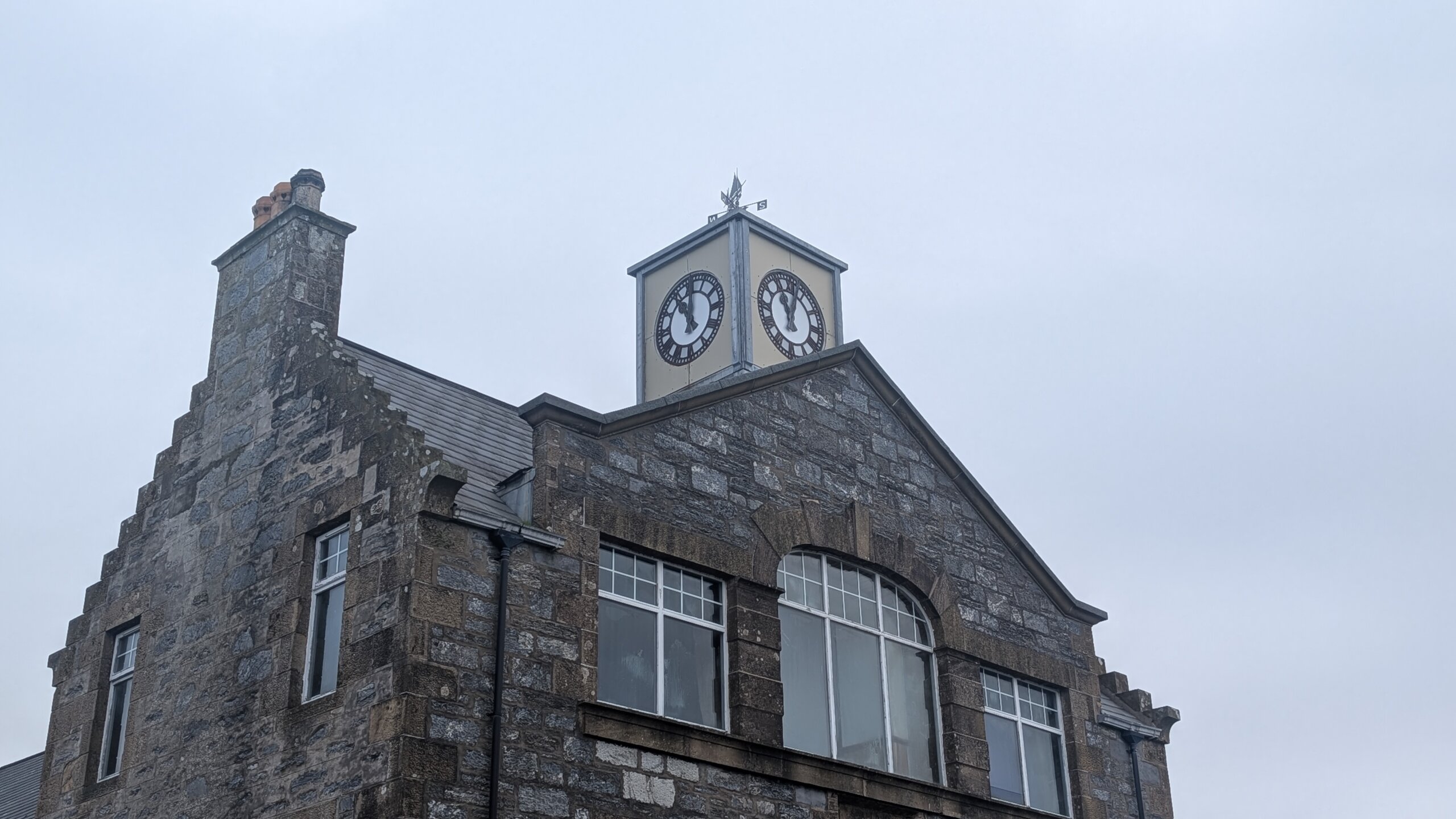
But the clock which stands tall atop the Scalloway Hall is back in full flow after being stuck in time for nearly a decade.
Hall trustee Mark Burgess said the clocktower, constructed in the 1980s, is a “keystone” in the centre of the village which is important to the community.
He explained that the hands on the clock faces were stopped and disabled in 2018 – and left pointing to 12 – after the electric-powered mechanism kept behaving erratically.
But this was nothing new, with the mechanism regularly having to be reset over the years.
“When it came to the recent investigation of it, you’d believe that the thing was haunted by how erratic its timekeeping was,” he said as he spoke outside the hall on Friday morning.
“We found that different faces ran at different speeds, at different times.”
Burgess said the hall owes a debt of gratitude to retired engineer Joe Gray, who tried to figure out what was wrong with the original clock mechanism.
One job was to understand why the clock hands were intermittently running fast.
At that time Burgess could see the clock from his kitchen window, and he took on the task of gathering evidence.
“I had a clipboard next to the window over a period of weeks, recording when the clock ran fast, and when it didn’t,” he said.
“What we think it came down to were particular wind conditions and particular weather conditions which were allowing the motor to run on an extra minute here or there.”
They then spoke to the original supplier, and the only answer was a new clock mechanism – something which Burgess said is not a mass produced item, and comes at a cost.
Help keep Shetland’s news open to everyone

Good local journalism takes time, care and people on the ground. Membership helps us keep reporting the stories that matter to Shetland — and keep them free for everyone to read. Members get a weekly newsletter created especially for them, local ads only, and can bookmark stories and join the conversation in the comments.
“And then Covid came along, and that added a bit of time to the process,” he added.
What essentially solved the problem was a bequeathment called the Jamieson Trust, which the Scalloway Community Council had responsibility for.
Funds from the trust paid for a new mechanism, but once an electrical engineer got to work on it, it became apparent the equipment was “quite different to the old one”.
The mechanism – which cost around £1,800 – then had to be sent back and modified, and a long period of time passed without the project reaching completion.
John Philip Hughes was then tasked with taking on the job, solved another problem with mounting, and eventually got it fitted.
The clock hands are back moving again, and just in time for the Scalloway Foy which is taking place this weekend.
The hall originally had no clock on it, and an earlier attempt at a stone-built one failed as it was damaging the structure of the roof joists.
That was removed and replaced in around 1986 with the current clocktower when an extension was built on the hall.
“It’s been a long process, but it’s been worthwhile,” Burgess said with a smile.
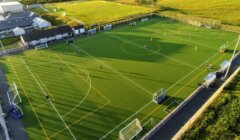
One cultural aspect to the clocktower, he said, was that parents used to send bairns to play at the nearby Fraser Park and tell them to watch the clock for when it was time to come home – “and that’s been missing for eight years”.
“We continue to improve the hall over time,” Burgess added. “It’s come a long way in the past 15 years in terms of the refurbishments that have been done, which are subtle, but they’re there.”
Keep Shetland’s news open to everyone
Your membership helps us report the stories that matter to Shetland — and keep them free for everyone to read.