
SSEN may need construction workforce of 1,500 in Shetland, meeting hears

SSEN could require a workforce of around 1,500 people for its future construction projects in Shetland, a meeting has heard.
Shetland Islands Council’s development director Neil Grant said the workforce could be in the isles over a three to five year period, starting from 2028.
Accommodation solutions could include barges and work camps, as well as up to 150 ‘legacy housing’ units.
The legacy housing, which could be passed on for community use after they are no longer needed by SSEN, could span mainland Shetland and Yell.
Grant said units would have to be within 40 minutes of the particular project, which means Lerwick could be in scope.
SSEN is proposing a range of projects in Shetland over the coming years, from substations, overhead lines and underground cabling – both in mainland Shetland and in Yell.
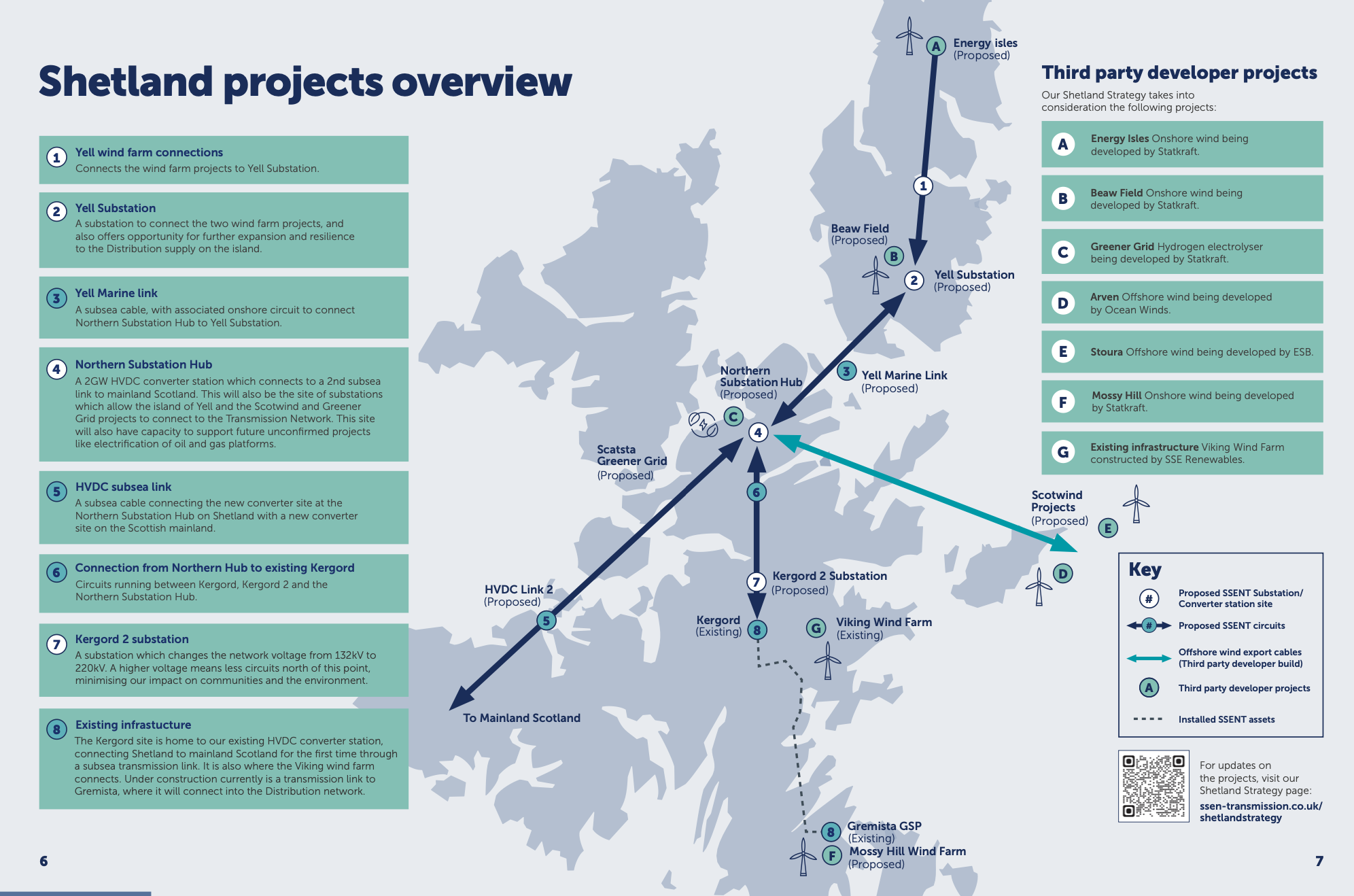


























In addition there is the project to install a second subsea HVDC cable between Shetland and the Scottish mainland.
This comes on top of three wind farms planned by Statkraft, just outside of Lerwick and in Yell – while the company is also planning two ammonia plants.
It echoes pressures on local accommodation which has been felt in Shetland in the past, including during the recent construction of the Viking wind farm and the Shetland Gas Plant, in the 2010s.
During the construction of the gas plant a number of construction accommodation barges were brought to Shetland to provide extra capacity, but there was still a squeeze on the local rental sector.
Grant told a meeting of the SIC’s development committee on Wednesday that the council is making “significant progress” with SSEN.
He said there was an important opportunity to get legacy housing for Shetland, “in the right places”.
Help keep Shetland’s news open to everyone

Good local journalism takes time, care and people on the ground. Membership helps us keep reporting the stories that matter to Shetland — and keep them free for everyone to read. Members get a weekly newsletter created especially for them, local ads only, and can bookmark stories and join the conversation in the comments.
The legacy housing scheme, which is replicated in other areas of Scotland, has been viewed as a way of helping to tackle an ongoing lack of housing in Shetland.
Grant told councillors that this could also include new builds and serviced sites. In the coming weeks the SIC will contact local developers, he said.
But he warned that “starting with a blank canvas” is unlikely to be achievable given the timeframe.
Shetland West member Liz Peterson questioned the 40-minute range figure provided by Grant, adding that she had been told at a drop-in SSEN event that there was no time limit and that the energy firm could see the benefits of building groups of housing in smaller communities.
Grant said he would seek to get this clarified, but stressed that the 40-minute connection time is what the SIC has been provided by SSEN.
But the development director said it would suit Shetland for it to be “wider than 40 minutes”.
Shetland Central councillor Davie Sandison it was incumbent on the SIC to “tell SSEN where we would like housing to be developed for legacy purposes”.
With discussion also pointing to sites owned by SIC, Peterson added that she was aware of local authority land in her Shetland West ward allocated for housing.
Development committee chairman Dennis Leask said he has found discussions on legacy housing “frustrating” over recent years, adding that the SIC had to push for more details.
SSEN said in community consultation materials said the company is “seeking to leave a positive legacy whilst housing our workers”.
“Our approach is multi-faceted, and includes looking at options to support permanent housing, the redevelopment of existing properties that require refurbishment, assessing use of underutilised, off season, hotel and rental accommodation, potential use of empty homes, potential use of existing short term lets who would wish to revert to long term rented accommodation, and temporary accommodation village options,” it said.
“We have worked with the council from the very start of our engagement, on a long list of accommodation options to ensure that this helps meet the aspirations of Shetland, and this work continues.”
One of SSEN’s largest proposed energy developments is a northern substation hub, likely to be in the Toft area.
There are also underground cabling and overhead lines proposed to run from that site down to a new substation which could be located south of Voe.
In addition, SSEN is currently investigating landfall sites for a second subsea HVDC cable running between Shetland and the Scottish mainland.
The Shetland landfall sites being considered are in the North Mainland, including near Mavis Grind and Eshaness, and underground cabling would be required to connect it to the northern substation hub.
In Yell, a new substation is required to allow connect to Statkraft’s planned Beaw Field and Energy Isles wind farms.
A mix of overhead lines and underground cabling is also proposed in Yell, as well as a subsea cable between the island and the Scottish mainland.
In addition to the various onshore projects, two offshore wind farms are being proposed to the east of Shetland.
It has been proposed for these to connect into mainland Shetland and then onto the northern substation hub, with power then heading south via the new HVDC cable.
Keep Shetland’s news open to everyone
Your membership helps us report the stories that matter to Shetland — and keep them free for everyone to read.