



Electric buses ‘technically feasible’ but range of barriers remain

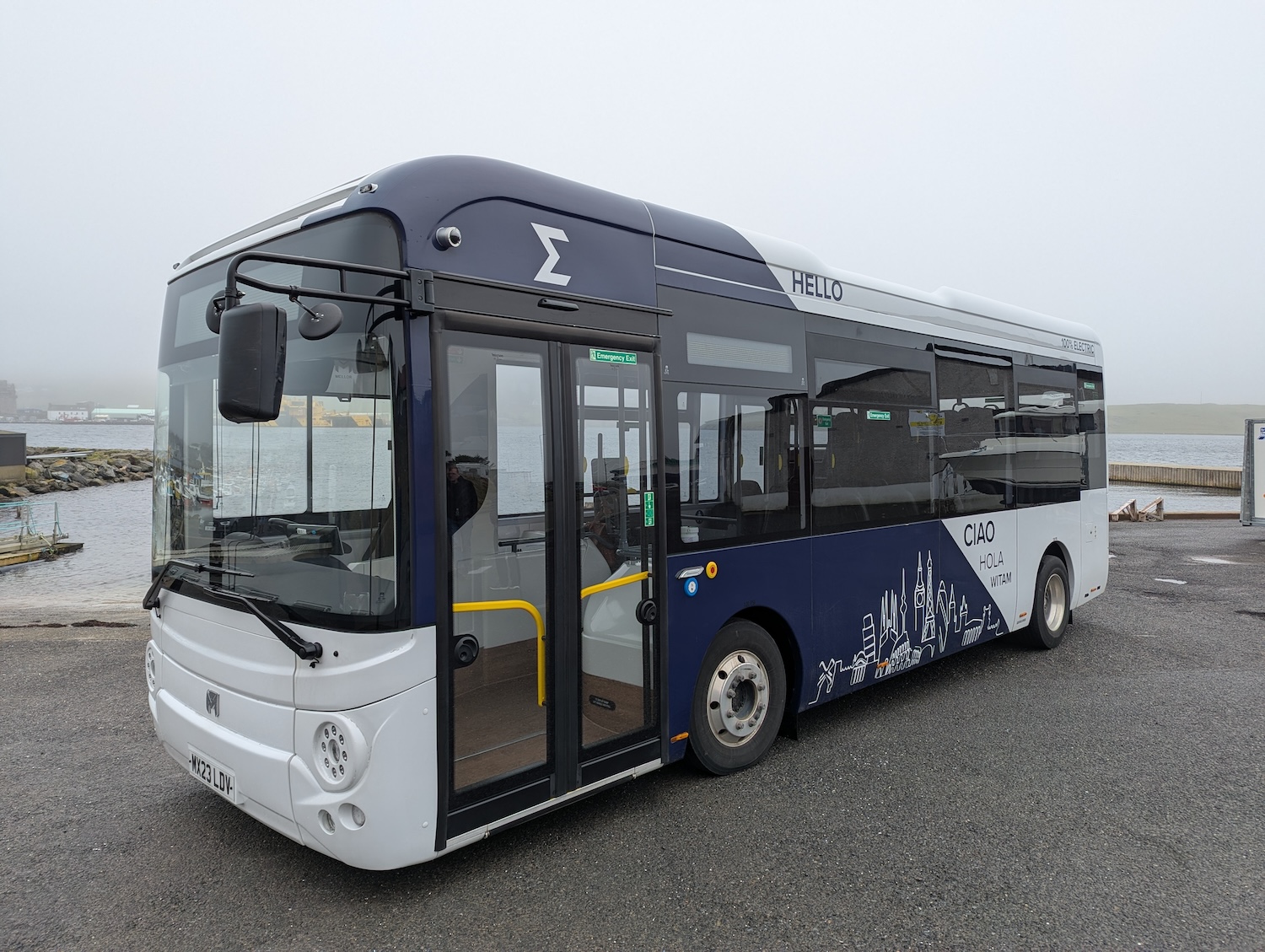
A TRIAL has showed that electric buses would be viable in Shetland – but several challenges remain.
Some of these obstacles include the high cost of the vehicles and constrained electricity grid charging.
The 27-seater Sigma 8 bus was used by Shetland Islands Council on routes across mainland Shetland from February to June this year.
The £120,000 trial was fully funded by UK Government agency Innovate UK and aimed to see how the technology works on the ground, considering Shetland’s climate, roads and topography.
Local bus operators were also given the opportunity to try the bus first-hand and give feedback.
While not in public use, it was driven on service routes, including stopping and starting at bus stops, as well as using simulated passenger loads.
Shetland News also got a trip on the bus earlier this year between Lerwick and Scalloway.
Trial assessing how electric bus fares in ‘Shetland context’
























A larger Sigma 10 bus had been planned for the trial, but the SIC said this had been leased to another group who then purchased it.
This “illustrates the difficulty of securing vehicles for trials, particularly in rural and island settings”, consultants Exceliamus said in their independent analysis.
While the report finds electric bus operation is feasible, several barriers remain.
These include: the high up-front cost of the vehicles, constrained electricity grid access for charging, and a lack of space or capacity for charging vehicles in bus depots.
The report said the local grid cannot support large scale EV charging until reinforcement, which could be at least 2029.
The bus was shown to have an average range of about 100 miles on a full charge.
Performance and reliability of the vehicle was found to be comparable to a diesel vehicle, with driver feedback “broadly positive”.
A milder winter and spring meant the bus was not driven in Shetland’s coldest conditions. However, colder weather, with use of heaters and wipers are predicted to decrease its performance.
Help keep Shetland’s news open to everyone

Good local journalism takes time, care and people on the ground. Membership helps us keep reporting the stories that matter to Shetland — and keep them free for everyone to read. Members get a weekly newsletter created especially for them, local ads only, and can bookmark stories and join the conversation in the comments.
The report recommends a further trial in colder weather with a larger vehicle, and considering a trial of a bus with a heat pump fitted to help energy efficiency in colder weather.
A performance report added that towards the end of the trial the vehicle showed some issues with “overheating and derating the motor performance on long climbs at Scord of Weisdale, Windy Grind and Ladies Drive”.
It said: “The vehicle should be able to operate in these conditions without issue and it is suspected that a thorough service of the cooling pack would improve performance.”
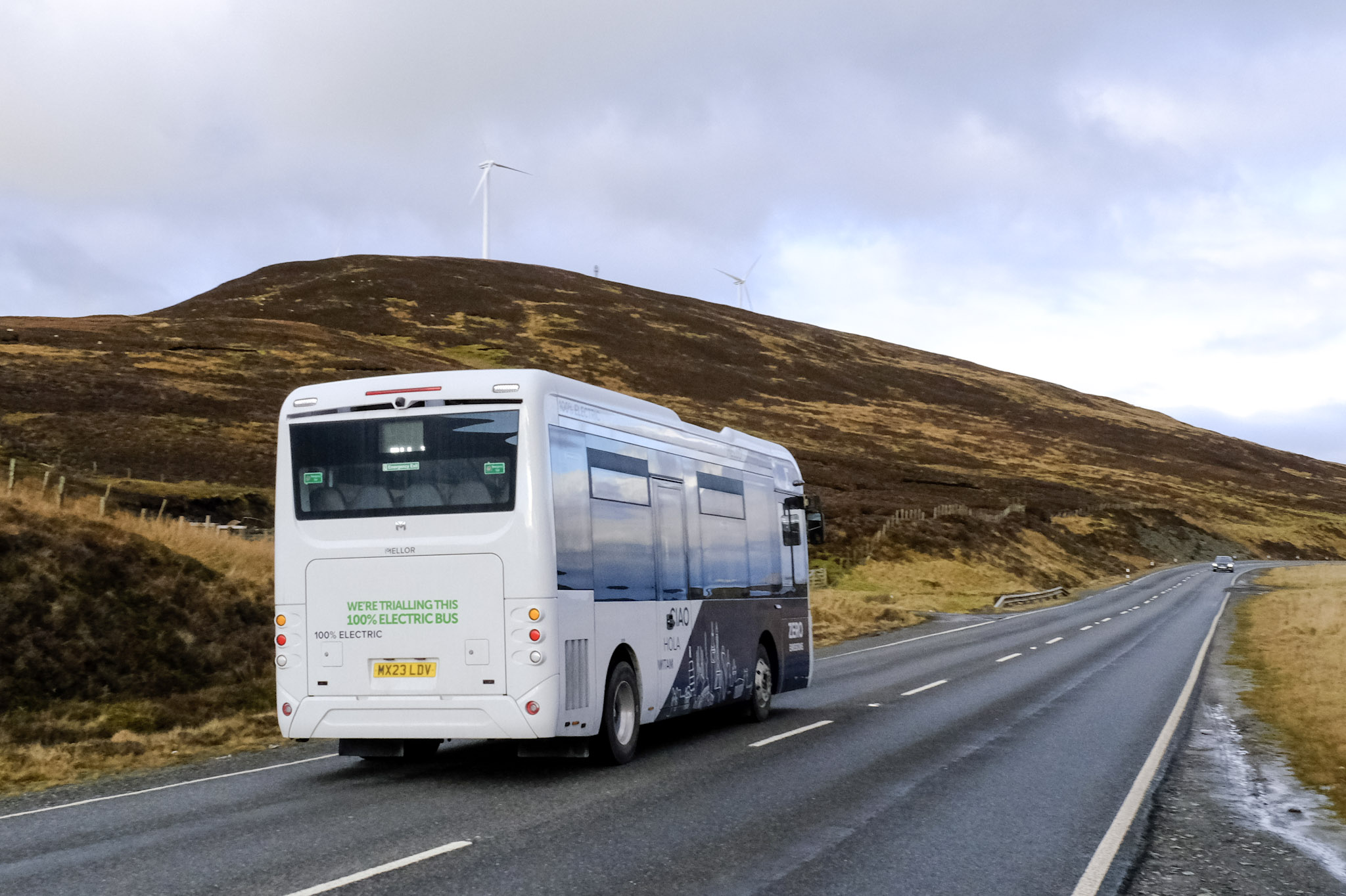
The main report says a full move to electric buses cannot be realistically achieved in the 2026-31 bus contract period.
However, the report said that time should be used to develop a business case for the change as well as to look at the charging network and further learning.
The report also said a “dedicated vehicle trainer” travelled with the bus, providing hands-on instruction in real-world conditions, including start-up and shut-down procedures, charging protocols and the specific operational requirements of the Sigma.
“In practice, the training did not fully cover all operational essentials, which resulted in some procedural issues and impacts on vehicle performance,” it added.
“This experience underlines the inherent challenges of introducing and trialling new technology in an unfamiliar operating environment.”
The report also highlighted how communication was seen as “central” to the trial’s success.
“Concerns had been raised by elected members that running an electric bus in parallel to existing services might appear wasteful, particularly if vehicles were observed carrying no passengers,” it added.
“Public discussion of the electric bus pilot, as seen for example in Facebook comments on the back of proactive press releases, generated a wide range of views.
“While these provide useful insights into how people perceive the trial, they should be treated with caution. Social media commentary is not representative of the wider community, often reflects strongly held personal views, and is influenced by broader debates on energy, cost of living, and renewable developments.”
Environment and transport committee chair Moraig Lyall said: “This project has given us some real evidence about how an electric bus performs in Shetland’s climate and terrain. It shows both the promise of new technology and the practical steps still needed to make it work at scale.
“ZetTrans will use the learning from this trial to inform a new Public and School Transport Decarbonisation Plan, which forms part of the forthcoming Regional Transport Strategy Delivery Plan (2026–28).
“The aim is to make progress toward cleaner transport in a way that’s affordable, reliable and right for Shetland’s communities.”
The report recommends a two stage approach – the first being a “readiness phase” where a business case is developed for incremental EV pilots on suitable routes, and depot and charging infrastructure planning is advanced.
The suggested second phase, from 2031, would then “investigate and set out the case for a large-scale transition to electric buses once grid reinforcement works are complete, depot infrastructure is operational, and operators are institutionally and financially prepared”.
Keep Shetland’s news open to everyone
Your membership helps us report the stories that matter to Shetland — and keep them free for everyone to read.