


UK Government urged to back ‘transformative’ tunnels by Parliamentary committee
Fixed links could reverse depopulation and improve quality of life for Shetland, Westminster group says

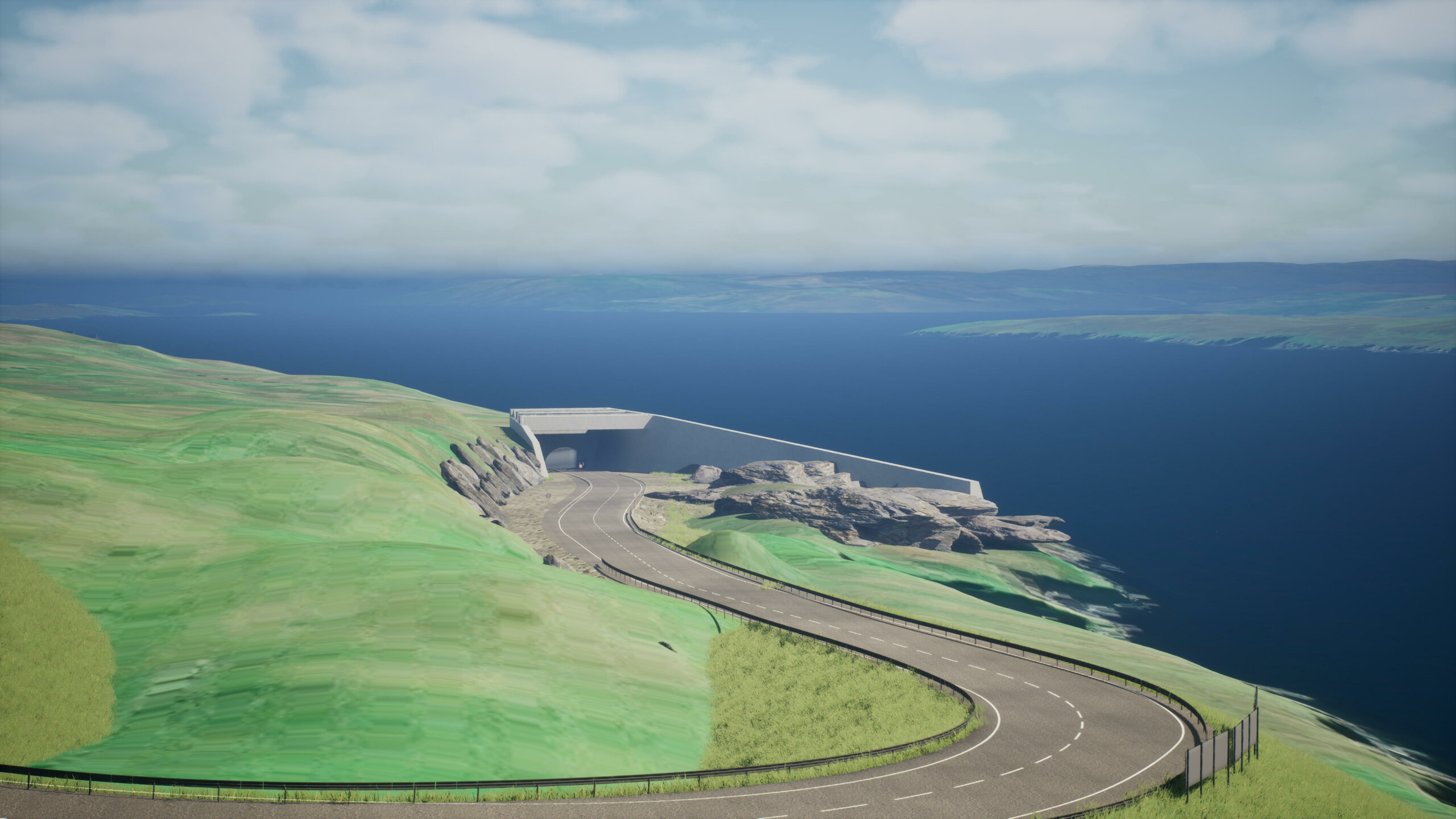
FIXED links could have “transformative potential” for Shetland’s future – with the UK Government urged to back the project by a Westminster committee.
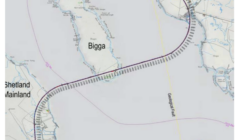
Tunnels connecting Shetland’s mainland to outer isles such as Yell, Unst and Whalsay could reverse depopulation trends, improve quality of life and strengthen the isles’ economic prospects.
That is the view of Westminster’s Scottish Affairs Committee, which has published a 40-page report into the impact fixed links could have on Scotland’s islands today (Friday).
It said that the £1.5 billion plan for tunnels around Shetland warrants “serious consideration” from both the UK and Scottish governments.
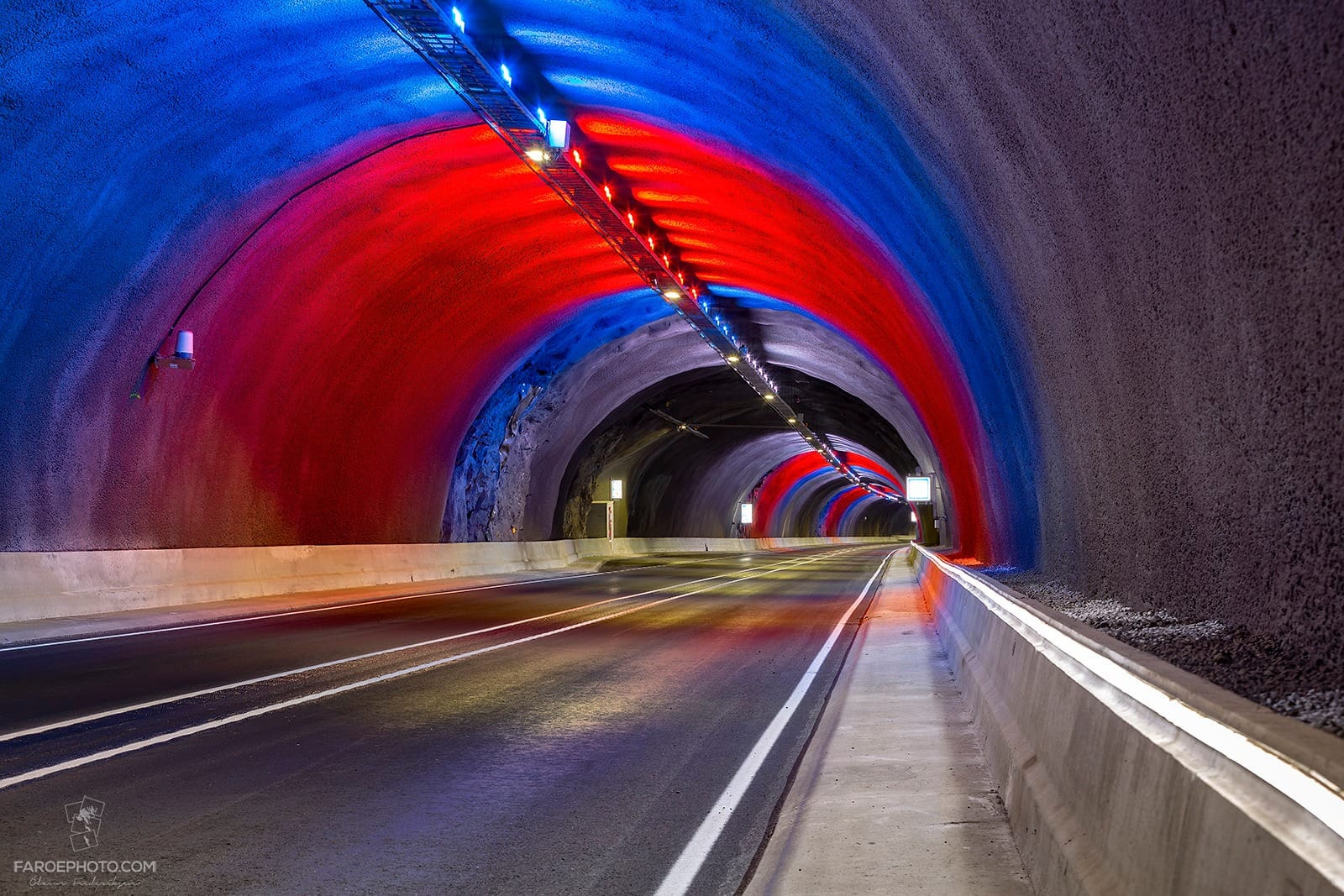
And the UK Government has been told to follow in the footsteps of the Faroe Islands – which has built tunnels “primarily for the public good”.
Shetland Islands Council (SIC) took a major step towards tunnels last month, agreeing to prioritise a fixed link to Yell as part of its transport connectivity route map.

























That alone would cost over £500 million, with a tunnel to Unst – the second priority route – taking the cost beyond £1 billion.
The Scottish Government has committed £23 million over the next three years to help the SIC carry out pre-construction work for the first fixed link, but no long-term capital funding plan is in place.
While transport is handled by the Scottish Government, the Scottish Affairs Committee said the UK Government – which has provided funding for a new Fair Isle ferry – should not treat fixed links as a devolved matter.
“The government should actively engage with island communities, the Scottish Government and local authorities,” it said, adding it should “give serious consideration to how it can support such projects”.
The committee launched an inquiry into fixed links for Scotland’s islands at the end of 2025, receiving 28 written submissions and holding two oral evidence sessions.
Help keep Shetland’s news open to everyone

Good local journalism takes time, care and people on the ground. Membership helps us keep reporting the stories that matter to Shetland — and keep them free for everyone to read. Members get a weekly newsletter created especially for them, local ads only, and can bookmark stories and join the conversation in the comments.
Councillors Gary Robinson and Moraig Lyall were among those to give evidence, along with Yell Tunnel Action Group, Seafood Shetland, ZetTrans and SaxaVord Spaceport.
Lessons from Faroe Islands
Committee members visited the Faroe Islands in March 2026 to see its extensive network of tunnels, and to hear how they were able to fund and construct them.
The committee drew comparisons between Shetland and Faroe, saying that while Shetland was experiencing depopulation, the Faroe Islands’ population had reached 55,000 and was growing annually.
Faroe’s improved connectivity through tunnels and bridges “has been a key factor in enabling this population retention and growth”, it found.
“We heard during our visit to the Faroe Islands that there are differences in population trends between islands that are served by fixed links, and those that are not,” the report found.
“Islands without fixed link connections have continued to experience population decline and ageing populations.
“Communities connected by fixed links have more stable populations, with average ages closer to the national average.”
There was also evidence that the tunnel network had addressed housing issues.
In Faroe’s capital Tórshavn, for example, there was still a housing shortage. However a tunnel had been built to Sandsoy, reducing the journey time to the capital from six hours down to just 30 minutes.
That had encouraged housebuilding and attracted more investment into Sandsoy, the committee found.
One major admission from Faroe during the visit was that there had “never been a strong economic case” for building tunnels there.
“Instead these investments have been undertaken primarily for the public good, rather than because they offer a high economic return on investment,” the committee said.
It also pointed to the example of Trondra in Shetland as another example of the benefits of building fixed links.
It said the population in Trondra was as low as 17 before the bridge was built in 1971, but had since risen to around 135 – a 700 per cent increase.
Shetland’s strong case
Despite depopulation and “rapid” migration of younger families, the committee said that Scotland’s islands “make a substantial contribution to the UK’s economic and cultural life – a contribution which is expanding”.
It said Shetland, Orkney and the Western Isles account for 13 per cent of the UK’s oil and gas production, 50 per cent of Scotland’s aquaculture and a third of Scotland’s seafood.
“Together the islands are central to the UK’s energy transition, with ScotWind developments in these areas alone having the potential to generate enough renewable energy to power every home in Scotland three times over,” it said.

It also recognised their significant contributions to textiles and knitwear, as well as “Shetland’s internationally recognised music scene”.
Without investment to improve capacity and reliability in the isles, there was the risk of future growth being constrained and the pressures being faced by islanders getting worse.
It said islanders had emphasised to use the urgent need to improve ferry services, with Moraig Lyall calling it a “race against time”.
Poor levels of ferry service were “placing intolerable limitations on people and businesses”, with fixed links “only one small part” of a reliable transport network.
The committee also pointed to Shetland’s “increasingly important strategic position” for the United Kingdom when talking about the need for fixed links.
“Russia has increased its military activity in the North Atlantic and High North, while Shetland is home to a remote radar facility intended to strengthen the protection of UK northern airspace,” it said.
“Fixed links could be a key enabler of industries which are strategically important to the whole of the UK, including space launch and clean energy.
“They could also strengthen national security, and help preserve the viability of island life, culture and heritage in the UK – all of which should be strategic priorities for the UK Government.”
How will fixed links be funded?
In written evidence to the inquiry, the UK Government said that its role in fixed link projects in Scotland is “limited”.
However Scottish secretary Douglas Alexander said that he would approach any UK Government support for fixed links “with an open mind”.
The committee said there was “clear evidence” that UK Government investment in fixed links would support policy areas such as growth in nationally significant sectors, the UK’s security in the North and the social and cultural rights of islanders.
SIC depute political leader Gary Robinson was quoted as saying that in-kind support from the UK Government in fixed links would demonstrate confidence in the project.
And the committee said the Labour government could provide “guarantees, loans or risk sharing agreements and support projects through national agencies like the UK National Wealth Fund”.

“It is clear that the scale, complexity and cost of any fixed link projects would benefit from UK Government support. This need not be solely financial.
“The question is therefore not whether the UK Government can support fixed link projects in Scotland, but whether it is willing to do so.
“The UK Government should actively engage with any proposals progressed by those communities and give serious consideration to the support it could offer them.”
The Scottish Affairs Committee’s chairwoman Patricia Ferguson, an MP for the Labour Party in Glasgow West, said it was clear that islands like Shetland would “benefit enormously from government support”.
“Scotland’s island communities deserve better than their unreliable ferry services, which place intolerable limitations on islanders going about their daily life – from accessing healthcare and education, to running businesses,” she said.
“Our report finds that, where viable, fixed links like bridges and tunnels could bring transformative benefits to these communities. “It’s also crucial to recognise that bridges and tunnels would complement, not replace, ferry services. For many, ferries will remain essential – improving their reliability must remain an urgent priority.
“The UK and Scottish Government have an important role to play in supporting projects. If proposals go ahead, our report shows that local authorities and communities would benefit enormously from government support.”
Keep Shetland’s news open to everyone
Your membership helps us report the stories that matter to Shetland — and keep them free for everyone to read.