SIC could pilot its own peatland restoration project

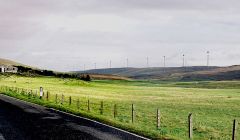
SHETLAND Islands Council (SIC) is considering a peatland restoration pilot project which it hopes could eventually involve up to 2,500 hectares a year.
The initial aim would be to restore 350 hectares of peatland a year within SIC landholdings through to 2028.
This could then scale up to 2,500 hectares from 2030 onwards, a report to councillors said.
Shetland South councillor Alex Armitage said peatland restoration remains an “opportunity” for Shetland, including in employment, and encouraged more action on the topic.
Development director Neil Grant said that while he agreed, the finances would need to stack up for the SIC.
Climate change officer Elizabeth Clarke highlighted there could be funding available through the government-backed Peatland Action.
She added that the SIC has had talks with a common grazings committee, with the hope of getting a project up and running next year.
Degraded peatland emits carbon dioxide, and there have been a number of restoration projects in the isles over the years – usually overseen by Shetland Amenity Trust, the charity overseeing natural heritage in the isles.
Figures show that in 2025/26 land made up 47 per cent of the SIC’s emissions.
The council owns more than 5,800 hectares of degraded peatland, which accounts for 34 per cent of all of its land.
The council has seen a reduction in land emissions of 716 tonnes (CO2e) since the baseline year of 2019/20, but this has mainly been achieved through selling land.
Clarke told a meeting of the SIC’s environment and transport committee on Monday that even if the required improvements were made in other sectors, land emissions would still see the council unable to meet the 2045 net zero target.
Overall in 2025/26, the council’s annual greenhouse gas emissions increased by 1,158 tonnes (CO2e) from 2024/25.
Help keep Shetland’s news open to everyone

Good local journalism takes time, care and people on the ground. Membership helps us keep reporting the stories that matter to Shetland — and keep them free for everyone to read. Members get a weekly newsletter created especially for them, local ads only, and can bookmark stories and join the conversation in the comments.
Although this is a nine per cent reduction from 2019/20, it is not in line with the target emissions decrease of 30 per cent.
However the report says a key reason for not meeting the overall target is the continued use of the “Shetland grid electricity emissions factor”, which takes account of the diesel-fuelled Lerwick Power Station.
Clarke said that even when Shetland is connected to the national grid, expected later this year, the SIC would still not meet its targets – but the figures would be greatly improved.
Speaking about the peatland restoration pilot plans, depute development and infrastructure director Claire Ferguson said the project would explore aspects like legal requirements, the economic case and funding models.
Committee chair Moraig Lyall encouraged the SIC to tap into learning from Shetland Amenity Trust, while she also said funding from the Scottish Government for peatland restoration has “significantly reduced” in recent years.
Lyall also warned that some other peatland restoration projects in Shetland have suffered from recruitment issues in the past.
Keep Shetland’s news open to everyone
Your membership helps us report the stories that matter to Shetland — and keep them free for everyone to read.