Energy park project draws objections from amenity trust and Historic Environment Scotland
Neshion says the site layout seeks to ‘balance community input, environmental considerations and project objectives’

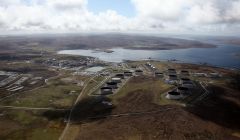
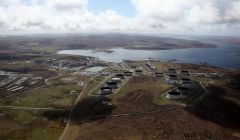
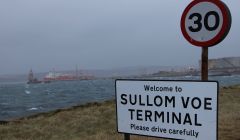
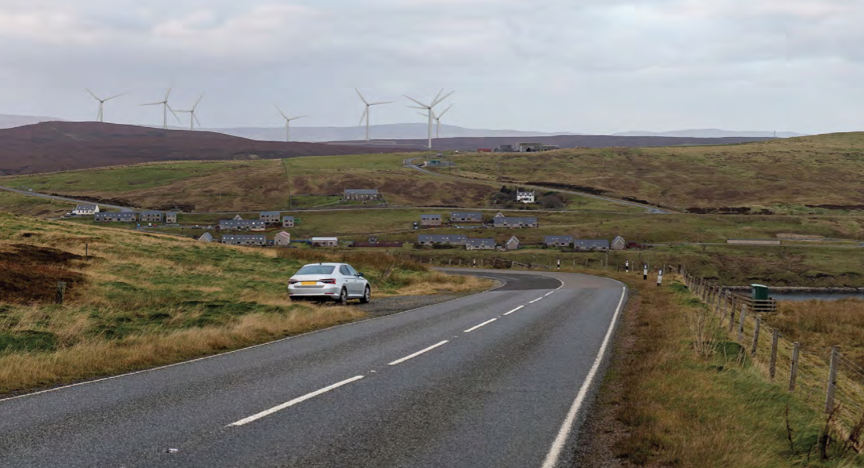
SHETLAND Amenity Trust (SAT) and Historic Environment Scotland (HES) have both lodged objections to the proposed Neshion Energy Park near Sullom Voe Terminal.
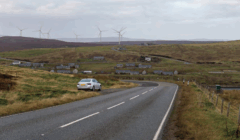
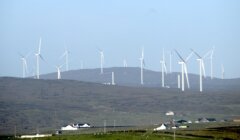
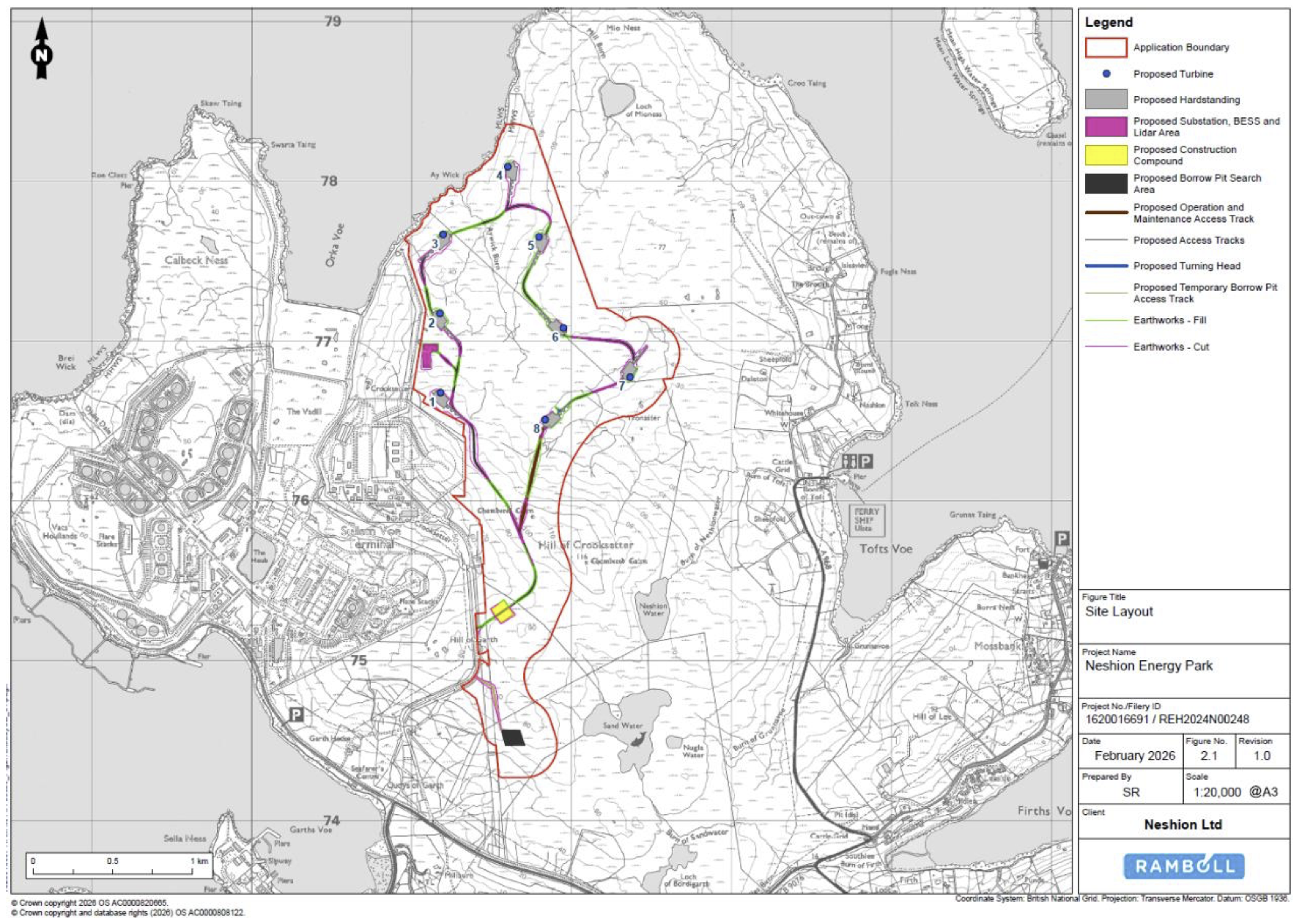
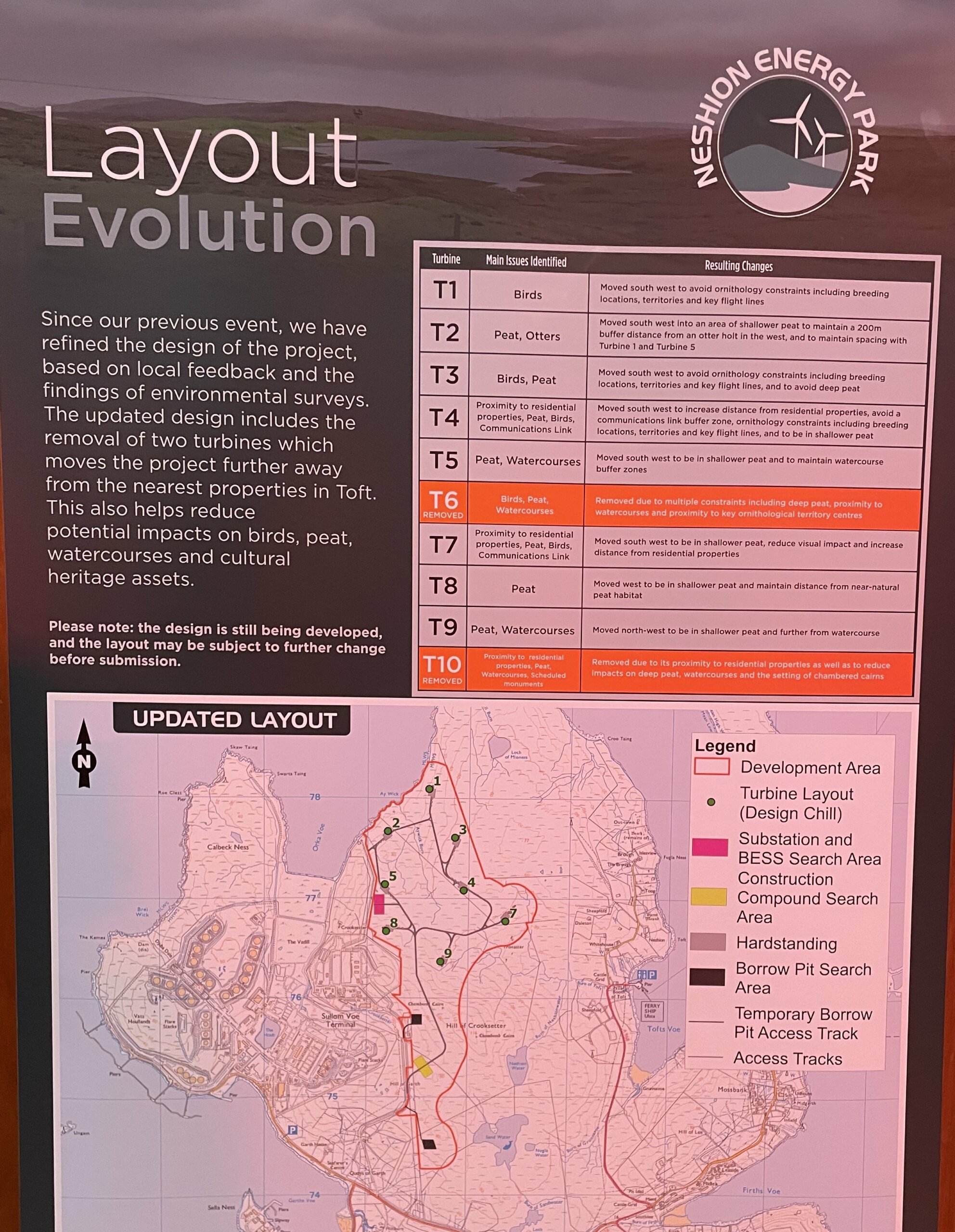
A total of eight turbines are proposed for the energy park, which is being developed by Shetland Aerogenerators, with 25MW of battery storage also planned.
The turbines would reach to a height of 200 metres, making them the largest in Shetland.
Neshion’s website says the final layout of the site seeks to “balance community input, environmental considerations and project objectives”.
But the amenity trust said it does not consider that the application has “demonstrated that the environmental, ecological and landscape impacts of this development can be adequately avoided, mitigated or compensated”.
A key concern for SAT is siting an eight-turbine wind farm within an area of “comparatively high-quality blanket” bog.
HES, meanwhile, has submitted an objection due to the impact the development could have on the setting of two chambered cairns on the nearby Hill of Crooksetter, which are both designated scheduled monuments.























It said chambered cairns are burial monuments where a central chamber, usually accessed via a passageway, was built and covered with stones to form a large and often monumental burial place for communities which may have been in use over several hundred years.
The Neshion website says the project will contribute to Scotland’s and Shetland’s climate change, energy security and just transition objectives.
The company is looking at establishing a “private wire” with Sullom Voe Terminal, having already signed a Memorandum of Understanding (MoU) with EnQuest subsidiary Veri Energy on a synthetic fuel development at the terminal.
The project could, over its 40-year lifespan, generate as much as £310 million to the economy, comprising £35 million from direct employment and £275 million from indirect economic effects.
Help keep Shetland’s news open to everyone

Good local journalism takes time, care and people on the ground. Membership helps us keep reporting the stories that matter to Shetland — and keep them free for everyone to read. Members get a weekly newsletter created especially for them, local ads only, and can bookmark stories and join the conversation in the comments.
There is also a plan to introduce an energy bill discount scheme for people living in nearby areas.
As the development has a generating capacity of more than 50MW, consent will be determined by the Scottish Government’s energy consents unit.
The planning process is underway, but the development has drawn concerns from a number of organisations as part of ongoing consultation.
The amenity trust claimed the application failed to strike a balance between supporting renewable energy development and avoiding, minimising or mitigating environmental impacts.
SAT said it “does not consider that sufficient justification has been provided for developing this relatively high-quality peatland resource rather than avoiding impacts through alternative siting and design”.
The trust said while peatland restoration is proposed as mitigation, “restoration should not be regarded as an equivalent substitute for avoiding impacts on functioning peatland systems in the first instance”.
It added that it “does not agree with the applicant’s assertion that off-site peatland restoration opportunities could not be secured within a suitable timeframe.
The trust also expressed concern at potential impacts on birds and their habitats.
It called on the Scottish Government, in consultation with relevant stakeholders, to facilitate the establishment of a Shetland-wide ornithological monitoring and advisory group in light of the cumulative impact of wind farms operational and planned in the isles.
The aim of this would be to assess and track the cumulative impacts of existing and proposed energy developments on sensitive bird populations, with whimbrel highlighted in particular.
In its objection, the trust said the turbines’ “scale, visibility and cumulative relationship with existing industrial development have the potential to substantially alter the character and experience of the North Mainland landscape”.
HES meanwhile said it believes the development would fail to meet a number of planning policies, including avoiding significant adverse impacts on the integrity of the setting of scheduled monuments.
“We do not consider that there are exceptional circumstances that would outweigh the significant adverse impacts on the integrity of the settings of the scheduled monuments that we have identified,” it wrote in its planning response.
But HES acknowledged that the “determination of whether such exceptional circumstances exist is ultimately a matter for the decision-maker”.
The government organisation said it supports the idea of Neshion exploring options for “substantial relocation and a reduction of the number of the turbines” on site.
NatureScot said it would also object to the development, unless it is made subject to mitigation conditions.
This is due to concerns over the impact on East Mainland Coast, Shetland SPA [special protection area] and the Sullom Voe SAC [special area of conservation].
NatureScot said its advice is that the development is likely to have a “significant effect” on the breeding redthroated diver feature of the SPA, and the otter feature of the SAC.
It offered suggested conditions for mitigating impacts, which if applied would not adversely impact the setting of the two sites.
In its own response, RSPB Scotland said it welcomed that the applicant is open to engaging further with NatureScot to “discuss how a planning condition can be used to secure necessary mitigation measures to ensure that adverse effects on the integrity of the SAC are avoided, with no reasonable scientific doubt”.
The RSPB also recommended that proposed bird monitoring programme should include measurable targets for breeding populations of curlew, redshank, golden plover, dunlin, whimbrel, lapwing and snipe, both during and after construction.
NatureScot also said Neshion would result in “significant adverse landscape, seascape and visual effects extending to approximately 10km”.
As a result it said it considers that there is potential to mitigate some adverse effects through a reduction in turbine height.
Delting Community Council said it had no objections to the development but would to see a planning condition included to “ensure there is proper, high degree, independent environmental monitoring put in place in liaison with Sullom Voe Terminal”.
It also called for a planning condition on residents in the area not being affected by noise and flicker.
Neshion has already reduced the proposed number of turbines from ten to eight prior to submitting its planning documents.
Its planning statement said the applicant’s conclusion is that the proposed development would be consistent with all relevant planning policies.
It said that although “moderate effects” have been identified on scheduled monuments, it is “considered that the understanding, appreciation and experience” of them would be “adequately retained such that the integrity of settings would not be significantly adversely affected”.
The statement also said the impacts on “potentially sensitive ornithological receptors” have been avoided and minimised wherever possible.
Regarding the impact on peatland, the statement said the “siting and design approach has sought to minimise adverse impacts on peatland and carbon rich soils and avoid the areas of deepest peat where possible, while balancing other environmental constraints”.
It continued: “The applicant has gone to considerable lengths to ensure a satisfactory layout, design and composition for the proposed development.
“In short, appropriate design mitigation has been applied. Potentially significant adverse effects resulting from the proposed development have been addressed through an iterative design process (i.e. ‘mitigation by design’) and a well-considered proposal has been established, which has acceptable effects.”
The statement added: “The importance of achieving energy security is one of mass importance, now more than ever.
“The delivery of renewable energy within the UK is required to ensure that the UK can be fully energy independent and support energy security.
“The nationally important contribution that the proposed development would make to energy security, and the delivery of clean renewable energy is significant.”
Shetland Aerogenerators also recently became the first company to sign the Shetland development charter, which sets out key expectations of investors for developments in the isles.
Its development manager Brendan Hall previously said: “We were part of the A Fair Share for Shetland taskforce in 2024, and helped codify the many ways our community can gain all the advantages of these projects, while minimising and compensating for the unavoidable disturbance. We think this development charter is helpful for these new times.
“The alignment of our ambitions with the charter is exemplified by our proposed Neshion Energy Park project, which recently went into the consent process.
“In line with feedback from the local community, we are planning Shetland’s first local electricity discount scheme to directly reduce electricity bills and address fuel poverty at an individual household level, while also exploring options for a community stake in the development.
“We look forward to working with EmPowering Shetland to develop the delivery plan for Neshion.”
Two wind turbines are also planned at Sullom Voe Terminal, with planning approval given for these in the summer.
Keep Shetland’s news open to everyone
Your membership helps us report the stories that matter to Shetland — and keep them free for everyone to read.