Space2face at 10: pioneers paving the way for restorative justice in Scotland
Scottish Government using charity as example as it looks to build services across the country


THE WORK of a pioneering Shetland restorative justice charity is being used to help shape the future of the sector in Scotland.
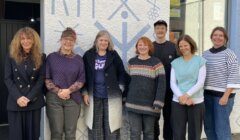
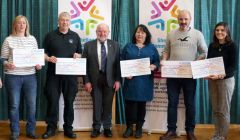
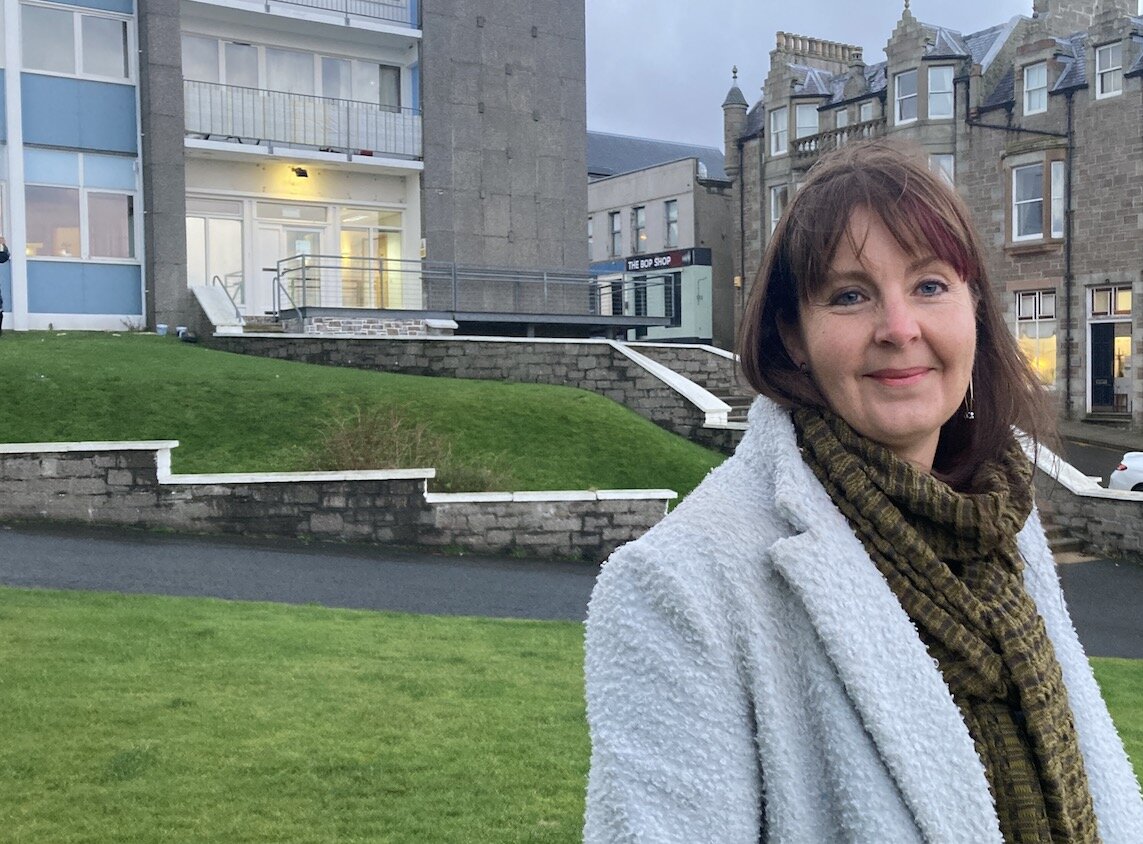
Based in the heart of Lerwick, Space2face recently celebrated its 10th anniversary as a registered charity – and 18 years since it was formed as an initial pilot project.
The independent charity uses restorative practices and the arts to support dialogue between those harmed by crime and those responsible for causing that harm.
And after a long wait, the Scottish Government is considering how it could expand and deliver restorative justice services across the country – with Space2face’s expertise in the field at the heart of its thinking.
How Space2face began
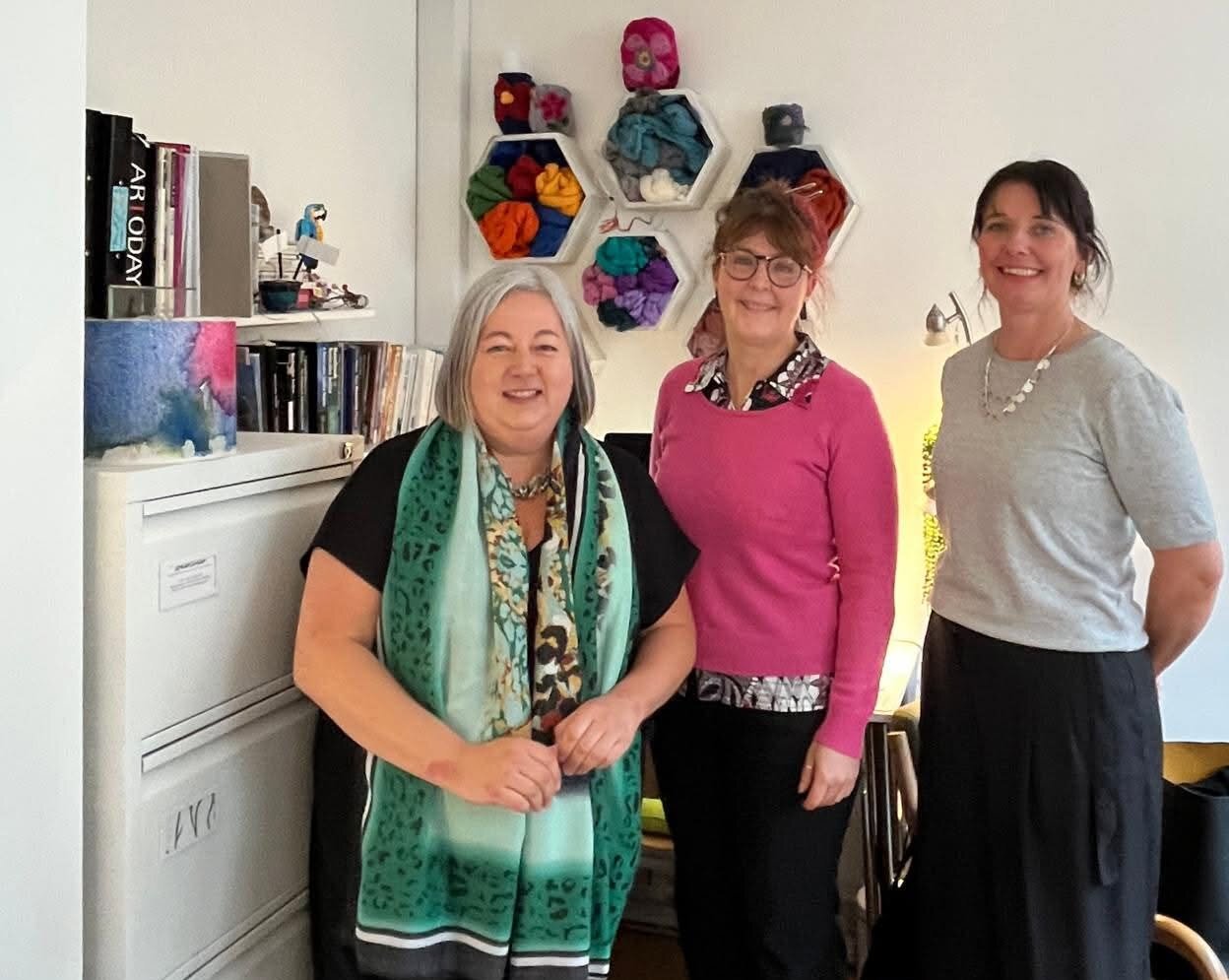
In 2008 Space2face co-founder and director-practitioner Clair Aldington was working for Shetland Arts, while Alyson Halcrow was part of the local community mediation team, when the pair struck up on the idea of combining art and restorative justice.

























Halcrow had found that young people she was working with were “struggling” with the traditional restorative justice process, which led to the pair launching Space2face.
“The normal way to do restorative justice is quite didactic – it’s question and answer, so a lot of sitting down, speaking and writing, and that doesn’t suit everybody,” Aldington tells Shetland News at Space2face’s base at The Mission in Lerwick.
Initially set up as a pilot project between the two agencies, Space2face soon found that people “just took to” using the arts as part of the process.
“It’s much easier to speak when you’re doing something, rather than just sitting and chatting like we are,” Aldington said.
“We made a decision at the start that we would train local artists as freelance restorative practitioners, and they worked alongside Alyson’s staff and volunteers.

Help keep Shetland’s news open to everyone

Good local journalism takes time, care and people on the ground. Membership helps us keep reporting the stories that matter to Shetland — and keep them free for everyone to read. Members get a weekly newsletter created especially for them, local ads only, and can bookmark stories and join the conversation in the comments.
“Art was a bit of an add on at the end of the service, but over the years that’s become integrated with the restorative justice process right from the start.”
Restorative justice was something of an alien prospect in 2008 – and even in 2016 when Space2face became a registered charity – Aldington said.
“People always looked at me a bit weirdly when I spoke about restorative justice, whereas now a lot of people have heard about it, even if they’re not sure about it.
“There’s a better understanding generally now, but it’s still not as widely known as it might have been.”
A restructuring at Shetland Arts roughly 10 years before meant Aldington was made redundant, and she said Halcrow’s community mediation team also underwent changes at the same time.
With the pair worried it would disappear for good, they decided to become a registered charity.
“We felt strongly that there was a need for it in Shetland,” Aldington added.
At one point Space2face employed a creative worker on a part-time basis, but Aldington said they “realised pretty quickly” they could not employ someone because of the uncertainty over referrals and funding.
“We went back to the freelance way of working and that’s how we’ve worked ever since,” she said.
How the process works
Aldington stresses that art is not forced on anyone – if they would prefer to sit and talk, that’s fine too.
The Space2face process is broken down into three stages – facts, consequence and future.
It looks at what happened, the impact this had on all involved and then what needs to happen now for everybody moving forward.
An outcome agreement is often negotiated and signed by all parties to conclude the process.
Explaining what this means, Aldington said: “In Shetland people often use this to agree what will you do if I see you in Tesco’s, what will you do if I go into the Marlex and you’re there.”
The process usually stretches across six sessions, which Aldington said affords each person the chance to reflect and work through what it is they want to say.
After this the person harmed and the person responsible may be brought together for a joint meeting – only if they both want to, and if it has been risk assessed as safe to do so.
If they cannot meet, the process may end with an indirect exchange – either by letters, shuttle dialogue, or even a video message.
So where do the arts come into it?
“We use very kind of visual descriptions of each stage and often people make artwork around that,” Aldington explained.
“Sometimes they’ll say they want to try a bit of woodwork, or they want to try a bit of felt making.
“It can be about them learning new skills from us, as well as to sit and make something while they’re working with us.
“Sometimes that’s what is gifted to the other party, with the recipient’s consent.”
Has this happened often, Shetland News asks?
“In the past we’ve had people gift pictures, tapestries, handmade books and garden benches to the other party,” Aldington said.
“The smaller projects we can do in here – we have basic woodworking materials and we have drills, saws, hammers. This cupboard is also packed full of art materials.
“It’s amazing what goes on in here.”
A potential upcoming change
In June 2019 the Scottish Government promised that it would make restorative justice services widely available by the year 2023.
But more than seven years after that statement, Space2face remains the only organisation solely focused on restorative justice remains in Scotland.
The charity is entirely powered by grants, case-by-case funding from local organisations and donations from members of the public.
It’s no wonder that when co-founder and director-practitioner Clair Aldington talks about a lack of government funding she complains that she sounds “like a broken record”.
That shortfall means Space2face – which encourages people harmed and the people who have harmed them to open a dialogue through art – is sometimes having to refuse new referrals.
“Victims are being shortchanged basically, and it breaks my heart to turn victims away,” Aldington says.
“We’ve had victims pay for their own process, because unfortunately we’re not in a position to be able to offer the service for free.
“Scotland is the only nation state of the UK where there isn’t some statutory funding for restorative justice. I don’t think victims should have to pay for restorative justice processes.”
However that could soon change. Community Justice Scotland has helped developed an options appraisal paper for delivering restorative justice to the Scottish Government.
The work of Space2face has specifically been highlighted in the document, which will help shape the future of restorative justice across Scotland.
Aldington wants to see change go further than that. When she talks to Shetland News, before news of the government’s decision around options in the appraisal paper is released, she talks about some of the changes needed.
It comes after minister for victims and community safety Kirsten Oswald visited Space2face last month, before she makes a decision on the options appraisal.
Aldington said that if a person harmed contacts Space2face, the charity cannot arrange anything unless the perpetrator has requested a meeting.
She said this wrinkle in the system weights restorative justice services against victims.
“If an agency comes with a referral, we give them an estimate and they say yes or no,” Aldington explains.
“Justice social work gives us a very small grant each year, but those funding streams, because they’re statutory, come from the perpetrator’s side.
“So if a victim approaches us, we don’t have the funding to work with them.”
Currently Space2face is only able to take on between 10 and 12 case referrals a year, a figure which she said could soar if they had the money and the staff.
“Some academics, particularly in restorative justice, have been frustrated with the lack of progress in Scotland, and I would agree with them,” Aldington said.
Orkney expansion and looking back on 10 years
Despite the adverse funding picture, Space2face was able to expand into Orkney last year – something Aldington said had been a “dream of ours for a while”.
Again though, there is no guaranteed funding for the expansion. Instead, they received some government money through Community Justice Scotland to deliver several test cases.
Expansion into mainland Scotland is also a long-term goal for the charity, with one practitioner already based in Edinburgh.
“Victims are being shortchanged basically, and it breaks my heart to turn victims away” – Clair Aldington
Time and time again the conversation naturally returns to funding, and Aldington said the Orkney work and any future plans are “really, really fragile” as a result.
Asked if this money would have to come from the Scottish Government, she replies: “I think it has to be.
“From when we started, it’s much harder and more competitive to get funding. Organisations like National Lottery are now saying that they’re not interested in funding us because we don’t have enough participant numbers.”
Speaking about the 10-year milestone, Aldington said they had “achieved an enormous amount” in that time.
“I’m really, really proud.
“For me the most important impact is the participants and the people that have taken part in our service, and the ways they say it’s changed their lives and helped them move forward.”
She points to one participant’s comment, who called the group a “profoundly wonderful beam of light that shone into my life through tiny cracks, proving that we are all a little broken – that’s how the light gets in”.
“I think it’s easy to lose sight of the personal impact,” Aldington added.
“It was good to sit back and see how far we’ve come, and to be reminded of that.”
And she said, after 18 years, it’s nice just to reflect on the fact that “we’re still here”.
She thanked the “whole community of people” around Space2face, including its board of trustees, for helping to keep them going and to bring up a decade.
Keep Shetland’s news open to everyone
Your membership helps us report the stories that matter to Shetland — and keep them free for everyone to read.