

Opportunity and uncertainty highlighted as SIC sets out public sector reform principles


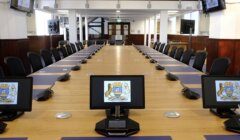
OPPORTUNITY and uncertainty were two key themes which kept cropping up in the council chamber on Wednesday as Shetland’s elected members discussed public sector reform.
Among the concerns was that upcoming change could “muddy the waters” ahead of the 2027 local government elections.
Another worry raised was that potential change could see staff in their “twilight years” being encouraged to retire.
But there was an acknowledgement that public sector reform could bring benefits to Shetland and potentially lead to better outcomes for people.
SNP councillor Robbie McGregor also encouraged a “shopping list” to be drawn up for what Shetland would want to see.
The Scottish Government is keen to shake up how the public sector operates, from changing the national structure of local government to merging health boards.
For Scotland’s three island authorities things stand to be different, however, with “bespoke” models being spoken about.
Wednesday’s session of the full council was the first time Shetland’s elected members formally discussed the topic together at a public meeting.

























It was not all just talk, however, with decisions made on how to proceed.
One key decision was to write to the government confirming an intention to engage on a preliminary premise that Shetland Islands Area continues to be “recognised as a distinct area for local governance and public service delivery” which retains existing strategic functions at local level.
A number of principles around reform have also been set, including that the need for change should be evidence based and that services should be designed around people and less often around organisational boundaries.
There are also plans to set up a Shetland Partnership working group to include representation from affected public bodies, and a sounding board of councillors.
One thing from the meeting was clear, however – that what the future holds remains unclear.
Help keep Shetland’s news open to everyone

Good local journalism takes time, care and people on the ground. Membership helps us keep reporting the stories that matter to Shetland — and keep them free for everyone to read. Members get a weekly newsletter created especially for them, local ads only, and can bookmark stories and join the conversation in the comments.
Shetland Islands Council (SIC) chief executive Maggie Sandison said the “scale of reform is something that we haven’t seen for quite a number of years”.
Among the proposals is going from the current 32 councils to six to ten strategic regional authorities, and then 120 to 160 community authorities which would focus on more local decision-making.
She proposed a first step where the SIC establishes that a bespoke model for Shetland builds from a point where it retains strategic functions.
Sandison said meetings with government ministers and civil servants are beginning, stressing a need to consider a set of principles around reform first.
She also said “we need to inform and listen to the views of the public as we make recommendations for any changes”, and said the key issue was improving outcomes for Shetland.
The meeting heard suggestions that any change may only happen from 2028 at the earliest.
Lerwick South member John Fraser said it was his worry that long-serving staff may think about retiring from the SIC if possible change is looming.
Meanwhile North Isles member Duncan Anderson questioned how the prospect of reform might affect next year’s council elections, planned for May.
Public service reform manager Jan Riise confirmed that the elections are going ahead as planned, with councillors returned for the statutory term.
But he said people “need to know what they’re standing for”.
Many councillors said public sector reform could bring positive change to Shetland, with the SNP’s McGregor calling it a “golden opportunity”.
Meanwhile Shetland Central member Moraig Lyall said she does not want to be part of a council which “failed to grasp” the opportunity.
“The door is ajar and if we don’t push it now we may ever live to regret allowing this moment pass,” she said.
SIC leader Emma Macdonald said she has been assured in meetings with ministers that the government recognises the need for a bespoke solution for Shetland.
But she said it is disappointing a large programme of change has been proposed “without providing a clear business justification case as to why”.
Macdonald added that change should “strengthen not weaken” the ability to make decisions locally.
Depute leader Gary Robison said the topic presented opportunity and risk, with both needing to be approached with care.
He warned that the SIC should not be accepting additional statutory duties without funding.
“We should be asking what additional benefits a new structure would deliver that cannot be achieved through better cooperation, shared planning or more effective use of existing powers,” Robinson said.
Depute convener Catherine Hughson added that the council should be realistic with its asks.
But she said the issue would be viewed as an “opportunity to allow us to get more devolved decisions that are best made by those at the frontline with the knowledge of what is best for Shetland”.
Shetland North member Andrew Hall, meanwhile, referenced Faroe and its self-governing structure.
He said he would like to see greater local influence on issues like energy decisions, crown estate revenues, transport powers and planning.
Hall said communities hosting nationally significant developments should retain a “fair share” of revenue.
Lerwick North and Bressay member Stephen Leask warned that reform cannot be “centralisation with another name”.
Calling for an ambitious but cautious approach, he added: “We cannot sensibly design new structures without knowing how much they will be funded and what authority they will have.”
Both Lyall and Robinson proposed slightly tweaked working for the decisions, with the latter’s winning a vote.
Robinson’s proposal included the creation of a council sounding board with members of each ward.
Meanwhile one of the last pieces in debate was from Shetland South member Allison Duncan.
Referring US president Donald Trump and the mood around the room to improve outcomes for the isles, he proposed councillors don their caps and “make Shetland great again”.
Keep Shetland’s news open to everyone
Your membership helps us report the stories that matter to Shetland — and keep them free for everyone to read.