



Councillors encouraged to approach public sector reform with an open mind – and avoid ‘political grandstanding’

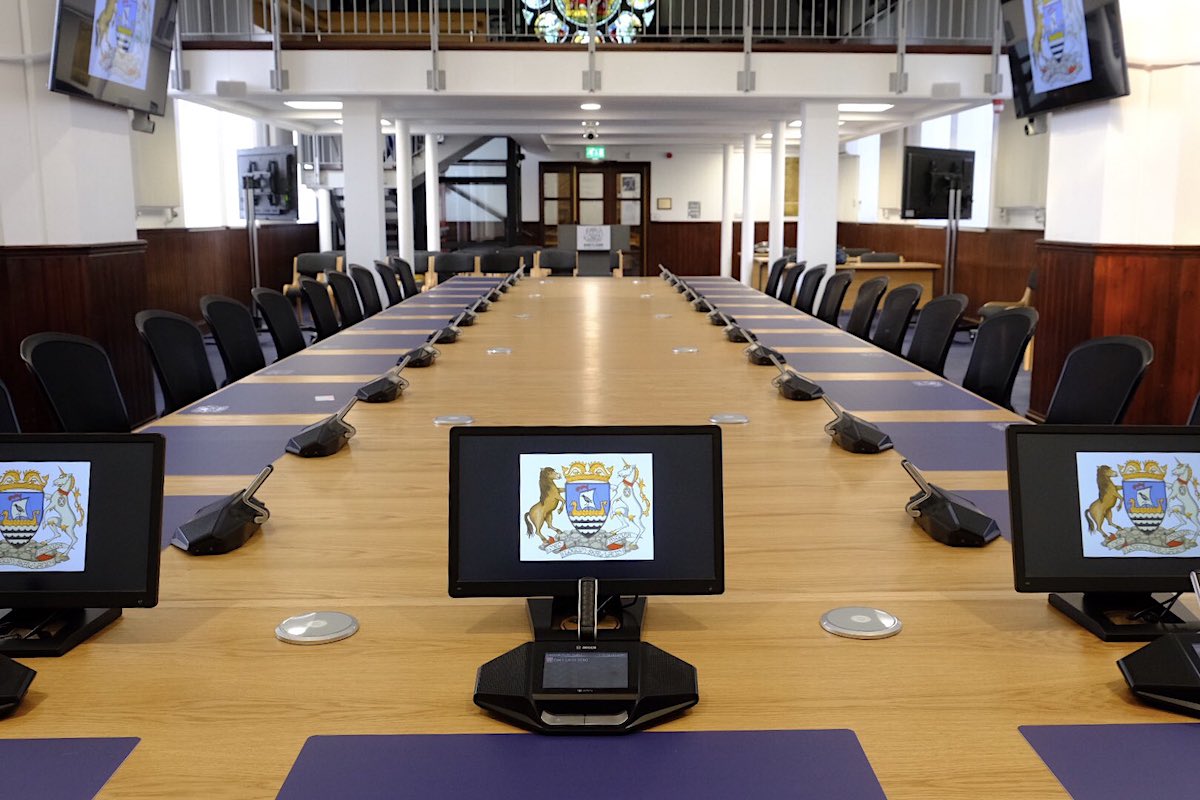
SHETLAND councillors have been urged to put any political differences aside when discussing public sector reform.
Lerwick South councillor John Fraser encouraged his colleagues to avoid “political grandstanding” when approaching the topic and to work collaboratively to get the best for Shetland.
Meanwhile Shetland Islands Council (SIC) leader Emma Macdonald said she thinks Shetland should be classed as a ‘region’ under new country-wide public sector reform.
It comes as the Scottish Government looks at reshaping how local government and health services are structured in the country.
When it comes to councils, the government believes there is a need for regional authorities, perhaps around six to ten in number, alongside many more decentralised community authorities.
The government said this would sit alongside bespoke solutions for island communities.
Macdonald told a meeting of the full council on Wednesday: “We do operate at a strategic level in many of the things that we do, and I will very happily argue that Shetland should be a region.”






















The topic was up for discussion at the meeting as public sector reform is included in the SIC’s risk register.
Chief executive Maggie Sandison said a report on the topic of public sector reform will go in front of councillors in October.
Depute leader Gary Robinson said there have been indications that the islands may be working from a “blank sheet of paper” given they are set to have different arrangements than authorities on the mainland.
He said Shetland should be “nothing short of ambitious” and asked if work undertaken through the previous Our Islands Our Future scheme could be used as a starting point in talks.
Chief executive Maggie Sandison said Shetland is both “small and strategic”, which she said was reflected by the meeting agenda which included inter-island connectivity solutions and the reshaping of adult social care.
Help keep Shetland’s news open to everyone

Good local journalism takes time, care and people on the ground. Membership helps us keep reporting the stories that matter to Shetland — and keep them free for everyone to read. Members get a weekly newsletter created especially for them, local ads only, and can bookmark stories and join the conversation in the comments.
She said “I think you need to be describing Shetland as a region in its own right”, which could be both local and strategic.
Fraser said he felt the council needs to come with an open mind with regard to public sector reform and “look for the potential opportunities as opposed to simply looking at the threats”.
Robbie McGregor, Shetland’s sole SNP councillor, said he felt “the biggest opportunity here is we can make a further move towards Shetland autonomy if we play our cards properly”.
“I’m very optimistic about this…we should get stuck in and get the best result,” he said.
However, while Macdonald said she is approaching the matter in a positive way, she has not seen anything yet that would suggest more autonomy for Shetland.
She said some of it is about “centralising decision-making elsewhere and taking things from places”.
Shetland South member Alex Armitage, of the Scottish Greens, questioned that if Shetland became a region then there could be an opportunity to decentralise decisions on health and the NHS which would be a “progression of autonomy”.
Macdonald, however, said there is a “lot to unpick” about what could be decided locally when it came to health.
She warned that areas which would not be classed as regions may lose decision-making powers.
North Isles member Robert Thomson meanwhile quoted a saying long associated with Up Helly Aa – “we axe fir what we want” – and said “we have to make it clear what we want out of this”.
Davie Sandison, from Shetland Central, meanwhile said public sector reform is an example where “Pandora’s Box has been opened up a little bit”.
But he said it was a useful opportunity to highlight the importance of local government, saying there is a “lot to be played for here”.
A proposal document for local governance published by the Scottish Government this week said reform aims to maximise the efficient use of public spending.
Regarding the idea to create regional authorities and community authorities, the government said the latter would sit within the borders of regional authorities.
The aim would be that community authorities would see “burgh/county/town/district/island” authorities based on identifiable communities.
The government used the example of areas such as Kilmarnock in Ayrshire, Leith in Edinburgh, or Blairgowrie and Rattray in Perthshire, while it could be “townships, villages or islands”.
The proposal document continued: “We would propose that councillors would continue to be elected at the current ward level, sitting on both the community authority and on the associated regional authority.
“This would improve local decision-making and enable greater strategic working, without the necessity of a further layer of elections or creating additional tiers of bureaucracy.
“The same overall regional administrative or corporate structures would support both regional and community authorities. The aim is to have greater subsidiarity with more local decision making but supported by the efficiency of delivery by regional structures.”
Keep Shetland’s news open to everyone
Your membership helps us report the stories that matter to Shetland — and keep them free for everyone to read.