‘Securing a fair share for Shetland’ – folk encouraged to stand in council election


The local authority is renewing its “Who stands for the Council? It’s people like you” campaign in an effort to encourage folk to stand and ensure all seven wards are contested.
For the second in a series of six articles, we’ve been hearing about how the next council will have some important judgements to make to help shape Shetland’s economic future.
NEXT YEAR’s intake of SIC councillors will assume the responsibility for making key decisions to help determine Shetland’s economic prosperity as we head towards the middle of the twenty-first century.
That is the message from current Development Committee chairman Dennis Leask, who says it is imperative that the islands extract the maximum possible benefit from the bountiful economic opportunities it is presented with.
The council’s corporate plan emphasises the importance of supporting jobs, skills, business and investment to create opportunities, attract and retain people, and build a strong and sustainable economy.
Laying the groundwork for the energy transition to deliver major benefits such as housing, jobs and affordable energy will be a key factor in ensuring Shetland remains an attractive place for people to live, work and build their future.
Development Services also do a power of practical work to support and encourage small businesses and social enterprises to thrive through the Business Gateway, by administering the Coastal Communities Fund and via various other schemes.
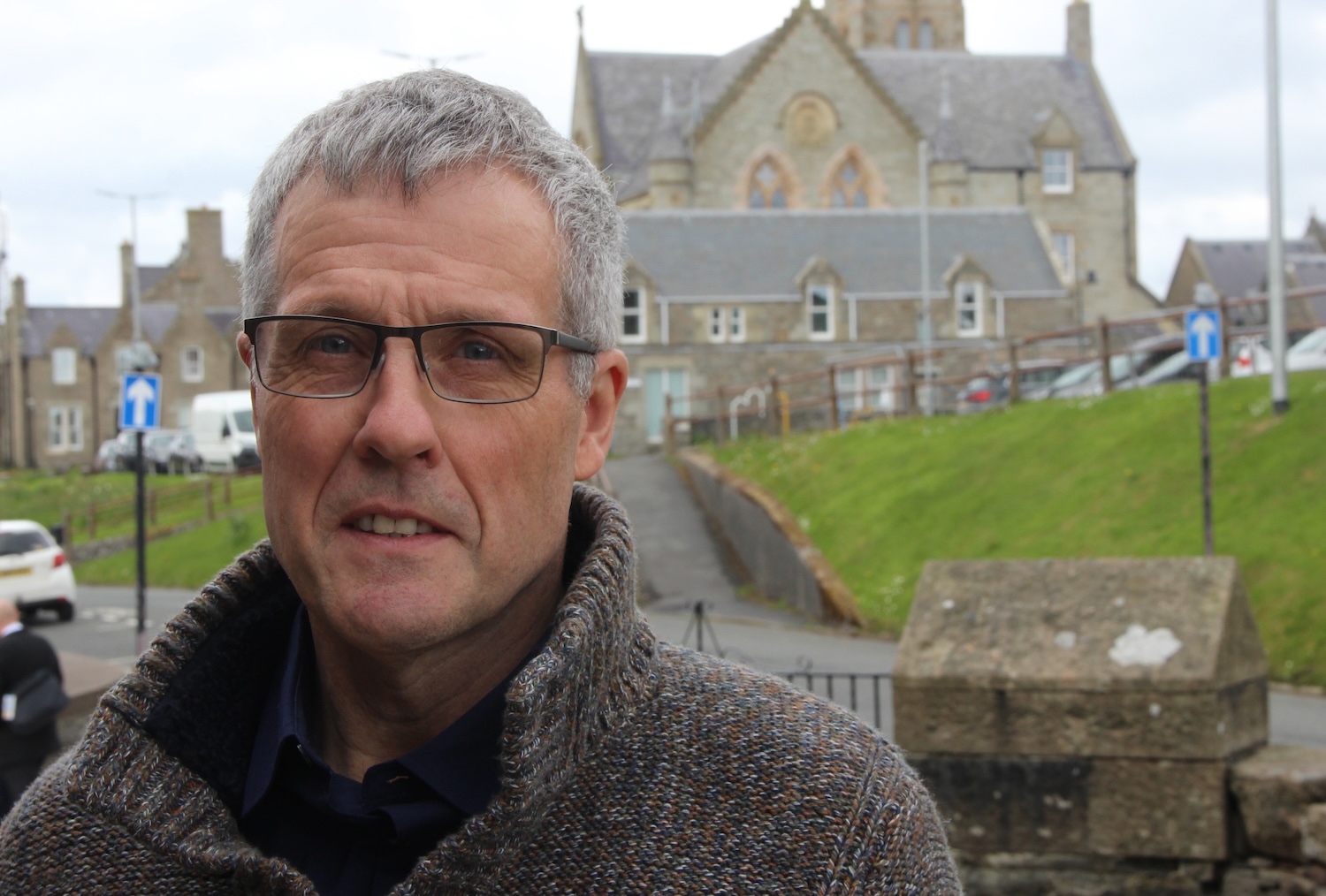
Dennis sees its role as “shaping Shetland’s future economy, not simply administering services”, and that involves working closely with existing industries as well as encouraging new ones.
“Having worked with the council during Shetland’s oil era, before leaving for a life in the private sector, I had some understanding of the bureaucratic world I was stepping back into when I was elected as a councillor,” he says.
Dennis reflects that when pursuing private business interests “decisions about spending were largely my own”, but “public sector work is different”.
“You have to find a path through bureaucracy, politics and, at times, confrontation. Much of that comes from the public’s rightful demand to understand and scrutinise decisions made with their money – and who could argue with that?”
He reels off a vast array of economic issues that councillors must grapple with, including an accelerating switch from fossil fuels to renewables including onshore and offshore wind, and opportunities for carbon capture.
Securing a “fair share for Shetland” from the energy transition may involve community ownership and perhaps even a “Shetland tariff” as islanders continue to face some of the most crippling energy prices to be found anywhere in the UK.
Another major challenge is housing, the availability of which Dennis describes as a “cornerstone of any economy, and shortages are highlighted across Shetland’s sectors as a major constraint. We have an opportunity to improve availability through SSE legacy housing, and we must grasp it.”
Also pivotal will be further work to ensure fixed links connecting smaller islands to the Shetland mainland can become a reality, which Dennis says could “transform” those communities and the wider isles economy in the long term.
The council also operates 16 harbours, the largest of which are at Sullom Voe and Scalloway, while the launch facility at SaxaVord Spaceport in Unst and related spin-offs offer “huge potential” and could help attract a younger workforce.
Also in next May’s bulging in-tray will be the need to continue offering cooperation and support to the fishing, aquaculture, agriculture and tourism sectors, along with ongoing efforts to bolster digital connectivity.
Dennis says all of the above require problem-solvers from all walks of life with “the quality and confidence to make the right decisions”.
“If experienced local people do not step forward,” he says plainly, “decisions will still be made, just without their experience.
“Shetland needs decision makers with real world experience. Economic development is not only about attracting investment and supporting local business, but also creating conditions for young families to stay in Shetland.”
Turning his attention to some of the factors that may discourage folk from putting their names on the ballot paper, Dennis feels people should not let a self-perception of inexperience put them off.
He was “pleasantly surprised” by the efforts the SIC makes to train new councillors to understand policies, procedures and processes through its induction process. It may “take a year or so to feel comfortable” but he urges people to trust their instinct.
As to whether the role can be too time-consuming, Dennis says he has “enjoyed expanding my knowledge on so many subjects and understanding the breadth of activity happening in and around our shores”.
The commitment level required “depends on your level of interest and how much of a difference you want to make”, he feels.
Dennis does sound a warning that “if the keyboard warriors get to you then perhaps [being a] councillor is not for you. Stay off social media! Its sole purpose is to get a reaction then feed the fire.”
His final pitch is simply to urge those with experience in many different avenues of working life to put themselves forward to help determine the isles’ economic future.
“Shetland has world-class assets: energy, fisheries, community wealth, natural resources and entrepreneurial people,” Dennis adds.
“The next generation of councillors will decide whether those strengths become long-term prosperity. If housing, jobs, childcare and transport matter to your generation, your generation needs a stronger voice around the council table.”
Anyone interested in finding out more about putting your name forward to be a candidate in May’s Shetland Islands Council elections can visit www.shetland.gov.uk/stand
A drop-in information session for prospective candidates will be held in December, with further details to be published shortly.
Keep Shetland’s news open to everyone
Your membership helps us report the stories that matter to Shetland — and keep them free for everyone to read.