
Help needed to find a rocket that landed in the sea

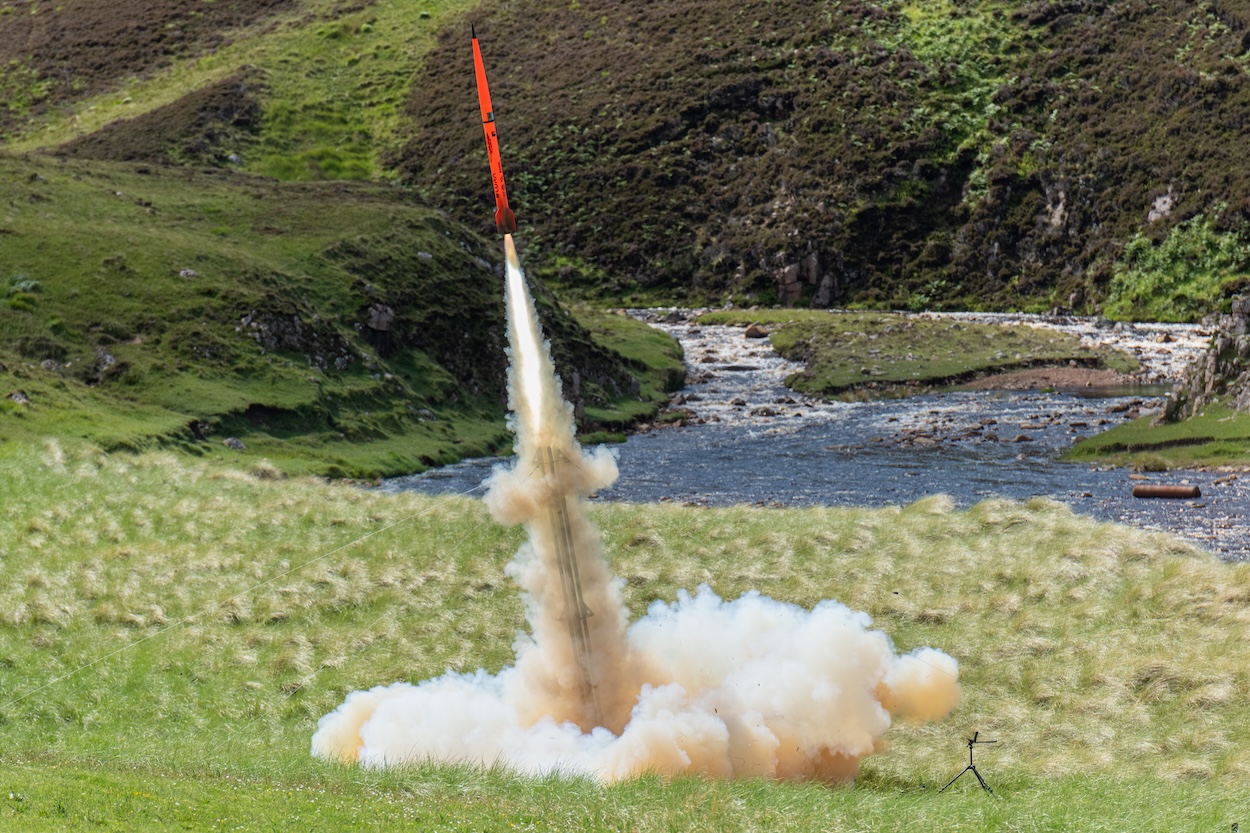
PEOPLE are being asked to keep an eye out for a small rocket which may have drifted upwards to Orkney or Shetland after taking off from the northern reaches of the Scottish mainland before landing in the sea.
The students behind the successful rocket launch from the military base at Cape Wrath last Friday have said they achieved 90 per cent of their objectives despite losing their rocket in the process.
There is some hope that the Gryphon II Block II (G2B2) rocket did not sink straightaway and may still be drifting somewhere in the sea to the north of Scotland.
The students from the University of Leeds are now hoping that it might either be found by passing shipping or come ashore either in Orkney, Sutherland or even Shetland.
Electronic engineering student Toby Thomson said the purpose of the launch was purely educational and had no links to the rocket launch preparation at the SaxaVord Spaceport.


























Built over the last nine months by Thomson and five other students from the Leeds University Rocketry Association (LURA), the goal of their efforts was to take the UK’s amateur rocketry record, a condition of which is to get the vehicle back in one piece.
“The rocket flew for about 50 seconds to 15 kilometres, then descended under parachute for almost five minutes before losing contact,” Thomson said, adding that this might be due to the rocket disappearing behind a hill.
He said he calculated that the rocket will have landed in sea in an area between eight and 10 kilometre off the north coast.
“We knew it landed in the sea, and we were out there with a boat, but we were not able to find it,” he said.
Help keep Shetland’s news open to everyone

Good local journalism takes time, care and people on the ground. Membership helps us keep reporting the stories that matter to Shetland — and keep them free for everyone to read. Members get a weekly newsletter created especially for them, local ads only, and can bookmark stories and join the conversation in the comments.
“I initially expected it to have sunk straightaway, but people locally have said that it might wash up, which was the first time that the notion of actually getting it back entered my mind.
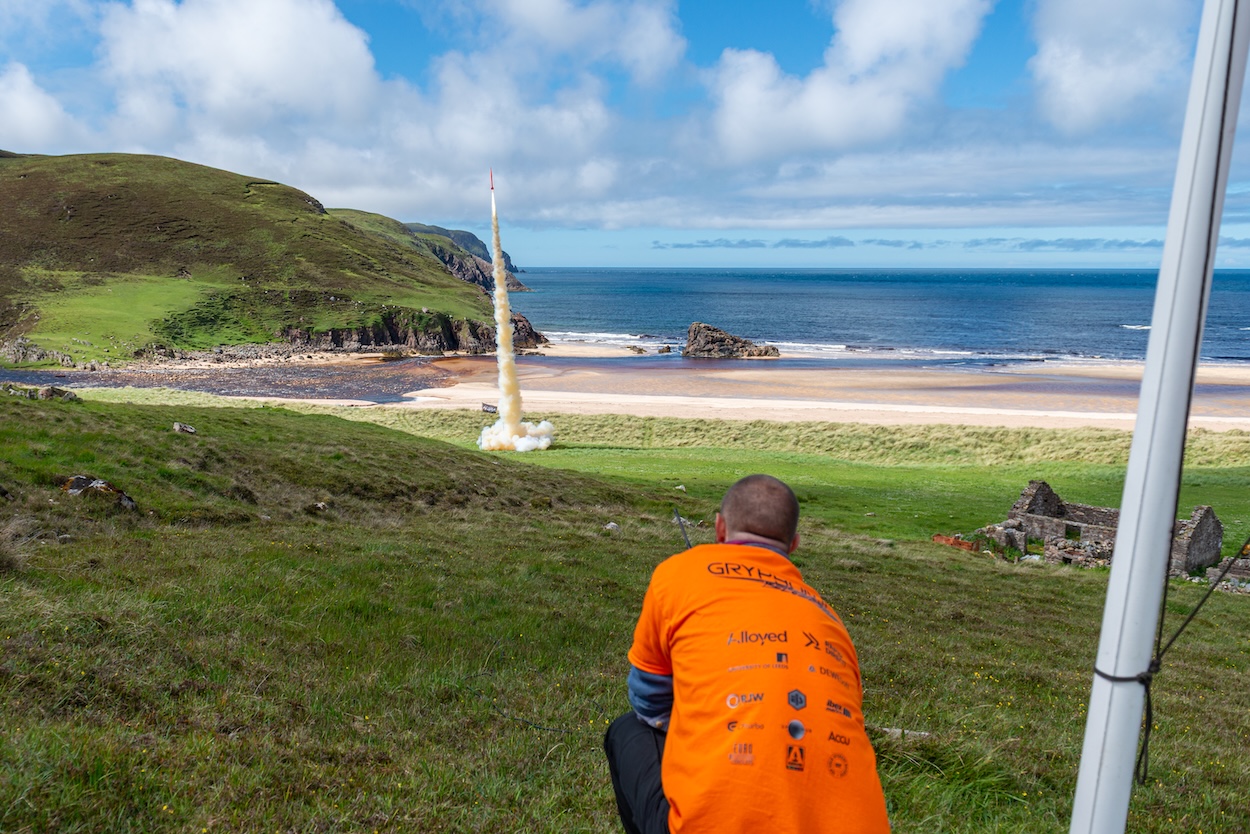
“And then several locals said, ‘when we lose things they tend to wash up here or the Orkney Islands and sometimes even Shetland’.
Thomson said they had received the green light from the Civil Aviation Authority (CAA) to launch and added the Ministry of Defence had been “extremely helpful” in supporting the students with their efforts.
“Launching rockets is quite hard,” he added. “We got twice the speed of sound in under six seconds, so that’s fun.”
However, to prove that they have broken the current record held by Durham University they need their rocket back to access the black box data.
Should anyone come across the missing rocket, contact the Leeds University students via this link.
Keep Shetland’s news open to everyone
Your membership helps us report the stories that matter to Shetland — and keep them free for everyone to read.