
Launches planned from SaxaVord for European Space Agency test programme

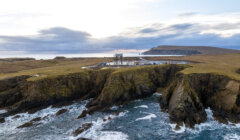
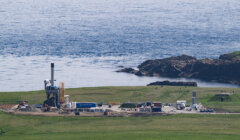
THE EUROPEAN Space Agency (ESA) has announced details of two planned launches from Unst as part of a programme testing new satellite technology.
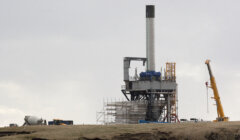
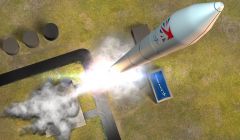
The launches from the SaxaVord Spaceport will use a rocket from Germany company RFA.
A spokesperson for RFA was unable to give out a timescale for the launches.
This is because the company needs to get its long-awaited first test flight completed first, which is currently slated for the third quarter of 2026.
One of the ESA-backed “missions”, named Lurbat, will see Earth-observation data sent from a small satellite in space to research centres in Spain.
It will have two propulsion systems to demonstrate technologies to move the satellite while in orbit.
One of the propulsion systems uses water generated through solar-powered electrolysis, which is expelled from the satellite.
The second propulsion system uses “porous material to generate ions” that are then expelled to move the satellite.

























A second mission will see the launch of two “CubeSats” developed under an ESA contract by Spanish company Indra Space.
They will undertake five experiments, including one to determine electron temperatures, density and ion density in plasma above our atmosphere, which is being developed by the Royal Belgian Institute for Space Aeronomy.
The two satellites will be operated in orbit for over a year.
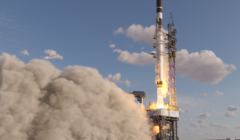
Both projects will make use of the RFA One launch vehicle.
It is part of the ESA’s Flight Ticket Initiative, which allows European companies or organisations the chance to test new satellite technologies in space. It is co-funded by the ESA and the EU.
No launches have yet taken place from the SaxaVord Spaceport, but RFA is the most advanced provider – with hopes that one will take place in 2026.
The company was the first to receive a licence for launch, while it also has exclusive use of a launchpad at SaxaVord.
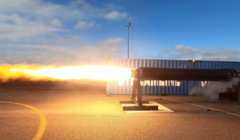
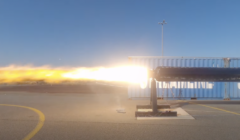
A ‘hot fire’ test carried out by RFA in 2024 ended up in flames, however, with space bosses describing it as a “successful failure” as safety protocols worked as planned during the test.