



New Jimmy Thomason exhibition a bold portrayal of life ‘home and away’

LIFE has come full circle for Shetland born artist, Jimmy Thomason writes Alex Purbrick.
As a teenager in the early 1960s working in the old fish factory at Hay’s Dock in Lerwick, he is now at the grand age of 80 proud to be exhibiting his paintings in Mareel in a display called Home and Away, close to the site where many years ago he had started life full of hopes and dreams.
In his dreams he never imagined he would become an artist. But disillusioned with packing fish every day, at the age of 16 he decided to explore the big wide world, jumping on board the St Clair ferry to Aberdeen and hitchhiking to London where he immersed himself in the Swinging Sixties and a city pulsating with energy, creativity and cultural revolution.
Fuelled by a burning desire to paint, he enrolled in evening art classes at Camberwell School of Arts which set him on a lifelong journey of creative expression inspired by a childhood love of art and nurtured by his Anderson Institute art teacher Jim Kerr, who would often remind him that ‘you should keep doing art!’


























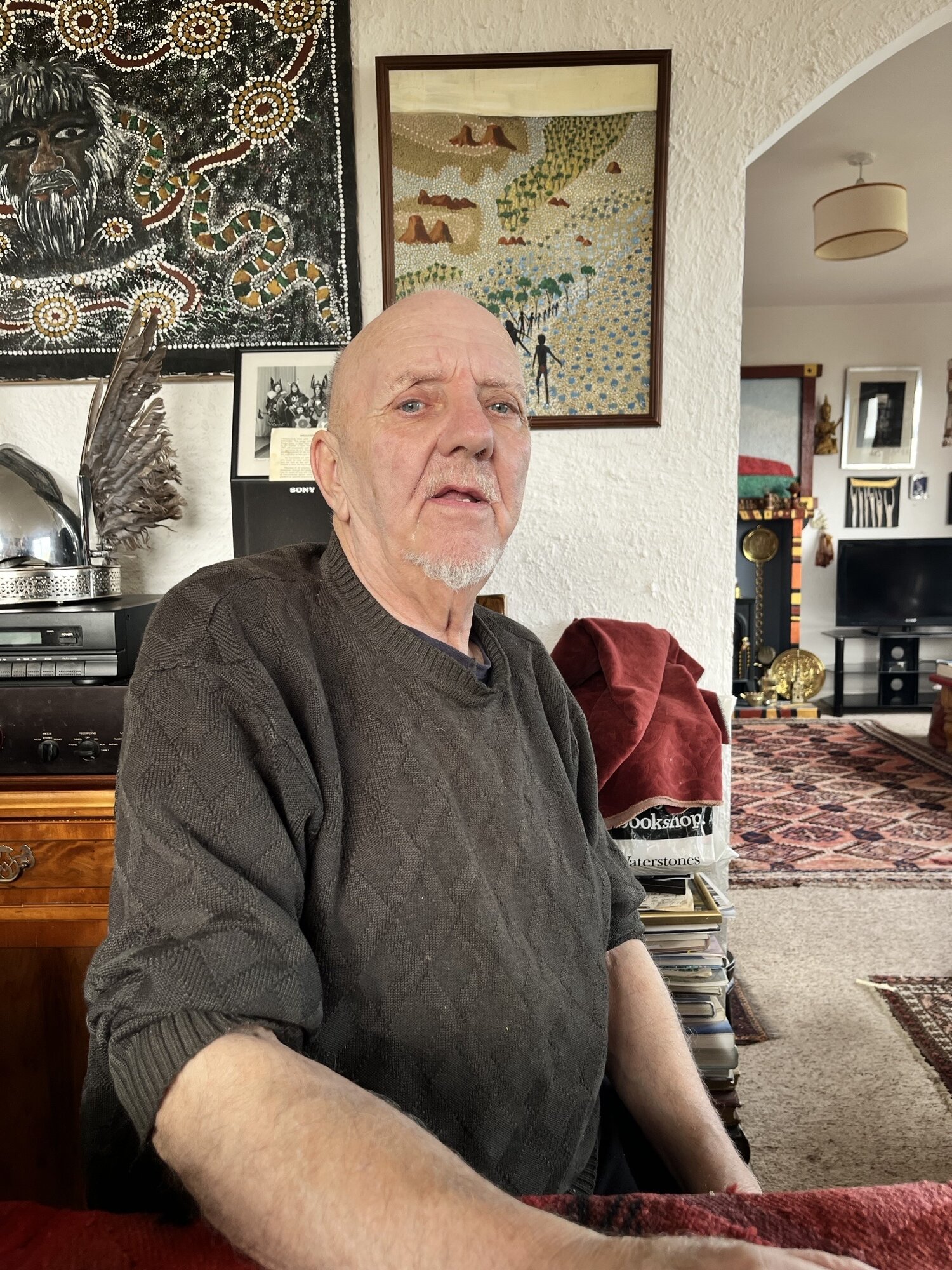
After landing a job in the legendary folk music cellar club, Bunjies in London’s West End, and watching visiting musicians such as Bob Dylan and Paul Simon before they became famous, Jimmy found that creative life in London fed his soul and with a few pennies in his pocket he travelled throughout Europe and Morocco absorbing himself in cultures so very different from his Lerwick hometown.
By the mid 1970s Jimmy had moved away from the bright lights of London to rural Suffolk where he worked as a landscape gardener for the American screenwriter and playwright Donald Ogden Stewart, and was introduced to Stewart’s friends from the Golden Age of Hollywood such as Charlie Chaplin, Katharine Hepburn, and fellow writers, Edward Albee and Tennessee Williams.
Help keep Shetland’s news open to everyone

Good local journalism takes time, care and people on the ground. Membership helps us keep reporting the stories that matter to Shetland — and keep them free for everyone to read. Members get a weekly newsletter created especially for them, local ads only, and can bookmark stories and join the conversation in the comments.
Jimmy fondly recalls those years of sharing cups of tea with Katharine Hepburn and being impressed by the “honest, down-to-earth personality of the great Hollywood star.”
By 1990, Jimmy had met his wife, Anne, a fellow Shetlander who was working in Australia as a community nurse, and he moved there and started leading art workshops for Aboriginal Australians.
Working with the Oenpelli Aboriginal community in the Northern Territories, and in later years, the Yalata community in Southern Australia, Jimmy would host workshops in an old church where about 40 to 50 Aboriginal people would come every day from 7am to 7pm as a drop-in space to make art.
“I had babies, grandparents, dogs, folk of all ages coming into paint. The Aboriginal folks that came to my workshops used to ask, ‘what do we do Jim?’ and I’d say, ‘take your paints out and dibble, dibble, dibble’. So that became my nickname, Dibble Dibble, which when I visit Australia still to this day folk call me that.”
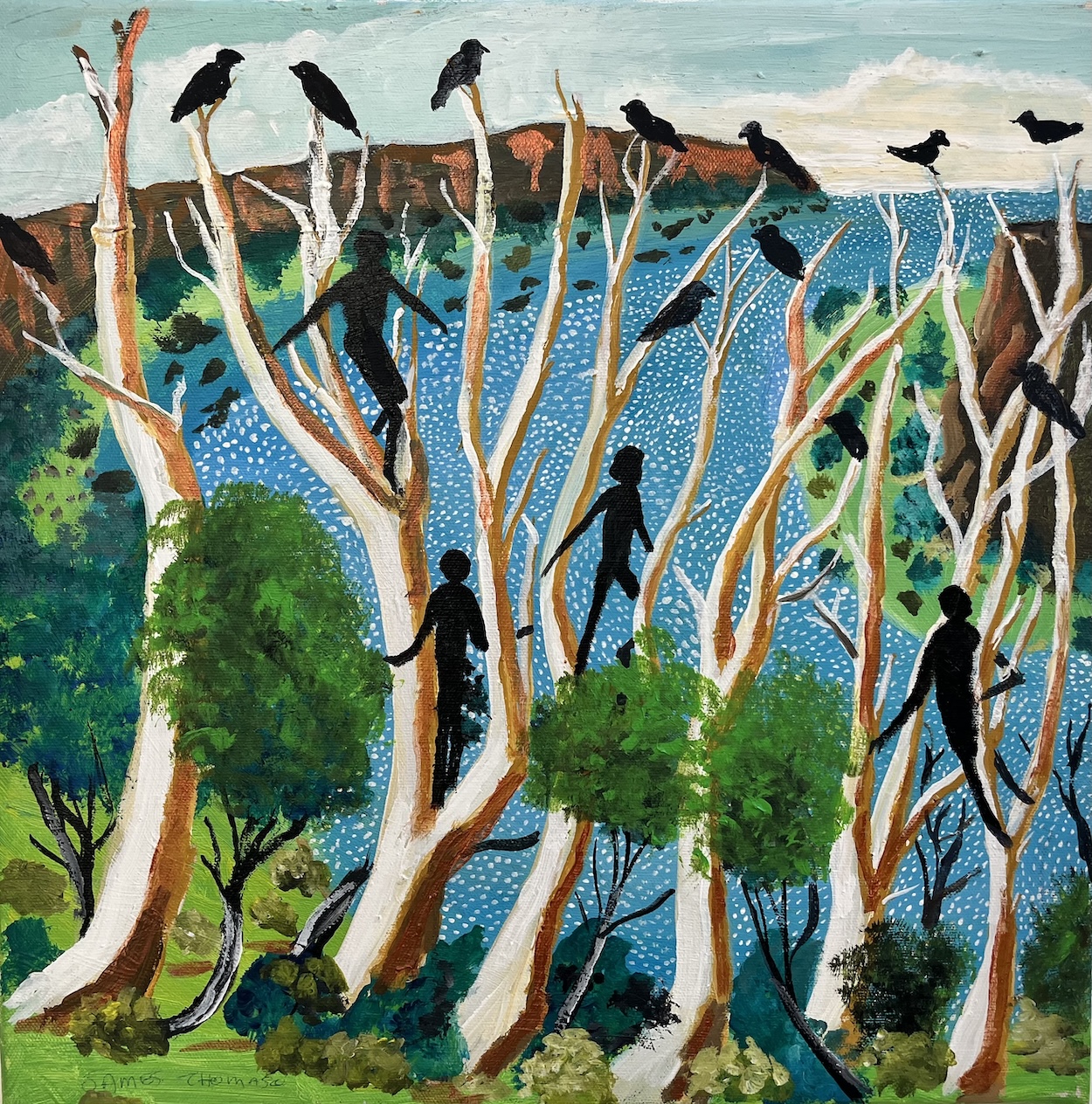
Working with Aboriginal peoples had a profound influence on Jimmy’s life as he witnessed a beautiful way of being that was rapidly being destroyed by ‘white Australian’ culture.
He speaks of the widespread discrimination towards Aboriginal peoples in day-to-day life and how “when you visit the aboriginal world you see things that can shock you and surprise you but they are a people in a state of transition, no longer in the Dreamtime but thrust violently into the white man’s world”.
Fortunately, through art, Jimmy could help Aboriginal people who came to his workshops, exhibit and sell their art at Adelaide art festival and other art festivals and galleries throughout Australia. He now recognises that some Aboriginals can make large sums of money from their paintings from a Western market desperate to consume an image from the Dreamtime as if the Western mind has long forgotten their own living myth and imagery from that world.
Jimmy began to paint the Aboriginal people and landscape he lived with, expressing how in awe he was of a culture that was so in tune with the land and their ancestors, visiting cave paintings several hundred thousand years old that are considered the oldest human art still in existence.
He does not attempt to paint as an Aboriginal would paint but more to give an interpretation of a way of life as seen through the eyes of a Northern European, a glimpse into a world that sadly very few Aboriginals are still living in where the Dreamtime and the bush are intertwined on a daily basis. His paintings are almost otherworldly; a celebration of a culture that deserves to be honoured and respected for the immense beauty and eternal wisdom it carries.
These mystical, colourful depictions of Aboriginal life are currently on display in the café at Mareel. They complement the café in a way that if they were in a gallery the heart and soul of them would be lost.
Taking time to sit with the paintings, over a cup of tea or coffee, talking to folks in the café is to me how art should be shared. The café is not a gallery as such but a place where art and socialising can sit comfortably together.
The Aboriginal peoples in Jimmy’s paintings are invited into our Shetland world and the stories they carry within them are carried into the space and heard amongst us.
The largest and most powerful painting, titled Lost and found, is a portrayal of an Aboriginal woman with a young boy whom Jimmy describes was based on a real story of a boy he knew whose mother was a nurse and a friend of his wife, Anne. The young boy wandered off from his mother and went walkabout into the bush where he was lost for several hours. Fortunately, an Aboriginal woman rescued him by following his tracks in the sand.
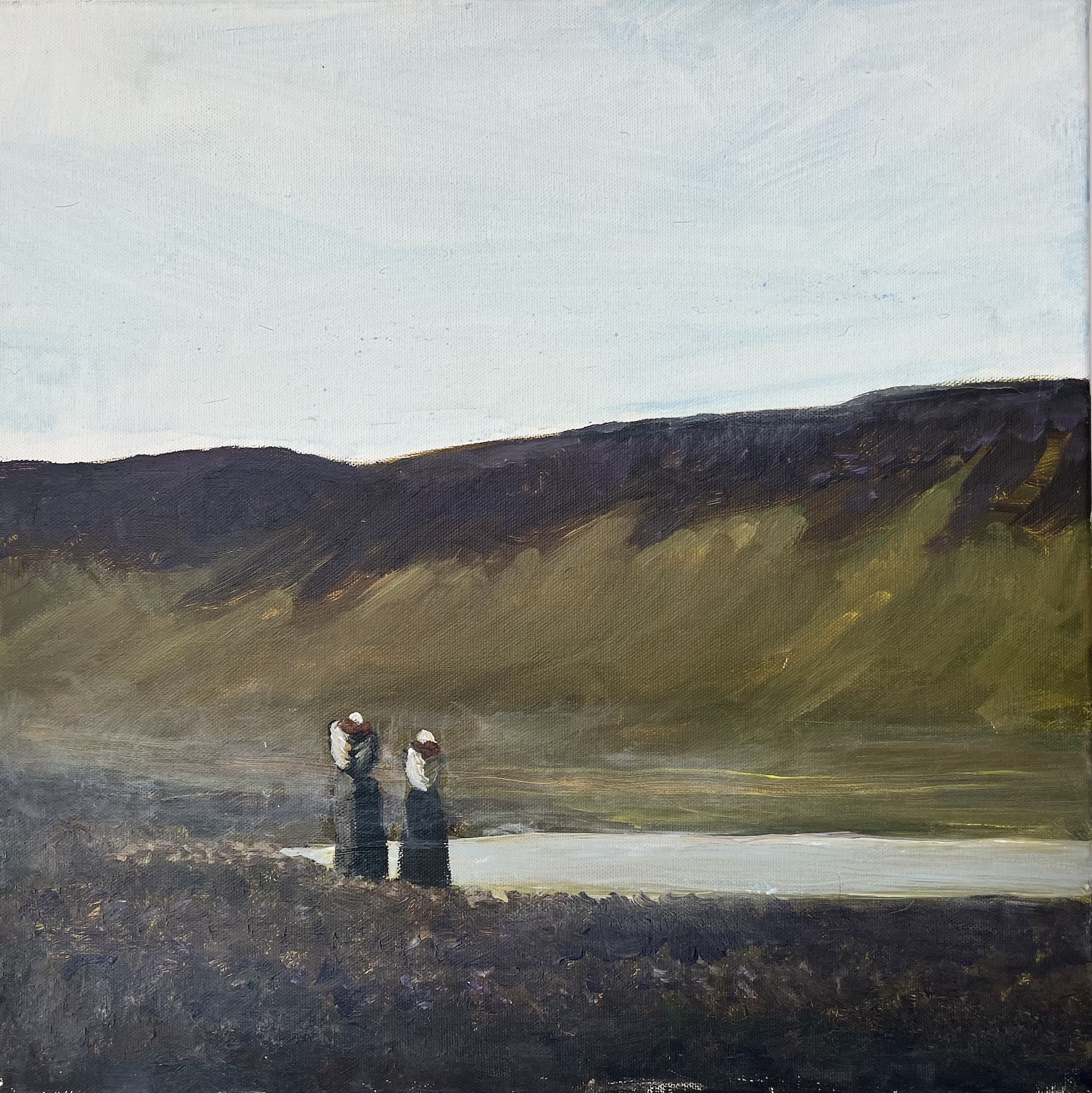
Hanging alongside the Aboriginal paintings are some of Jimmy’s Shetland work which feels like a cultural sharing, a depiction of the story of Shetland’s past as seen through the eyes of the women.
“The stoicism of women in the face of hardship”, Jimmy conveys with imagery of women in black carrying kishies, working the land amongst poverty and adversity.
Aboriginal activist Charles Perkins spoke about how ‘we know we cannot live in the past but the past lives in us’, and Jimmy’s paintings convey this belief. We can easily over romanticise the Aboriginal past just as we can with Shetland’s past, but the stories and the folk and the land continue to speak to us and tell a story in our souls that Jimmy has painted and shown to us.
The Dreamtime of Australia and the Dreamtime of Shetland are boldly portrayed in Jimmy’s art and for a man who has never been to art school and is completely self-taught, it is a gift to have someone as authentic living here in Shetland sharing their life and work.
It is rare to meet a character such as Jimmy who has lived such a colourful, varied life and hopefully he will be recognised as being one of Shetland’s most talented, unique artists.
Home and Away by Jimmy Thomason is currently exhibiting in Mareel café/bar until 3 January 2027.
Keep Shetland’s news open to everyone
Your membership helps us report the stories that matter to Shetland — and keep them free for everyone to read.