Time to resurrect the trolls

The story of the Greenlink interconnector being rerouted to avoid the Dobby memorial at Freshwater West sounds more like folklore than energy policy.
But it made me think — Dobby seems to have managed something many communities struggle to do. He got somebody to change the plans. I can’t help wondering why that seems so difficult in Shetland.
These concerns aren’t new. I and many others have raised them before in letters, consultations and public meetings, but I honestly wonder how much difference any of it makes.
Sometimes consultation feels more like recording that we’ve spoken rather than actually listening to what we’ve said. And surely public opinion should matter. We pay the taxes that fund government, public bodies and infrastructure.
Look at the Cairngorms, where millions are being spent removing pylons and putting electricity lines underground to protect the landscape. Then look at what we already have in Shetland.
We produce and land huge quantities of seafood, host nationally important oil, gas and renewable energy infrastructure, and have UNESCO Global Geopark status. These are valuable assets for Scotland and the UK right now.
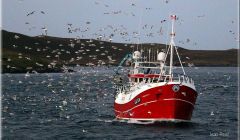
Fishing isn’t just boats. It is factories, engineering, haulage, suppliers, exports and jobs. None of it exists without healthy, productive seas. Look after them and they can keep feeding people and supporting jobs for generations.
There are studies into individual developments and seabed impacts, but I still haven’t seen enough about what happens when you put all the cables, offshore infrastructure and other developments together over 30 or 40 years.
Then there is the great Shetland energy contradiction. Oil and gas have come ashore here for decades and been exported, yet our homes have no mains gas. Many of us instead heat our homes with electricity at around 26p per kWh, compared with just over 7p for gas. We produce it, host it and export it — but somehow the cheaper energy sails straight past us.
Even producing our own renewable electricity doesn’t solve the wider problem. A householder or small business with solar panels or a wind turbine can be paid far less for electricity exported to the grid than it costs to buy electricity back. We are encouraged to generate green energy, but the system doesn’t necessarily reward the people producing it locally.
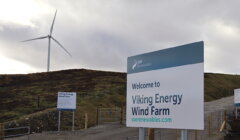
Then there are constraint payments. Viking has already received payments when electricity generation has had to be reduced because the network could not take it. Whatever the reasons within the electricity market, it is difficult for islanders to watch money being paid for energy not to be generated while our own essential infrastructure is crying out for investment.
Money on that scale could make a meaningful contribution towards ferries, fixed links and other infrastructure that Shetland has been waiting years to modernise.
At the same time, billions are being talked about for new energy infrastructure while we still rely on an ageing ferry fleet that has needed replacing for years. Islanders and businesses depend on these ferries every day, yet we seem no closer to the modern transport system we need.
We have had feasibility studies, business cases and more studies, but still no clear route to replacing the ageing fleet or delivering the fixed links that have been talked about for decades.
Apparently planning the infrastructure to export more energy is easier than planning the infrastructure needed by the people who live here.
Water should have taught us something too. After years of under-investment, pollution and criticism of private companies, public ownership is being talked about again. We seem very good at changing things after they have gone wrong. I’d rather we learned to do it before.
I also wonder what we are actually building for the future. Will people one day look at old photographs of Shetland as we now look at lost parts of the Amazon and ask why nobody realised the value of what was already there? Much of today’s renewable infrastructure may last 20 or 30 years. Our seas, fishing grounds and landscape have been here rather longer.Technology moves quickly. Hills and seabeds are rather slower at growing back.
I’m not against renewable energy and I’m certainly not suggesting we preserve Shetland in aspic. I simply think we should protect what already works. Our seas, fishing grounds, wildlife, landscape and food-producing industries aren’t empty spaces waiting for development. They are valuable working assets already providing food, energy, exports, jobs and revenue for the country.
It makes little sense to me to damage one valuable asset in the rush to build another.
That is why I now support a moratorium on major new energy infrastructure applications in Shetland. Stop for a while. Look at what is already here, what has already been approved, what else is coming and what we could lose as well as gain.
That isn’t anti-renewable. To me, it’s common sense. In our rush to save the planet, I don’t want us to destroy some of the very things worth saving. Shetland’s land, seas and way of life shouldn’t be the price paid for greener energy elsewhere.
Which brings me back to Dobby. Paul Moar’s Shetland’s Trolls and Giants gives us Grottie Finnie, Geitir, Gryla, Lukkie Minnie and Da Lang Kames Giant.If Dobby can protect his patch, perhaps it’s time for a resurrection here too. After centuries of sleep, our trolls may finally have found their new job — protecting Shetland.
At this stage, I’d back the trolls.
Regina Irvine
Whalsay