


‘You realised you were helping people’ – Shetland’s first paramedic relaxes into retirement after 39 years
Niall Bristow steps away from the ambulance after almost four decades of service

“I DIDN’T really know what I was letting myself in for,” Shetland’s first ever paramedic Niall Bristow admitted.
“But I never looked back.”
After almost four decades of literal blood, sweat and tears, Bristow last month turned the ambulance sirens off for the final time as he eases into retirement.
If anyone deserves a rest, it’s him. A 39-year veteran of the Scottish Ambulance Service, Bristow was a trailblazer as the isles’ first paramedic and has been on the scene to deliver urgent care and support at countless major accidents across the isles over the years.
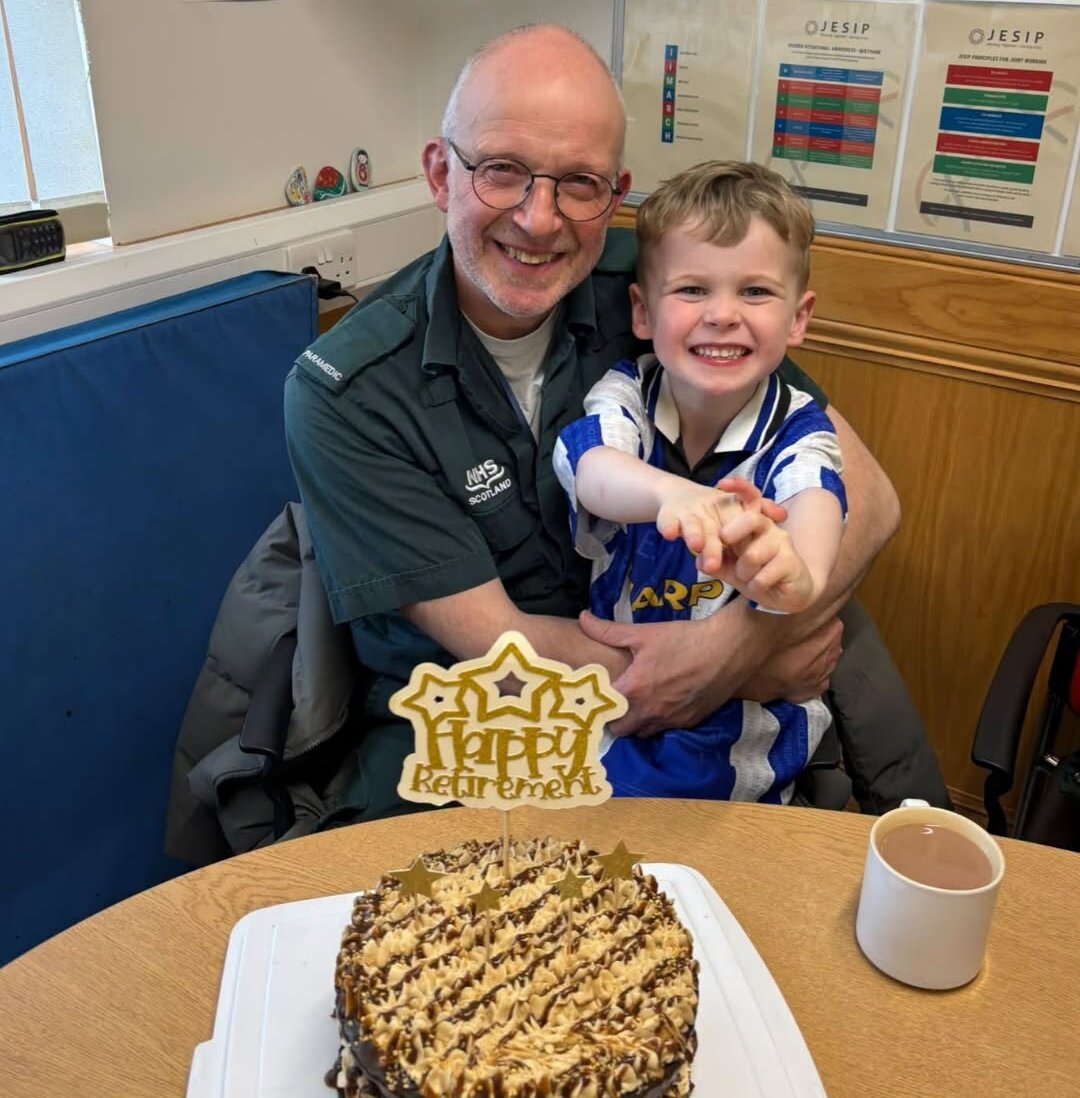
As he relaxes into retired life over a coffee last week, Bristow reveals that he had no intention of pursuing a medical role in his early life.




















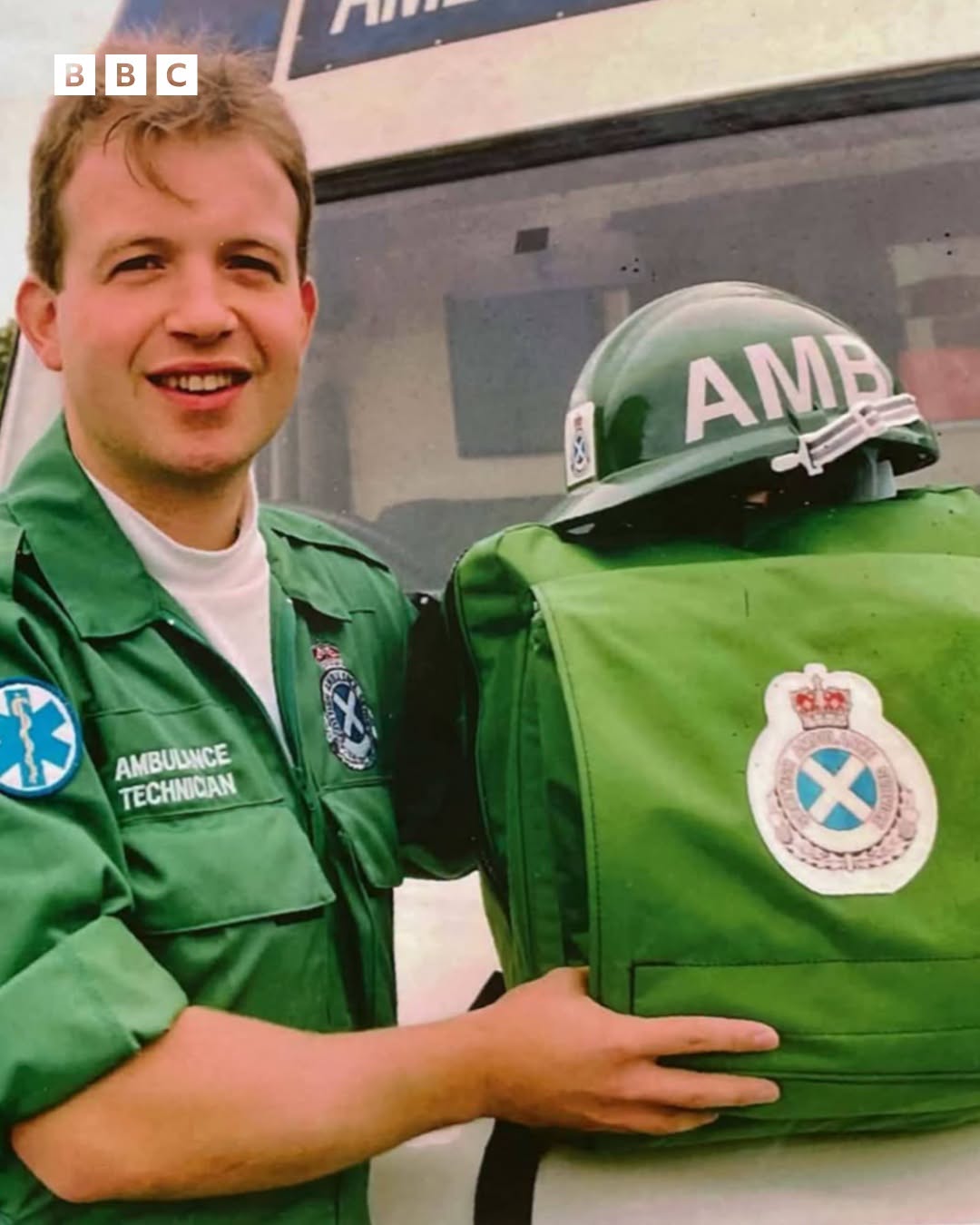
Despite growing up the son of a nurse, he says he was simply looking for a job that would keep him in Shetland back in 1987.
“I worked in the bank, I’d been there four years, and I enjoyed it,” he said.
“But it was at the time when the bank would transfer you around, particularly if you were a young, single male.
“I had just started a romance so I was keen to stay here, [to] see how that developed.”
His then-partner – who went on to become his wife – one day dropped the jobs page of the paper in front of Bristow and told him “you’d be good at that”.
The job in question was as an ambulance technician, and despite knowing little about it Bristow says he took the plunge.
Immediately he says the training was “a bit of an eye opener” – but that was nothing compared to what he found when he started on the job back in Shetland.
Help keep Shetland’s news open to everyone

Good local journalism takes time, care and people on the ground. Membership helps us keep reporting the stories that matter to Shetland — and keep them free for everyone to read. Members get a weekly newsletter created especially for them, local ads only, and can bookmark stories and join the conversation in the comments.
“It was even more of an eye opener when you started working – the training can’t really prepare you for what you’re going to see.”
Nowadays paramedics can deliver all manners of urgent and non-urgent healthcare to patients, but Bristow said it was a very different picture in the late 1980s.
“It was considered more of a manual job,” he told Shetland News.
“You can joke about it, but the only two things you needed to get the job then was ‘can you drive’ and ‘can you carry your end of the stretcher?’”
There was just four people working at the ambulance station, and Bristow said the job “just became your life” very quickly.
“A lot of the time you were working round the clock, or at least you needed to be available around the clock.
“You would have finished a shift during the day, go on call at night, and then be on shift again the next day.
“Nowadays you’re expected to have 11 hours between shifts – none of that applied.
“And you just did it, you never questioned it, I guess I was lucky that I was young – a lot of the older guys at the station found that workload pretty tough.
“Thankfully that changed – personally I would have been burnt out before now.”
Work-life balance is a big thing when considering a job nowadays. What was the work-life balance like when Bristow started?
“There was no such thing,” he admitted. “But you just took it in your stride.”
What was it about the job that kept Bristow coming back to work every day then?
“Straight away you were realising you were helping people,” he said.
“You saw that you could make a difference, you could be part of something that was good.
“Some of my earliest jobs, looking back on them, were quite traumatic, so it was an eye opener straight away.
“You’re under a lot of pressure – people are relying on you, relying on you to get it right and to be able to do the right thing at the right time speedily.
“It’s a big responsibility, but it was very satisfying at the same time.”
There is no doubt that the ambulance service has changed massively across the 39 years of Bristow’s time. He said that paramedics are now “seen more professionally” than when he first started.
Just oxygen and Entonox – gas and air – were available then for paramedics to provide. Now they can choose from an array of drugs to administer to patients if needed.
Bristow said that when he first started there were effectively three outcomes from a call-out – the patient was “going to hospital, they would refuse…or they’d be dead”.
“Now we can go to jobs and a person might expect to be going to hospital, but we might think there’s a better way,” he said.
“We can leave them at home with a pathway, a visit from a GP, a call from a district nurse… there’s a variety of things out there now.”
If paramedics are seen as professionals now, what did people think when he said he was a paramedic in the early-1990s?
“You were looked at as a driver with a first aid certificate,” Bristow said.
Bristow became a recognisable and well-liked figure in the community, partly because of his work with the ambulance service and then later in football circles – famously leading Shetland men’s footballers to Island Games gold at home in 2005.
But that could be a double-edged sword, particularly in those difficult moments where he had to deliver bad news to someone he may know.
“Straight away you were realising you were helping people” – Niall Bristow
Was it a help or a hindrance being someone that people knew when you were having to tell someone a loved one had not made it?
“I know for a fact there were times people were grateful it was me, just because they knew me or knew of me,” Bristow said.
“I think it did help that you were a well-known person. But the exact same could be said of my colleagues.
“It’s not easy, you have to take a moment – remember this was a person, how dear they were to them.
“I hope I was always able to do it in a manner that was fitting and respectful.”
Bristow is always quick to talk about how brilliant his co-workers are and have been, and how much they have helped each other across the years.
How important is it having people that you can fall back on when you’re dealing with those difficult moments?
“It’s everything, honestly,” Bristow said.
“You build up a bond, there’s no question, because you see things that are tough and you have to be able to share that.
“Your colleagues are everything and I’ve been truly blessed.”
So what are the things that stand out when Bristow takes time to stand back and look back over the past 39 years?

The first he mentions is the famous “big snow” of 1995, when a sudden blast of wintry weather left Shetlanders without heating and electricity over Christmas, with the roads in, out and around Lerwick impassable.
With no way of getting the ambulance out to people in need, the ambulance crew were instead flown throughout the isles in the coastguard rescue helicopter to pick people up.
“That was an interesting time,” Bristow said.
“We were getting collected from the running track by Oscar Charlie and picking up pregnant ladies, visiting vulnerable people, for example.”
Another personal highlight for the sports-mad Bristow was the opportunity to volunteer as a paramedic at the 2014 Commonwealth Games in Glasgow.
Despite his fellow volunteers complaining about a slot at the finish line of the athletics track, Bristow said he thought to himself “watching world class athletes, I’ll have a bit of that” and threw his hand up.
“It was absolutely brilliant,” he said.
“It was such a quality race and I just had the biggest smile across my face. I actually ended up briefly on the TV and my daughter Katie managed to get a screenshot of it.”
Bristow stepping back gives him more time to spend with his family, and coaching the Shetland women’s football team – who he has helped guide for the past 18 months.
That leaves a gap for someone to hold their end of the stretcher up now, and Bristow’s only advice to anyone considering it is: “Go for it”.
“If you’re in any way interested, go along the station and speak to people there.
“I don’t regret it, I’ve been very, very lucky. My wife’s intuition all these years ago turned out to be fantastic for me.
“I’ve been a bit overwhelmed this last few weeks and really quite humbled by some of the things people have said – I could never have believed that for what I still think was just doing my job.”
Keep Shetland’s news open to everyone
Your membership helps us report the stories that matter to Shetland — and keep them free for everyone to read.


