Australian artist delves into Shetland roots in new exhibition
Topics of home and identity are highlighted in Hannah Parker’s Mareel exhibition ‘The distance from Shetland to Australia and back’

“Whan will du win hame?”
This is a question many old folk in Shetland would ask those that had left these island shores to migrate to far off lands such as Australia, Canada and New Zealand, writes Alex Purbrick.
As Shetland, for them, was the centre of the world. It was home, the place you always returned to even when you had been away for a long time.
With so many Shetlanders never returning ‘home’ to Shetland but settling in a foreign country, making it their new home, what happens to their identity and sense of belonging when their language and stories cannot interpret their new landscape and the alien culture they move into?
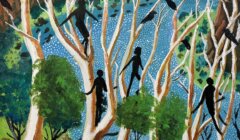
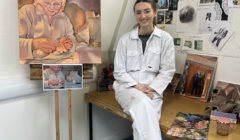
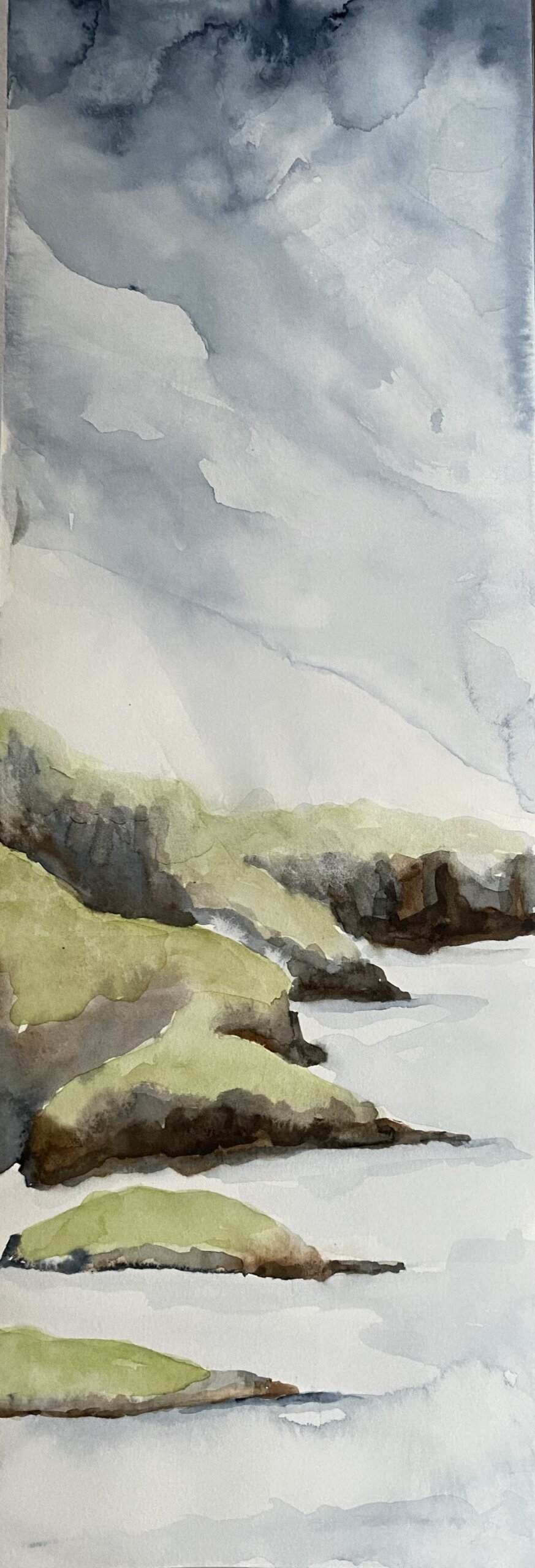
These are questions asked by Australian artist Hannah Parker in her exhibition, The distance from Shetland to Australia and back, currently on show at Mareel.
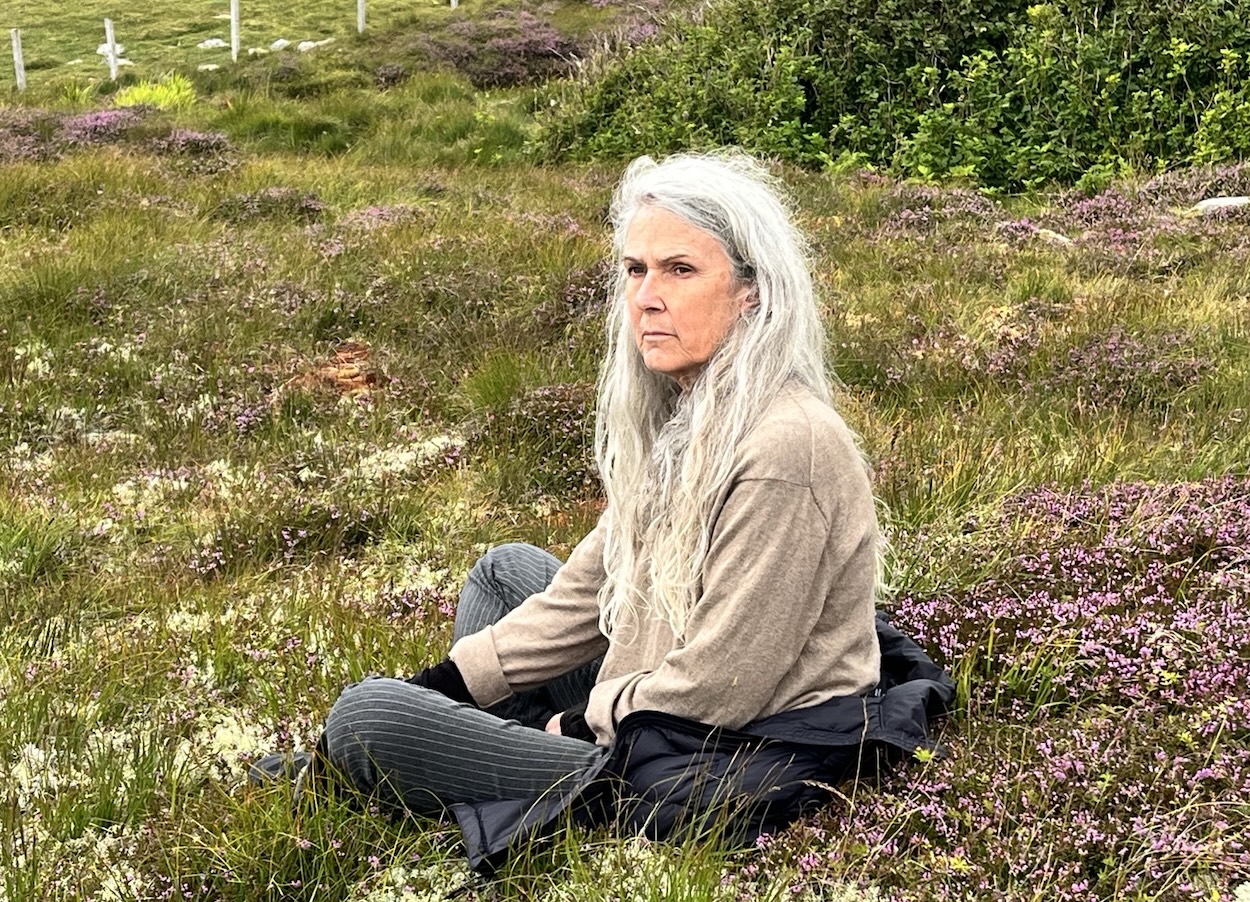
Hannah has visited Shetland several times over the years, most recently in October 2024 when she was an artist in residence at The Booth in Scalloway creating watercolour paintings, writing and weaving expressing her connection to her Shetland ancestry. Her grandmother, Margaret Tait Johnson, emigrated from East Burrafirth, Shetland in 1912 to Australia where she settled with her two sisters, never to return home.
Hannah was always intrigued by Margaret and wanted to unravel the roots of her belonging to her home and soil.
“I know Australia is my home but coming back here to Shetland gave me a clearer picture about why I feel the way I do and brought up questions about what gets lost in the migration and colonisation process,” she said.
Raising questions about colonisation and living in Australia on unceded land taken violently from the Aboriginal peoples can be unsettling for many to consider, especially when their ancestors were part of the chain of emigrants that formed the monster of progress and genocide on Native people’s lands.
Help keep Shetland’s news open to everyone

Good local journalism takes time, care and people on the ground. Membership helps us keep reporting the stories that matter to Shetland — and keep them free for everyone to read. Members get a weekly newsletter created especially for them, local ads only, and can bookmark stories and join the conversation in the comments.
The clearances in Shetland in the 1800s were a colonisation mostly by mainland Scots that attempted to displace indigenous Shetlanders from their traditional ways of living on the land to make way for mass sheep farming and ultimately an industrialisation of their home.
The devastation and heartbreak of people desperate to flee poverty and seek a better way of living in the New World countries resulted in there being a severance in the fabric of their culture which Hannah recognises.
“When I read about the stories of the clearances in Shetland, I found it really moving and I realised why a lot of people in Australia don’t want to talk about where they come from and they don’t want to look back because it would be too painful to talk about,” she said.
“There’s a lot of people in Australia who say they have no culture and they think they have no history and they don’t care.
“Indigenous peoples know the importance of family, connection to language and stories. I worked with Aboriginal peoples for 30 years and they always asked me, ‘where are you really from?’”
Spending time with Aboriginal peoples in their communities and supporting them to make art through screen printing and painting became a reciprocal process as Hannah also learned how to weave from Aboriginal women, showing her how to use natural fibres from the plants of the desert.
Their roots in their culture and land helped Hannah search for her own cultural identity which she realised was woven into the fabric of Shetland. Returning to her grandmothers’ homeland, which Aboriginal peoples call, ‘Returning to Country’, she realised it connected her to a sense of rootedness with her ancestral past and her home in Australia.
She speaks of how she realised “that culture is really important and language holds knowledge”.
“When you lose your language, you lose knowledge and if language is taken from one place to another it doesn’t really fit there because it’s holding information from another place,” Hannah added.
“When people are transported across the world, to a place where there are often no reference points to anchor their culture, their language and stories cannot deeply read and talk to their new landscape and there are no familiar patterns to map land, sea and sky.”
Returning to Shetland and painting the sea and sky of her ancestral home brings peace to Hannah and forges her connection to her past as well as present sense of self.
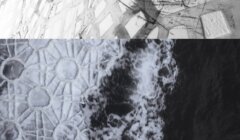
Her screenprint South Whiteness reflects this with her use of poetic language scribed on top of the image to express her longing to ‘feel’ the soul of the land and sea.
At the water’s edge at South Whiteness
I stopped walking and sat
Watched a seal until it was out of sight
Watched the wind and the water and a kestrel
Closed my eyes to feel the place
To open to it
I sang a long low note that moved with the wind
When I opened my eyes there was an otter out on the water swimming along the surface.
Using art to connect to our cultural roots and identity is a powerful medium in these divided times we live in where mass migration of cultures colliding and attempting to find a common shore of being are at the forefront of our discussions in how we can all live together.
We are all a cog in the colonial machine but how we choose to share and celebrate our cultures, our language, our stories in a way that does not displace or destroy the ‘other’ is surely the quest for the age we now find ourselves living in.
‘The distance from Shetland to Australia and back’, by Hannah Parker is currently on show in the upstairs café at Mareel until 18 September.
You can also meet Hannah Parker at Mareel between 11am-12pm on Tuesday 25 August.
Keep Shetland’s news open to everyone
Your membership helps us report the stories that matter to Shetland — and keep them free for everyone to read.