



Frustration simmers at Scalloway pool ‘impasse’
Councillor Davie Sandison said a report compiled by the SIC chief executive offered ‘no pathways for resolution’

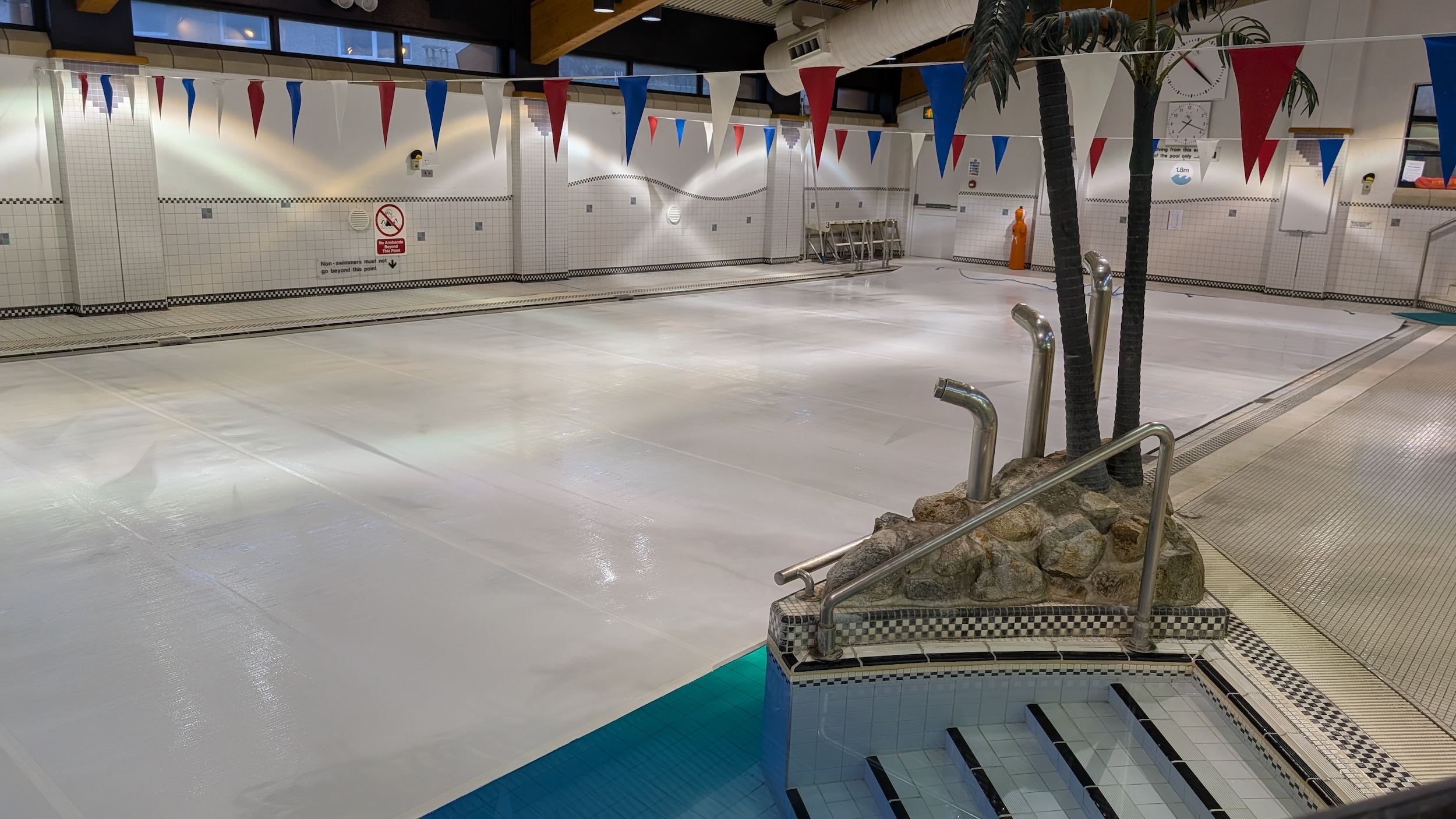
CAMPAIGNERS in the council chamber on Wednesday hoping for the reopening of the Scalloway swimming pool have been left disappointed at a so-called “impasse”.
Elected members were asked to simply note a report produced by Shetland Islands Council (SIC) chief executive Maggie Sandison – a document which said in her view there was no long-term sustainable plan to maintain the pool, which is owned by Shetland Recreational Trust (SRT).
She said the message from the SRT is that it would require an extra £380,000 a year until 2030 to continue running the Scalloway pool.
This is because the SRT says the savings achieved by closing the pool – £952,000 through to 2030 – are less than the additional income required to continue operation, because maintaining staffing at the current levels is “unsustainable”.
The report started that the deficit in the SRT’s projected income and expenditure between 2025 and 2030 was £675,000.


























Local councillor Davie Sandison, who instructed the report back in March, said he was not happy to note the report – “far from it”.

He claimed the report was “wholly inadequate” and failed to show that any “innovative options” had been explored.
There were a variety of views on show in the chamber – from suggestions towards a community takeover of the dormant pool, to a view that it is solely a matter for the SRT and its core funder Shetland Charitable Trust.
However convener Bryan Peterson said Wednesday’s full council meeting was not the time or the place to be raising further actions – with instead the focus being on noting Maggie Sandison’s report.
The Scalloway pool’s closure in April came as the SRT – which operates seven other leisure centres across Shetland – sought to become more financially sustainable.
Help keep Shetland’s news open to everyone

Good local journalism takes time, care and people on the ground. Membership helps us keep reporting the stories that matter to Shetland — and keep them free for everyone to read. Members get a weekly newsletter created especially for them, local ads only, and can bookmark stories and join the conversation in the comments.
The SRT’s core grant from SCT – the organisation set up with oil funds in the 1970s – for the period between 2025 and 2030 is £19.6 million, up from £16 million.
However the report to councillors said SRT’s requested uplift was “not fully met” which led to trustees determining that their own reserves would be exhausted by 2028/29 – leading the decision to close one of its eight facilities.
Earlier this year SRT had requested its five-year grant to be reconsidered to maintain its eight centres, but SCT said this was not possible.
A petition was quickly started after the unexpected news in January that the Scalloway pool was to close, which attracted nearly 5,000 signatures.
In March Davie Sandison successfully proposed a motion in the council chamber to instruct the SIC chief executive to compile a report on the SIC’s arrangements with the SRT and the sustainability of the trust.
Part of the motion from Davie Sandison was for the chief executive to report back on “options for a sustainable long-term plan to maintain the operation of the Shetland Recreational Trust and the Scalloway Pool into the future”.
The message back from Maggie Sandison was that there is no sustainable long-term plan to maintain the Scalloway Pool, given funding challenges.
She highlighted that the SRT risked insolvency if it did not close a facility, and that the SCT was not in a position to extend its grant offer without affecting other organisations.
At Wednesday’s full council meeting Maggie Sandison said it was unusual for the SIC to discuss other organisations’ business but added there was an expectation the motion report would be considered in public.
The report said the SIC spent £766,000 last year on the use of SRT premises and other services, including for PE swimming lessons.
Maggie Sandison said the SRT has confirmed that with its current core grant, the organisation will be sustainable until 2030.
She said the SIC will be involved in discussions around the SRT’s financial projections after 2030.
The chief executive said having considered the SIC and SCT’s positions, and the SRT’s projections, “I have notified you in my report that there is no sustainable long-term plan to maintain the Scalloway pool into the future, given there is no additional source of sustainable funding that can be identified.”
What followed was then a lengthy round of questions and answers between Davie Sandison and Maggie Sandison.
One topic raised was whether options for the pool were discussed.
Maggie Sandison began by saying that the SRT’s core funding from the SCT runs through to 2030, but the ability to look long-term is a “real challenge” for publicly funded organisations – including the council itself.
“I think it was probably unrealistic to ask for a sustainable long-term plan, as I haven’t got one for the organisation that I work for and the one that you employ me to manage,” she said.
The chief executive said that giving councillors assurance around the SRT being sustainable through to 2030, with the three organisations set for discussions, was the best she could do.
“I can’t give you anything that will be more sustainable than that,” she added, and continued by saying that funders are not able to offer the SRT more.

Photo: Ben Mullay
Davie Sandison said this was “very disheartening” and then questioned what attempts had been made to look at alternative options for the pool, such as corporate sponsorship, community fundraising and engagement with the voluntary and third sector.
Maggie Sandison reiterated that the SRT had to make a series of decisions regarding its own financial sustainability now and into the future.
“Exploring other options continues to be an availability if people felt that they had value,” she said. “I don’t think there is that level of money, that £380,000, out there.”
Maggie Sandison also said the SRT has described their staffing levels as no longer “safe” across its full network of eight centres.
A few years ago the trust embarked on a ‘turnaround plan’ to cut costs, with a reduction in general staffing by 12 per cent and the loss of the management tier between its chief executive and centre managers.
In debate, Davie Sandison said in his view the report did not provide options for a sustainable long-term plan for the operation of the SRT and the Scalloway Pool.
He said that instead of offering options, it was a report that stated the position of each organisation with “no evidence” of discussion of other solutions.
The Shetland Central councillor said there remained unanswered questions on the finances of operating the Scalloway pool, while he also said it seemed the organisations involved were not budging a “single inch”.
“The report offers no further actions for members to be appraised of, no pathways for resolution and no hope for finding a route towards the reopening of the Scalloway pool,” Sandison said.
His ward colleague Ian Scott also paid tribute to the “magnificent effort” from the Save Scalloway Pool campaigners.
He said the SRT was unsustainable because the “mothership of all trusts”, SCT, has refused to fund it further.
“If the trustees aren’t prepared to keep it open, I suggest that they can step down and let people who are onto the trust,” Scott said.
He also said the motion to the chief executive was “futile”. “Our council is in no position to say anything, because we’re exactly the same.”
After Scott’s contribution depute leader Gary Robinson said any “attacks” on the chief executive and SRT/SCT trustees were uncalled for.
Robinson said the SIC cannot dictate to another organisation.
He said it all comes back to sustainability, and added that since the meeting had started around two hours earlier the SIC had spent around £14,000 from its reserves – half of which is sustainable.
“For any progress to be made, the organisation that you’re dealing with has to be willing and able to make those changes,” the Lerwick North and Bressay councillor said.
Robinson commended the SRT for operating its trust sustainability, and added: “I’m not sure where we can go with this beyond here.”
Shetland Central member Moraig Lyall meanwhile said the SIC’s role is to be a customer of SRT – with the local authority paying a “substantial amount” for services.
She said in her view any request has to be around the SCT and SRT continuing to work together to ensure access to facilities is maintained.
Shetland South member Allison Duncan also paid tribute to campaigners and local councillors, and said he was prepared to put an option on the table.
“This is the perfect opportunity in my opinion for the Shetland Central constituency and the wider communities to support and enter dialogue with the SRT and the SCT to purchase this closed asset,” Duncan said, “and identity financial models and income streams to reopen and run this facility themselves.”
Lerwick South member John Fraser also suggested if the SRT was looking to relinquish the asset then the “galvanised, energetic and cohesive” community could think about whether a local takeover was possible – providing there was a sustainable model.
He also praised the SIC for having the discussion in public and said “it would be really positive if other organisations followed suit”.
But Fraser also said it should be noted that trustees of the SRT and SCT do their roles out of “goodness and passion” for Shetland.
Shetland South member Robbie McGregor said he “firmly believed” there needs to be a way out of the “impasse” regarding the pool, while Lerwick councillor Cecil Smith said there needed to be continued engagement with the trusts so people could still use the facility.
Remarking on the SCT’s support for SRT, Lerwick South councillor Dennis Leask – who chairs the SIC’s development committee – highlighted that the cost of swimming and sports on the mainland is higher than it is locally.
“We’ve been a very subsided community for many years and I think we’re struggling to come to terms with that,” he said.
“I think this is maybe just the start of some really tough decisions that’s going to come before us and other organisations in the community.”
In a social media post after the meeting the Save Scalloway Pool group said: “Unfortunately the chief executive’s report presented at the SIC meeting this morning did not deliver any options for the re-opening of the Scalloway pool, even though this had been specifically requested.
“The report puts forward the individual stance of the SRT, SCT and the SIC. Where was the partnership working to find a solution?
“Once again the signatures of 5,000 people and the community impact survey has been completely ignored.”
The SRT previously said it will retain ownership of the building for a longer period of time and has agreed to maintain the fabric and fittings of the building in the “best way possible” to allow for consideration of continued use.
It said this is to give the community “further opportunity to suggest alternatives and allow the possibility of reopening should a sustainable long-term solution be identified”.
Keep Shetland’s news open to everyone
Your membership helps us report the stories that matter to Shetland — and keep them free for everyone to read.