Government looking at better support for smaller food producers after 2030

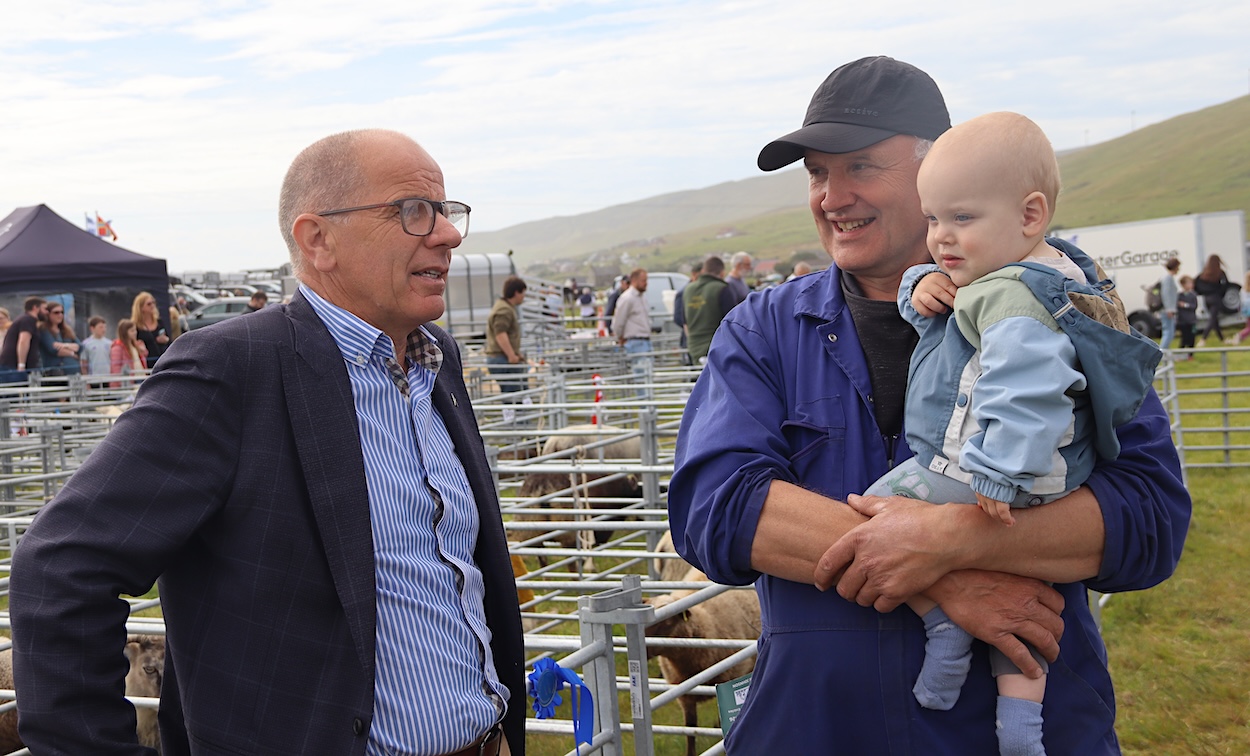
SCOTLAND’S minister for agriculture, marine and the islands has acknowledged that Shetland is facing “a number of challenges” while also enjoying “fantastic opportunities”.
Jim Fairlie was visiting a packed Cunningburgh Show on Wednesday and was evidently enjoying it.
The minister has been on a three-day visit to the isles, speaking to representatives of the various sectors that are all part of his large portfolio, including, fishing, fish farming, UHI Shetland, the council and many more.
Speaking about island resilience and food security, and what this means in the context of crofting, Fairlie said in the long term it was his aim to make island life more resilient by better supporting small producers.
He said the government was already acknowledging that island life was different and had its specific challenges; and this was why the national islands plan and the islands impact assessment system was put in place.
Fairlie said Mairi Gougeon – the previous rural affair secretary – had introduced a food resilience plan to ensure that the country produces enough food.
And he said the supermarkets, operating a ‘just in time’ system had to be part of the solution for islands because “if a ferry stops, that’s where the problem lies”.
“The supermarkets themselves have to provide stability of supply because they control 90 per cent of the grocery markets in the country. That give them a responsibility,” he said.
“I am not going to demonise the supermarket because we need them as our partners to make sure the food gets there, and that means there has to be a way of protecting consumers but also protecting the prime producers.
“In an island context, I accept that this is different”, adding that for this reason the Scottish Government had kept in place a system of direct support to crofters and farmers.
Help keep Shetland’s news open to everyone

Good local journalism takes time, care and people on the ground. Membership helps us keep reporting the stories that matter to Shetland — and keep them free for everyone to read. Members get a weekly newsletter created especially for them, local ads only, and can bookmark stories and join the conversation in the comments.
He continued saying: “We are working with nature, we are achieving our ambitions for biodiversity and climate change and emission reduction, but there are also opportunities to do more.”
And he called on the crofting and farming community to work with the government as partners to ensure “that food resilience is there”.
“There is no reason why you can’t have a vertical farming opportunity here in Shetland, the same you have in any other part of the country,” the minister told Shetland News.
“And you have the energy here to allow you to do that. (…) The Polycrubs up here are phenomenal.”
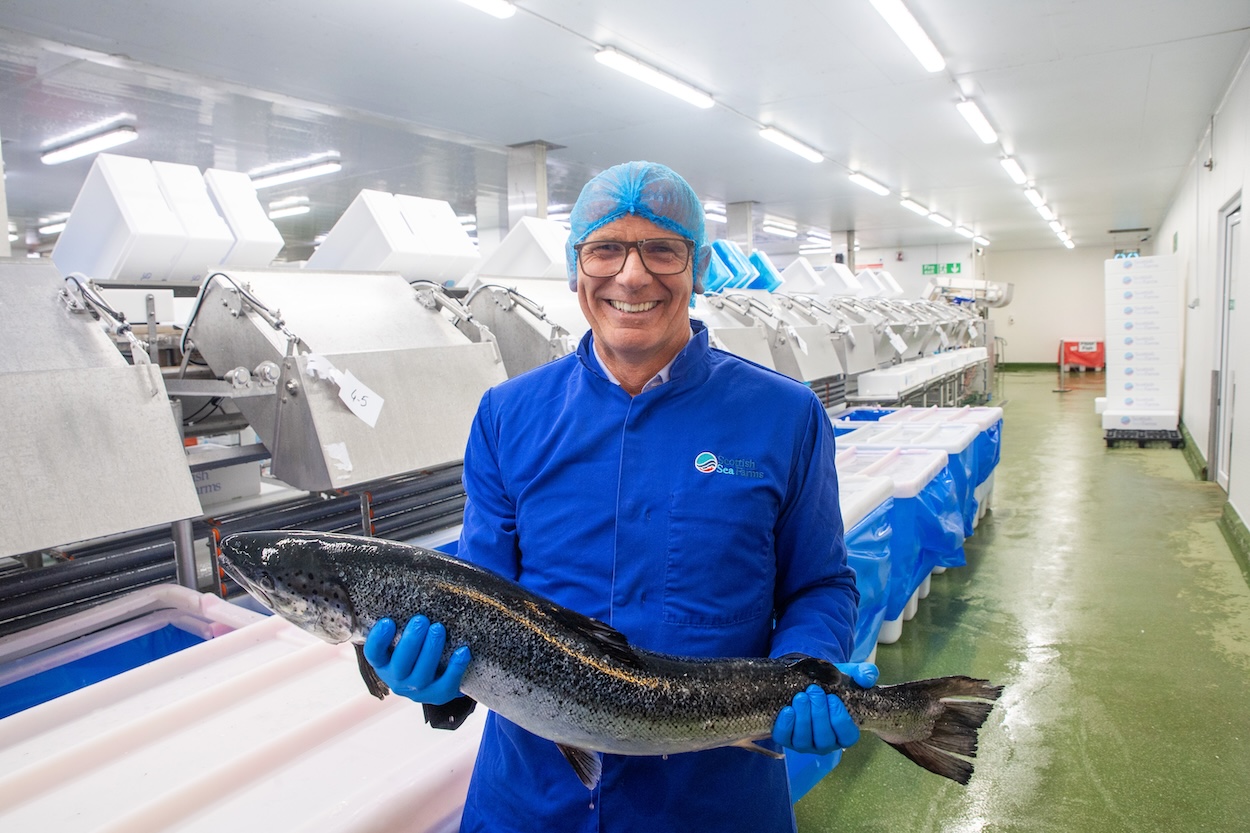
Photo: Dave Donaldson for Salmon Scotland
A farmer and shepherd himself, Fairlie was the first in Scotland to start a farmers’ market in Perthshire. That was back in 1999.
“As far as local supply chains are concerned, I am a massive fan,” he said, adding that he and his team were looking at how smaller producers could be better supported.
“Between now and 2030 things will stay very much the same than what they are,” he said, promising that from 2030 onwards the government is looking at introducing a series of measures that would “make that money work better in the local context”.
He said his vision was for islands to become “more resilient by giving more opportunity to the people who are active, and put resources to the people who can actually grow stuff in the area they are living in.”
“That is the vision for me, he said, and then adds before shooting off to his next appointment: “I love this place. There is something about Shetland that feels so good to me.”
Keep Shetland’s news open to everyone
Your membership helps us report the stories that matter to Shetland — and keep them free for everyone to read.