


‘Tension’ between reform and maintaining performance, health board meeting hears

THERE is a tension at play between public sector reform and maintaining healthcare performance, a meeting has heard.
NHS Shetland chief executive Brian Chittick added that the “money that’s available isn’t as much we thought we would be getting”, particularly in areas like planned care.
It comes amid wide-ranging public sector reform in Scotland, with the country’s mainland health boards potentially reducing in number to two.
For the three island areas a different solution is likely, with a single authority model – where the council and health board merges – and more bespoke arrangements among the possible options.
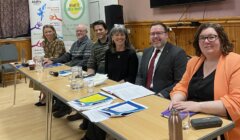
During a meeting of NHS Shetland’s board on Tuesday morning, Emma Macdonald sought assurance that work on public sector reform “isn’t going to distract from some of the things we need to do around our financial performance”.
She said NHS Shetland has a good history of maintaining its finances, but asked if the health board can keep focused.





















“The tension that’s playing out in the system is exactly that ask of reform, change…but also maintaining performance in key areas like planned care, elective care, urgent unscheduled care and cancer performance,” Chittick responded.
He said some of the “change aspects” will be funded by money NHS Shetland has put towards a strategic change oversight group.
“It’s a real case of flying the plane and then changing the direction or changing the passenger list or whatever it might be,” he added.
NHS Shetland’s director of finance Colin Marsland reiterated that health boards are still required to meet their financial targets, because the government still needs to meet its own targets.
“Quite often the public sector, when reorganisations occur, the eye is taken off the ball on all fronts because people are concerned about reorganisation and shaping the future,” he said.
Help keep Shetland’s news open to everyone

Good local journalism takes time, care and people on the ground. Membership helps us keep reporting the stories that matter to Shetland — and keep them free for everyone to read. Members get a weekly newsletter created especially for them, local ads only, and can bookmark stories and join the conversation in the comments.
Marsland said meeting financial targets is “our intention for however long our future may last”.
“We are financially stable but we do have pressures to address in identifying what is a stable and recurrent medical staffing model in a number of areas from GPs, to obstetrics, to physicians and mental health.”
He questioned what the “optimum model” is, given that consultants and GPs these days are less likely to want to work whole time equivalent hours.
Medical director Kirsty Brightwell meanwhile said that “subnational working, or working together” might help with risk assessment recommendations.
“There is an opportunity in terms of working with other boards, but there is also a risk, because we do stuff in Shetland that we do because do it really well, but we do it in a Shetland way,” she added.
“But we are going to have to work differently in the future, and that may change what we need in terms of staffing and workforce.”
Keep Shetland’s news open to everyone
Your membership helps us report the stories that matter to Shetland — and keep them free for everyone to read.