
Adult social care redesign report given first airing in front of councillors
The report says Shetland could ‘pioneer’ how adult social care is delivered

SHETLAND has an opportunity to act as a national “pioneer” as the council looks to reshape how adult social care is delivered in the isles.
That is one of the key messages contained in a draft strategic outline case report on a sustainable adult social care model which got its first airing in front of councillors this morning (Monday).
The report was approved by the policy and resources committee, but still needs to go in front of the integration joint board on Thursday and the full council next week.
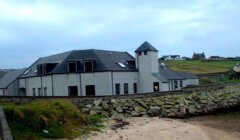
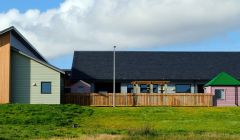
At Monday’s meeting Shetland Central member Moraig Lyall successfully added in a request that the council investigates the use of its Brevik Cottage properties on Lerwick’s Burgh Road, which are currently being refurbished, as a pilot for a ‘core and cluster’ model of care.
The core and cluster supported living model is highlighted in the report as the key preferred way forward for adult services, which includes supporting people with learning disabilities, complex needs and autistic spectrum disorders.























This would provide people with their “own front door while sharing a central staff hub allows for shared resources and efficient staffing, significantly reducing the reliance on high-cost, single and low occupancy tenancies”.
For community care resources, such as those requiring a care home or those who receive support at home, a “fundamental redesign” would be needed so that fewer staff can deliver greater volumes of care.
“Structurally, this necessitates a shift toward flexible, community-based supported housing and extra care models,” the report says.
There is also a suggestion that more telecare and digital health records are rolled out to reduce workforce time on-site and through administration.
The report highlights that adult social care in Shetland is constrained by a “structural workforce deficit”.
The message is that the personnel required to meet current and future demand in an ageing population are not available.
This means that the current service has been deemed unsustainable, with the report pointing towards a more community-based model.
Prior to Monday’s meeting third sector organisation Shetland Community Connections encouraged the community to “look beyond discussions about cost and focus on the difference social care makes to people’s lives”.
It said that recent media coverage has “understandably highlighted the financial challenges facing health and social care services”.
“However, social care is about much more than budgets. It is an investment in people, communities and the future of Shetland,” the group added.
“Social care enables people to live independently, pursue their ambitions and participate fully in community life. It supports families, helps unpaid carers continue working and contributes to the wellbeing and resilience of communities across the islands.”
At Monday’s meeting cost was not brought up by councillors, with members advised that the strategic outline case is about setting out the case for change.
More details on solutions would come in the next business case stage, which could take between 18 and 24 months to complete.
Director of health and social care Jo Robinson opened by saying that the purpose of the programme is to develop a sustainable package of solutions that will secure the future of service delivery in Shetland.
She said the case for change has been informed by an “extensive” analysis of data sources, as well as consultation with communities.
Robinson said there is no one size fits all approach to care, but things need to change.
The meeting was also given a presentation from Graham Blackett of Biggar Economics, which worked on the strategic outline case.
He said the work of frontline staff is “widely recognised and appreciated” by the community, but added that folk feel the system is “straining at its limits”.
Development director Neil Grant spoke at the meeting too, telling councillors that a programme board spanning a range of services has already been set up.
He warned however that getting access to staff, who are already busy with their day to day job, can be a challenge.
Lerwick South member John Fraser, who is the vice-chair of Shetland’s integration joint board, said “we can’t underestimate just the importance of what’s been placed before us today”.
He spoke of the oft-used “definition of insanity” phrase to highlight why change is needed.
“I think it’s been highlighted that no matter much many we throw at this on the existing model, it would still be unsustainable,” Fraser said.
The importance of prevention work to help people before they get to the stage of needing care, however, was highlighted by Lerwick South councillor Dennis Leask, and echoed by Shetland Central’s Davie Sandison.
Lyall, meanwhile, pressed for the nine homes in the Brevik Cottages scheme to be explored as a possible ‘core and cluster’ pilot location.
She said they would be the “perfect opportunity” to do so given they are being refurbished.
Lyall’s amendment, to instruct officers to investigate its potential use, was successfully approved.
In a press statement issued on Monday morning, Shetland Community Connections manager Karen Hannay warned against the wider conversation on social care “starting and ending with how much it costs”.
“A more important question is what we achieve through that investment. When social care works well, it gives people the opportunity to live the life they want,” she said.
“It helps people participate in their communities, pursue their interests and achieve goals that might otherwise seem out of reach. We have seen examples of this right here in Shetland.
“Over recent months, with the support of Gaada, some local artists with additional support needs have been able to showcase their work at the V&A Dundee.
“COPE offers people the opportunity to work in a supportive environment. There are many other examples of this in Shetland. These achievements do not happen in isolation. They happen because people receive the right support at the right time.
“Social care benefits everyone, not just those who access services directly. It enables unpaid carers to remain in employment and continue making a vital contribution to our economy and our communities.
“At a time when many sectors are experiencing workforce challenges, helping people stay in work is more important than ever.”
Shetland Community Connection is a third sector organisation working to support people and strengthen communities across Shetland.
The organisation said it welcomes the discussions taking place through the sustainable model of adult social care in Shetland programme and supports a focus on outcomes, prevention, inclusion and community participation.