


Campaigners’ concern at proposed site for Shetland cable infrastructure in Aberdeenshire

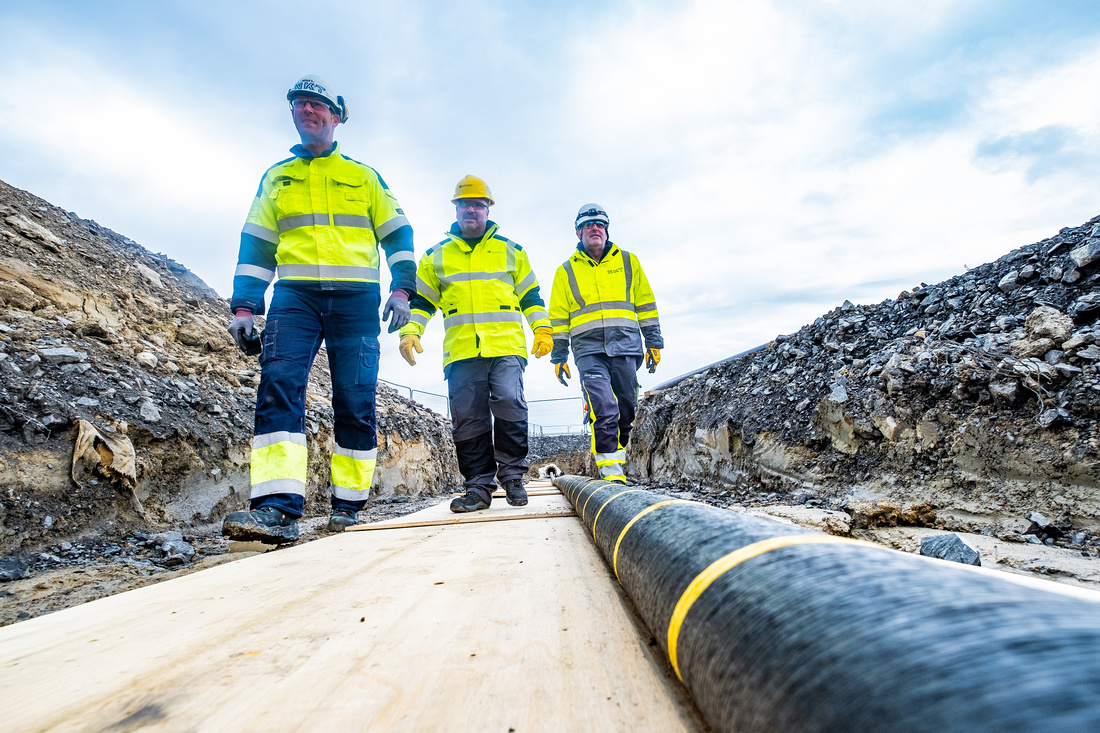
A CAMPAIGN has been launched in Aberdeenshire expressing concern over a proposed location of infrastructure needed there to connect to a second HVDC cable from Shetland.
The Save the Deveron Valley campaign is particularly focused on SSEN Transmission’s proposed Strathbogie Hub north-east of Huntly.
It said one of the two shortlisted sites has “potential landscape, farming, road, wildlife, water-environment and cumulative-impact implications for the Deveron Valley”.
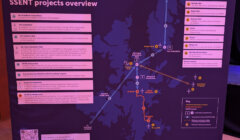
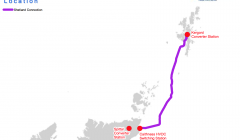
There is already a subsea HVDC cable running from mainland Scotland to Shetland – a 600MW link between Caithness and Weisdale Voe.
This allows the 443MW Viking wind farm to export to the national grid, while it will also have the ability to bring power up to Shetland.
A second subsea cable to Shetland – proposed to be three times the capacity at 1.8GW – is now planned, partly to facilitate offshore wind farm projects to the east of the isles.
While studies are being carried out on the potential landfall location in Shetland, and also where substation infrastructure will be sited, SSEN is also looking at the Scottish mainland side.


























Campaigners said SSEN is currently consulting on two shortlisted sites for a proposed 400kV substation and HVDC converter station on the Scottish mainland – Rivestone and Cruchie.
They said the main concern is the proposed Rivestone site.
This proposed location recently drew concern from locals at a public engagement session, with one couple saying their family farm would be “wiped out” by the development.
Huntly substation linked to Shetland subsea cable strongly criticised by residents
Those behind the valley campaign said they are “not anti-renewables and not anti-grid”.
Instead, it is asking for “proper scrutiny of this particular site, in this particular landscape, under this particular concentration of cumulative pressure”.
SSEN’s consultation material identifies three shortlisted Scottish mainland landfall areas for the second Shetland HVDC link. They are Sandend, Boyne Bay and Boyndie Bay/Inverboyndie.
Help keep Shetland’s news open to everyone

Good local journalism takes time, care and people on the ground. Membership helps us keep reporting the stories that matter to Shetland — and keep them free for everyone to read. Members get a weekly newsletter created especially for them, local ads only, and can bookmark stories and join the conversation in the comments.
From the selected landfall, onshore cable would run approximately 30km underground to the proposed Strathbogie Hub area.
The campaign is asking why the Rivestone site remains under consideration when Cruchie also exists as a shortlisted option.
The Save the Deveron Valley campaign said its core request is to “assess the cumulative impact of the overlapping pressures on the Deveron Valley together, not separately”.
This echoes concerns in Shetland too over the cumulative impact of energy development in the isles, with more planned including overhead lines, substations, wind farms and ammonia plants.
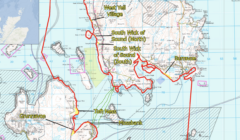
A substation hub on the Shetland end of the second cable is mooted for the Toft area.
The Deveron Valley campaign said local people experience the cumulative pressures together: “substation proposals, onshore cable routing, associated transmission connections, quarry traffic, estate development, rural roads, designated landscape, farming displacement, wildlife sensitivity and wider energy infrastructure around Keith/Blackhillock”.
The campaign has submitted 50 formal written questions to SSEN Transmission and is seeking written responses before the current feedback deadline of 26 June.
Campaign coordinator Jean D Reid said: “Save the Deveron Valley is not anti-renewables and not anti-grid.
“We are asking for proper scrutiny before decisions are made. Site six [Cruchie] exists. Site 14 [Rivestone] carries serious landscape, farming, road, wildlife and cumulative-impact concerns.
“The Deveron Valley deserves joined-up assessment, not fragmented decision-making.”
Speaking in May, development portfolio manager at SSEN Transmission David Inge said the project would help to connect homes and business to “cleaner and more secure sources of power”.
He added: “We are currently at an early stage of the site and route selection process, and we want to hear from the local community so their views can be considered alongside the environmental and technical factors that will shape the project.”
Consultation materials said that the Rivestone site would represent a “strong strategic location between existing and proposed overhead lines”.
They added that the location is “generally flat landform, well suited to a large hub layout” and that there are no designated environmental sites located within the site boundary itself.
The materials also said there are fewer nearby residential properties compared with other options.
They added: “Environmental assessments and site surveys will be undertaken as we move through the stages of site selection to preferred site and consenting.
“This includes assessing landscape, visual and recreational amenity; ecology, habitats and ornithology; geology, hydrogeology and hydrology and cultural heritage of the potential options and then preferred sites.”
Keep Shetland’s news open to everyone
Your membership helps us report the stories that matter to Shetland — and keep them free for everyone to read.