New research proposes bespoke tax framework for West of Shetland oil and gas region


A NEW report from the University of Aberdeen has raised the idea of a dedicated tax framework for the West of Shetland oil and gas region.
It said that the current “one size fits all” tax regime for UK oil and gas “fails to reflect the unique risks and costs associated with West of Shetland exploration, appraisal and development”.
As a result, researchers said, projects that are technically viable may remain “economically marginal” under current conditions.
Nick Schofield, professor of igneous and petroleum geology at the University of Aberdeen, said: “A bespoke licensing regime tied to existing infrastructure would provide a pragmatic pathway to unlock value while maintaining environmental and economic responsibility.”
The university research also said it is “economically, environmentally and strategically beneficial” for the UK to prioritise domestic oil and gas production rather than increasing reliance on imports.
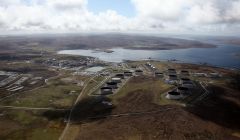
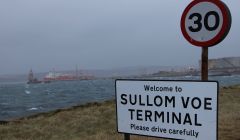
West of Shetland was first explored in the 1970s before production began in 1997, with oil coming through Sullom Voe Terminal.
There is said to be significant untapped potential, with the basin estimated to contain approximately 4.7 billion barrels of oil equivalent (boe) which is yet to be discovered.
But the researchers warn that the region’s development is constrained by significant challenges, including limited infrastructure, complex geology, harsh operating conditions and higher development costs.
More than 170 exploration wells have been drilled over five decades yet large areas remain underexplored, the researchers said, particularly where seismic imaging is difficult.
The report says the region’s exploration history has been characterised by “episodic success, with major discoveries driving step changes in understanding rather than steady incremental gains”.
Researchers said that the West of Shetland region should be viewed as a “strategically important, technically complex region with a meaningful role to play in the country’s future energy mix”.
Help keep Shetland’s news open to everyone

Good local journalism takes time, care and people on the ground. Membership helps us keep reporting the stories that matter to Shetland — and keep them free for everyone to read. Members get a weekly newsletter created especially for them, local ads only, and can bookmark stories and join the conversation in the comments.
However, climate campaigners have criticised the new report, saying it would lead to “more people killed by extreme weather”.
Friends of the Earth Scotland’s oil and gas campaigns manager Rosie Hampton said: “Burning more oil, whether from Shetland or anywhere else, will mean more suffocating heatwaves, destructive floods and more people killed by extreme weather.
“When people call for more drilling, these are the inevitable consequences that will be felt by people in Scotland and around the world.”
Meanwhile the Floating Production, Storage, and Offloading (FPSO) unit for the Rosebank oil and gas field to the north west of Shetland has now arrived on site.
Work continues on the development despite a court ruling which means the UK Government is having to re-consider the development’s approval following a challenge from climate campaigners.
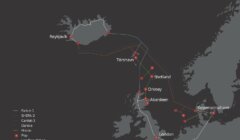
The field is located around 130 kilometres north west of Shetland, and is the largest undeveloped oil field in the region – with expected resources estimated at more than 350 million barrels of oil equivalent.
Oil will bypass Shetland, but gas will go through a pipeline to Sullom Voe Terminal.
Keep Shetland’s news open to everyone
Your membership helps us report the stories that matter to Shetland — and keep them free for everyone to read.