

Transport / Capacity on NorthLink ferries key priority for transport partnership
Reliability, affordability and fair access to accommodation are also among ZetTrans’ priorities ahead of a new Northern Isles ferry contract

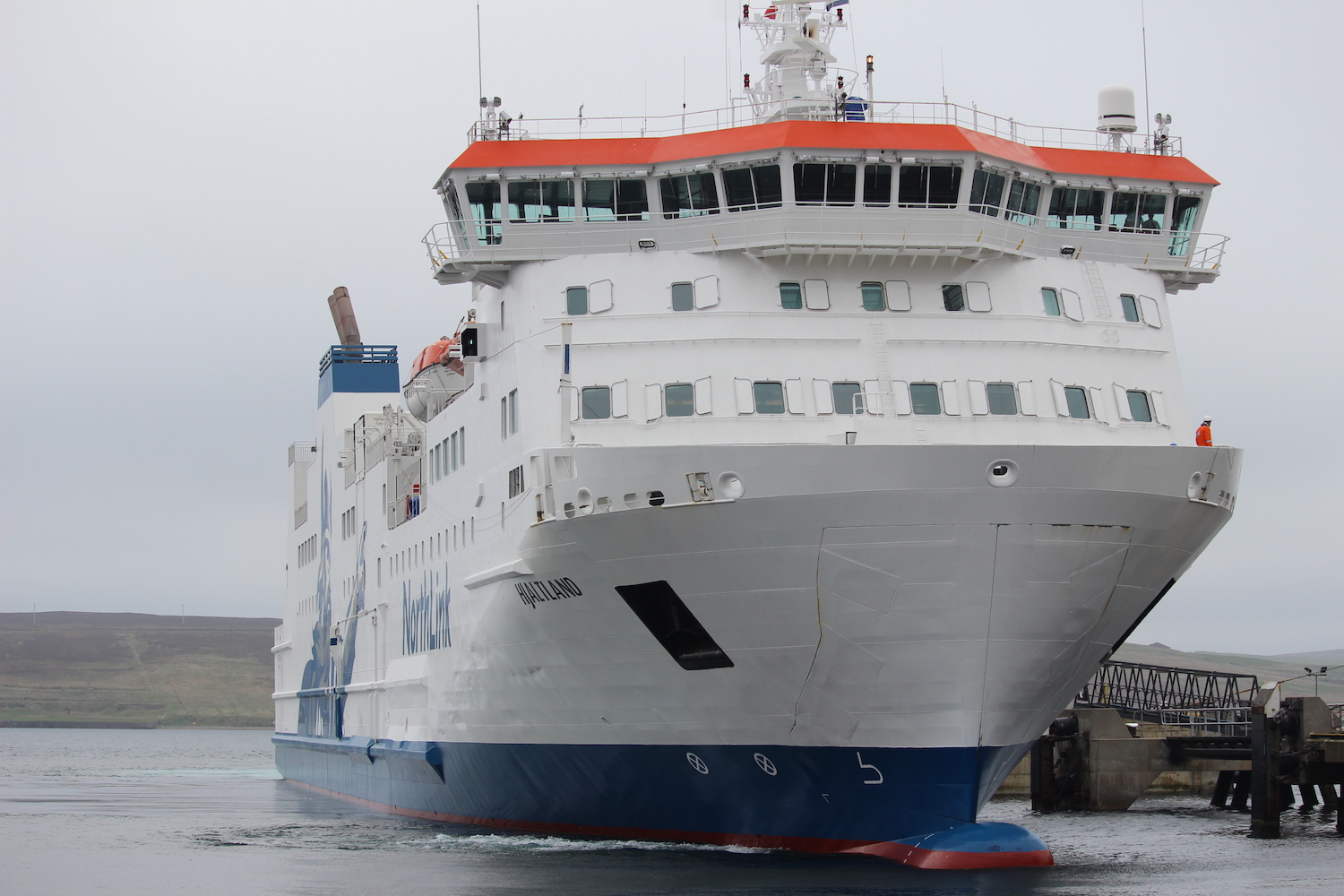
SHETLAND’s transport partnership has told Transport Scotland that the next Northern Isles ferry contract should address “affordability, equity, accessibility, environmental responsibility and freight resilience”.
ZetTrans said the next contract should ensure “adequate freight and passenger capacity in the short, medium and long term”.
The partnership said its “overarching priority” is adequate capacity – but reliability, affordability and access to accommodation also of importance.
Late last year ZetTrans signed off its response to a consultation undertaken by Transport Scotland on the next Northern Isles ferry service contract.
The current contract, held by Serco NorthLink Ferries, ends on 30 June 2028.
Transport Scotland, the Scottish Government agency which issues the contract, visited Shetland and Orkney last year to hold in-person consultation events to gather the public’s views, in addition to an online consultation.
Some of the key concerns in the community over the service relate to capacity during peak months, as well as affordability.





















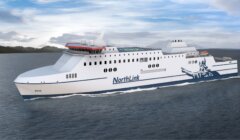
There are two new ‘freight flex’ cargo vessels on the horizon at the end of the decade, which would offer accommodation for 200 passengers in peak months.
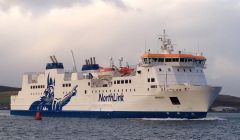
But accommodation on the passenger boats – which have a total passenger capacity of 600 each but have less than 120 cabins on board – formed a key part of ZetTrans’ consultation response.
It said that “overnight cabins are not a luxury on the Northern Isles routes but an essential lifeline service”, providing “rest, privacy and dignity” on the 12-14 hour overnight journey.
The response said that islanders often find cabins booked out, especially during summer months, while it said there can be a “perception of unfairness” around tour operator and group bookings, given they are usually made long in advance.
ZetTrans – whose membership includes councillors as well as representatives of NHS Shetland and Highlands and Islands Enterprise – proposed the idea of a waiting list for full sailings, with any cancelled cabins allocated fairly to those “already queued, [and] not re-released at random”.
Become a member of Shetland News
The consultation response also recommends that windows for booking are extended – more than 12 months, for instance – so people can book further ahead.
ZetTrans also encouraged Transport Scotland to ensure that the next contract “explicitly prevents” any requirement for single older travellers to surrender additional concessionary vouchers to pay for unused berths.
The consultation response added that sleeping pods represent a useful mid-range option particularly for younger travellers, students and solo passengers “seeking an affordable rest space”.
“Feedback shows, however, that pods are not universally welcomed, and views within the community are mixed,” it said, adding that there have been “concerns about safety and dignity, especially for women and vulnerable travellers using shared space”.
ZetTrans also welcomed the recent announcement that Serco NorthLink is exploring the idea of ‘lie-flat’ pods.
Eighteen ‘lie flat’ pods to be installed on NorthLink ferries early next year
When it comes to reclining seats, the consultation response said feedback shows that islanders feel they do not provide adequate rest.
Meanwhile, on the idea of introducing a possible cancellation fee on the service, ZetTrans said there can be frustration when “no-shows” or late cancellations result in the boat sailing with empty cabins.
It said any late cancellation fee must be “carefully designed”, saying that it should only apply to “very late” call-offs, such as within 24 hours of departure.
ZetTrans advocated exemptions for people travelling for clinical or compassionate reasons, or where disruption has been caused by factors outside passengers’ control such as the weather.
It said it “supports the principle of discouraging ‘phantom bookings’ but only through a narrowly targeted, fair, and transparent system – the focus should be on maximising effective capacity, not penalising lifeline users”.
In the consultation response ZetTrans also said it supports, in principle, the extension of Road Equivalent Tariff (RET) to Northern Isles routes.
RET involves calculating fares through a combination of a fixed element and a rate per mile.
But ZetTrans said a key issue is that RET does not factor in the additional cost of overnight accommodation on the boat, while the Northern Isles routes are longer and more costly to run than other RET routes.
“ZetTrans’ position is therefore that RET should apply to the Northern Isles, but only if it is adapted to reflect both the scale of the routes and the essential role of cabins, ensuring no resident faces higher costs than at present,” the consultation response said.
ZetTrans recommends that RET for Shetland should be adapted through capped fares at current mid or low season levels, including for cabins, and reducing the mileage rate.
More generally, the transport partnership highlighted that travel to and from Shetland is “disproportionately expensive compared with other Scottish islands, due to both distance and the need for overnight accommodation”.
On the topic of ‘dynamic pricing’ for visitors, which would see fares change based on demand, ZetTrans said this should only be considered as a “last resort”.
It said that Shetland is already an expensive destination for visitors, and introducing variable or higher peak fares “would reinforce this image”.
The response added that “unpredictable fare fluctuations” would undermine tour operators’ ability to market Shetland effectively.
It continued: “Dynamic pricing could create divisions between residents and visitors, or between those who can afford to book early and those who cannot, potentially restricting the ability of lower income households to access this lifeline service.
“This risks reputational damage to both the service and Shetland’s wider economy.”
When it comes to freight, ZetTrans said Serco NorthLink has developed a “strong reputation” over the years for constructive engagement with hauliers, exporters and importers – with a hope that this continues under the next contract.
The partnership also welcomed the proposed freight flex vessels are set to place the Hildasay and Helliar in years to come.
But it said it will be vital to manage the “flex” aspect transparently and fairly, “so that freight and passenger needs are given equal weight”.
“For Shetland, the movement of goods – from seafood exports to daily food and fuel supplies – is as much a lifeline as passenger travel,” ZetTrans added.
“Businesses and industries must have confidence that their needs will remain central in how the new vessels are deployed.”
ZetTrans also said that it recommends that the next contract secures “freight’s place at the heart of lifeline services”.
“This means protecting the collaborative approach already established, ensuring transparent allocation, and planning proactively for future capacity through freight flex vessels and supporting infrastructure.”
ZetTrans also said in its consultation response that it recognises ferry operations have “significant environmental impacts” and said it supports efforts to reduce them.
Transport Scotland said it received more than 1,130 responses through the online consultation portal, and an additional 28 submissions via email.
It said staff also collated more than 300 additional comments during community engagement sessions in Orkney and Shetland.
Transport Scotland also said the Northern Isles ferry service plays a “crucial role in our transport system, providing vital links for residents, businesses, and tourists across the north coast of Scotland”.
“We are committed to ensuring that the views and perspectives of communities and key stakeholders are considered and reflected upon to help inform and shape the detail within the next NIFS contract,” it added.
Become a member of Shetland News
Shetland News is asking its readers to consider paying for membership to get additional perks:
- Removal of third-party ads;
- Bookmark posts to read later;
- Exclusive curated weekly newsletter;
- Hide membership messages;
- Comments open for discussion.
If you appreciate what we do and feel strongly about impartial local journalism, then please become a member of Shetland News by either making a single payment, or setting up a monthly, quarterly or yearly subscription.