


Fishing leaders’ anger after Swinney told to avoid saying ‘spatial squeeze’ on isles visit


CONCERNED fishing leaders have criticised guidance given to first minister John Swinney ahead of a visit to Shetland last year which advised him not to mirror the term “spatial squeeze” when describing the use of the sea around the isles.
The briefing note, released by the Scottish Government through freedom of information, said the term is a “narrative advanced by industry that we do not share, given the use of our shared marine space must be done in a way that delivers for the whole of Scotland, and balances across environmental, social and economic interests”.
Shetland Fishermen’s Association executive officer Daniel Lawson said it is “not constructive and does nothing to inspire faith in government processes”.
The Scottish Fishermen’s Federation went one further and said it was “disgraceful” that officials briefed the first minister “not to recognise their deeply held concerns for the future livelihoods”.

























The note was designed to brief first minister Swinney ahead of a visit to Shetland in October last year, which included engagement with the fishing and aquaculture sectors, as well as Lerwick Port Authority.
The briefing note gave background information and the messaging from government on related topics, including offshore wind development and the industry’s supply chain.
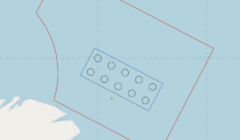
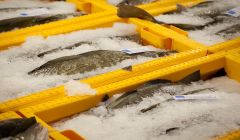
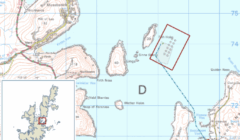
There was also guidance on shared marine space – an issue which is deeply concerning the local fishing industry, given that offshore wind farms are proposed to the east of Shetland – cutting into some “prime” fishing grounds.
This has been called a “spatial squeeze” by the fishing industry, reflecting concern fishermen are being pushed out of their traditional grounds.
The briefing note to Swinney said “if industry use language in relation to ‘spatial squeeze’, we suggest you do not mirror/repeat back that language”.
Help keep Shetland’s news open to everyone

Good local journalism takes time, care and people on the ground. Membership helps us keep reporting the stories that matter to Shetland — and keep them free for everyone to read. Members get a weekly newsletter created especially for them, local ads only, and can bookmark stories and join the conversation in the comments.
It added: “This is a narrative advanced by industry that we do not share, given the use of our shared marine space must be done in a way that delivers for the whole of Scotland, and balances across environmental, social and economic interests”.
The note also provided “lines to take” regarding related issues, including that it is “not possible to have sustainable and profitable marine industries in the long term without a healthy marine environment”.
It also said: “Our sectoral planning process for offshore wind seeks to avoid or minimise negative interactions between offshore wind development on the environment and other marine sectors, by taking an evidence-based approach and through stakeholder engagement.”
But the apparent dismissal of the term “spatial squeeze” has not landed well with fishing representatives.

Lawson said it will be “sad and vexing to local fishermen to see evidence of government officials pre-emptively briefing the first minister against long held and well justified concerns about the loss of good fishing grounds”.
“It’s not constructive, and does nothing to inspire faith in government processes,” he added.
“The spatial squeeze is not some imagined construct, but a very real concern expressed by fishing crews in Shetland – and across the country.”
Lawson referred to a 2023 report which found that over half of Scotland’s seas stand to be closed to trawling by 2050 if fishing continues to be marginalised in favour of other activities and developments.
“Recent national polling shows clear public support for fishing, and the equal importance of food security alongside energy security,” he added.
“If our seas were being managed in such a way that did ‘deliver for the whole of Scotland’, this would not be such a pressing problem for Shetland.”
In a social media post the Scottish Fishermen’s Federation (SFF) said: “It’s disgraceful that when it plans systematically and permanently to exclude fishermen from traditional fishing grounds to build colossal offshore windfarms, that Scottish Government officials briefed the First Minister not to recognise their deeply held concerns for their future livelihoods.
“The spatial squeeze is not an imaginary concept dreamed up by fishermen, but a real and active force that a report carried out for the SFF has shown will exclude the trawling fleet from 50% of fishing grounds by 2050.
“It is time the Scottish Government woke up and realised that people’s jobs and the future of our coastal communities really matter, and are not just talking points in political games.”
A spokesperson for the Scottish Government said in response: “Scotland’s fishing sector makes a huge contribution to our economy, and to our rural and coastal communities.
“We recognise there is increasing competition for marine space, and that there is valid concern from those engaged in existing marine activities.
“The National Marine Plan 2 (NMP2) will help to address the increasing competition for marine space in the future and we are working in partnership with the fisheries sector to ensure an open dialogue in developing NMP2.
“The views of fishers are important to us and we are keen to hear their views as we continue to develop the draft plan.”
Keep Shetland’s news open to everyone
Your membership helps us report the stories that matter to Shetland — and keep them free for everyone to read.