


Marine / Whitefish landings down but prices up
Pelagic sector raises concern over landing obligation

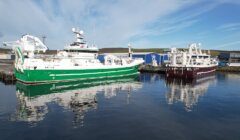
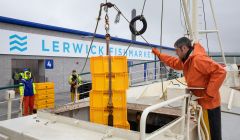
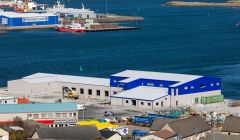
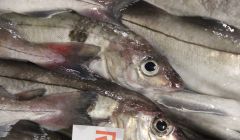
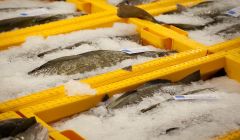
WHITEFISH landings at Shetland’s two fish markets during the last 12 months have been described as “resilient” by the manager of the local auction company.
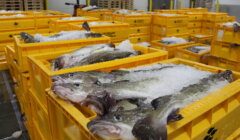
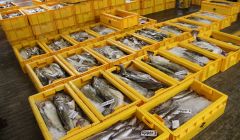
While the overall number of boxes landed at Lerwick and Scalloway were down to just below 326,000, demand for fish from Shetland remained high.
Speaking to Shetland News on Friday, the last auction day of the year, Norma Williamson said she expected demand for Shetland fish to remain high in 2026.
However, there has been a slow downward trend in fish landings over the last ten years with 325,972 boxes being the lowest number since 2015.
Landings prior to the Covid pandemic and Brexit were at least 20 per cent higher, with as many as 436,210 boxes landed in 2018.
Williamson said: “I would describe 2025 as being resilient. Yes, overall landing volumes for whitefish are down compared to previous years, but demand for Shetland whitefish remains high.



“Prices for certain species have been exceptionally good, especially with the run-up to Christmas. We have seen record prices for species such as turbot, cod, monk, lemon sole and megrims.
Speaking about the prospects for next year, she said: “The cod quota for 2026 will be challenging for the fleet, as local observations differ from scientific assessments but the increase in monkfish quota is positive.
“Our fishermen remain committed to working within the rules while maintaining and ensuring the highest quality fish is landed in Shetland.
“With Shetland whitefish in strong demand and its proven quality, I’d expect Shetland fish to remain in high demand in 2026.”
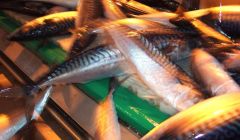
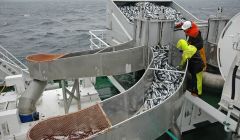
This autumn has also seen the highest ever prices for mackerel in anticipation of the cut in mackerel quota next year.
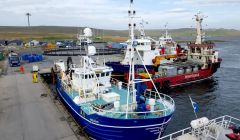
The pelagic industry has said that its sector will further be affected by the increase of the landing obligation into Scottish processing factories.
Become a member of Shetland News
From next year onwards the industry will have to land 70 per cent rather than 55 percent of its catch into Scotland.
The chairman of the Scottish Pelagic Fishermen’s Association, Richard Williamson, said: “It is hugely unwelcome from a catching perspective to intervene again on the landing target when the 55 per cent figure has just been implemented in 2025 and the full impact of which has still to be assessed.
“The quota cuts for both mackerel and herring in 2026 are going to impact on both catchers and processors, and both sectors will endure a period of significant business risk.
“For the Scottish pelagic industry to thrive it needs both a strong catching and processing sector, but in effect this new 70 per cent landing figure will mitigate the risk to processors whilst loading additional risk onto the catching sector, thus jeopardising the balance.
“If businesses in the catching sector fail because of the new regulation they could become prey for foreign investment, changing the family ownership structure of the Scottish pelagic fleet for ever.”
Become a member of Shetland News
Shetland News is asking its readers to consider paying for membership to get additional perks:
- Removal of third-party ads;
- Bookmark posts to read later;
- Exclusive curated weekly newsletter;
- Hide membership messages;
- Comments open for discussion.
If you appreciate what we do and feel strongly about impartial local journalism, then please become a member of Shetland News by either making a single payment, or setting up a monthly, quarterly or yearly subscription.