


A lot of ‘really good conversations’ at council’s climate festival
The event, now in its fourth year, was held at the Clickimin on Saturday

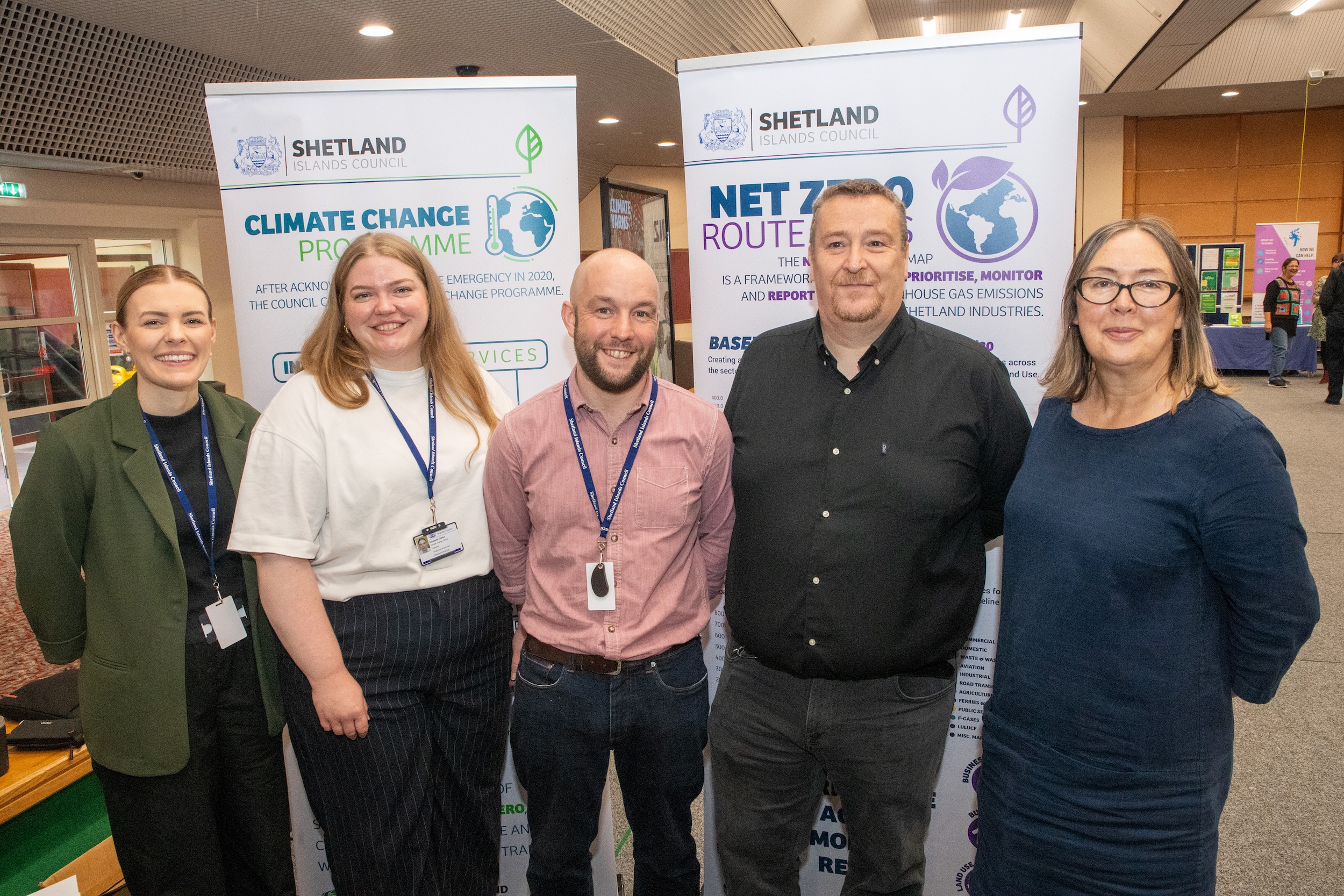
CLIMATE was back in the spotlight on Saturday as Shetland Islands Council (SIC) hosted its annual festival on the topic.
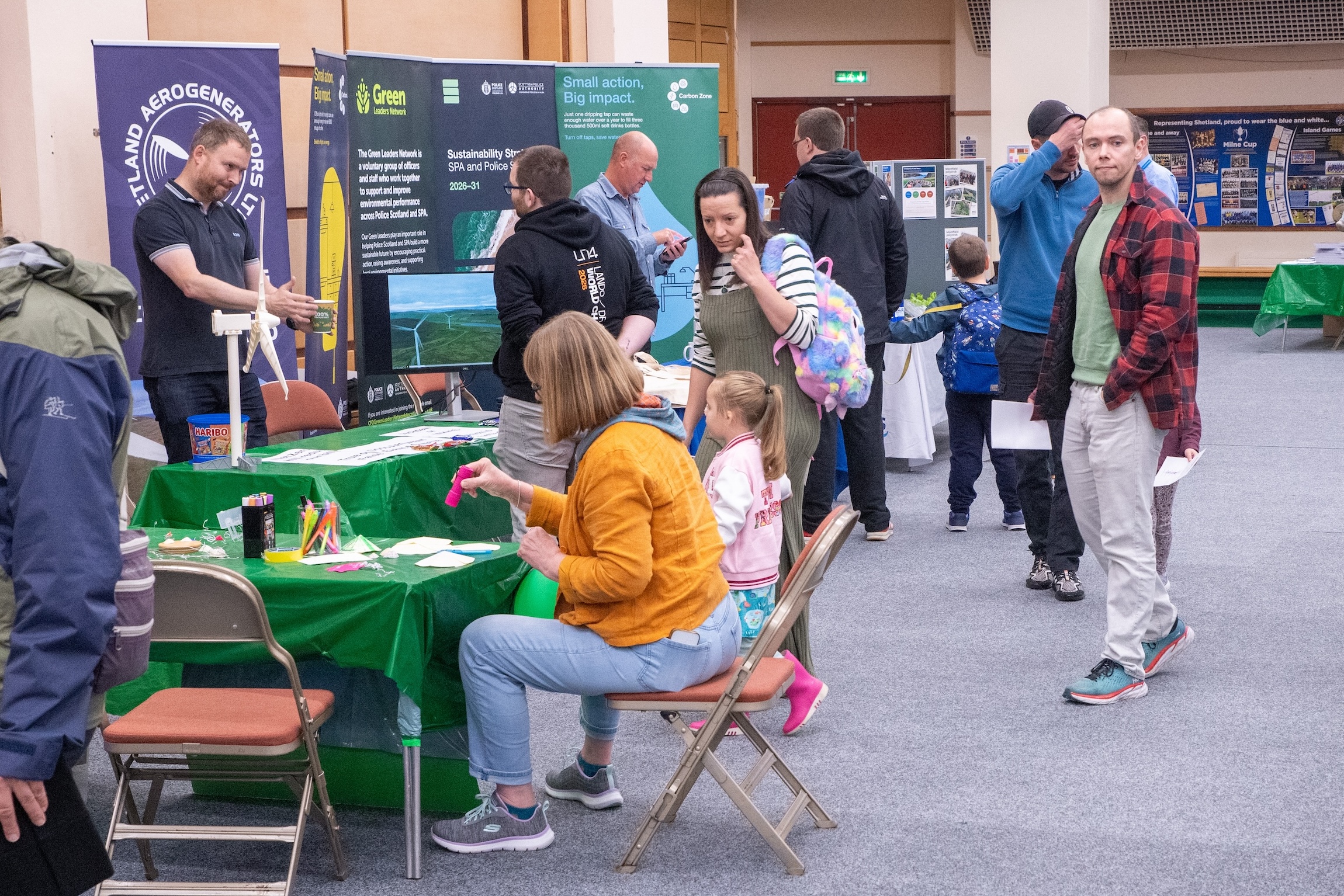
There was a range of exhibitors and talks at the Clickimin in Lerwick as well as poetry, local produce cooking demonstrations and a repair cafe.
The SIC’s senior climate change officer Anne Maver said the event – the council’s fourth so far – had opened up some “really good conversations” with people.
“It’s really important to get a chance to speak to the community about climate change and about the different steps we can take,” she said.
“It’s good to get a sense of how the public feel about it, what kind of things they’d like to see us doing to help tackle climate change and coming up with solutions for the future.”
There was a wide range of exhibitors, from local companies, organisations and community groups, with an aim to look at the topic through a Shetland lens.
























David Thomson of Shetland Aerogenerators said the event gave his company the “opportunity to find out what people were thinking”.
One of the key projects the company is overseeing is plans for an energy park near Sullom Voe Terminal, which would contain eight wind turbines and battery storage.
“We want to make sure people are aware of the activity we are up to, and the bit we enjoy about this is we get a complete range of people from the youngest in our community to the oldest in our community,” he said.
“They come along and they talk to us about how all these things work. It’s an opportunity for us to explain how the machines actually work, and it’s an opportunity for us to then see what questions are coming through.
“We’re very aware in the community there’s concern about what do these projects mean, what do these projects bring – this is an opportunity for us to come out and talk about these things.”
Help keep Shetland’s news open to everyone

Good local journalism takes time, care and people on the ground. Membership helps us keep reporting the stories that matter to Shetland — and keep them free for everyone to read. Members get a weekly newsletter created especially for them, local ads only, and can bookmark stories and join the conversation in the comments.
Home Energy Scotland was also among the exhibitors, with the government-funded organisation on hand to offer advice on saving energy and reducing bills.
Energy efficiency specialist John Clarkson said their stall had received a “lot of good quality enquiries” through the day.
“I would expect to be visiting maybe five or six people off the back of it, so to me it is worth it,” he said.
Clarkson said there were plenty of questions about solar panels, but added that they may not always be the solution for everyone.
He said it is “about how the system works”, with solar panels tending to work better alongside heat pumps than oil-fired boilers.
“There are other things that quite often can save money much quicker and easier, like changing your energy tariff,” Clarkson said.
“Energy tariffs can make a thousand pound a year difference.”
Home Energy Scotland can be contacted on 0808 808 2282, with more details available online.
The event came just a few days before councillors will receive an update on the SIC’s own climate progress, for the year 2025/26.
A headline figure is that in 2025/26 the council’s annual greenhouse gas emissions increased by 1,158 tonnes (CO2e) from 2024/25.
Although this is a nine per cent reduction from the baseline emissions year of 2019/20, it is not in line with the target emissions decrease of 30 per cent.
However the report says a key reason for not meeting the target is the use of the “Shetland grid electricity emissions factor” within the 2025/26 report year.
The 2025/26 target was set based on Shetland becoming connected to the UK electricity grid during the year.
As this has not happened yet, with Lerwick Power Station still in full operation, the Shetland grid electricity emissions factor has been used, which the SIC said accounts for the high electricity emissions in comparison to the target.
Land is said to make up 47 per cent of the SIC’s overall emissions through degraded peatland.
It is the only sector where emissions reductions targets have been met, but this is largely due to the council selling land and not emissions reduction actions.
Infrastructure is the SIC’s highest emitting sector, and is one per cent up on the 2019/20 baseline.
The most significant increase in 2025/26 was seen in the use of burning oil (kerosene) at the Scord Quarry, which is attributed to the large rise in demand for products for road surfacing, cabling and other construction.
One of the projects using products from the quarry is SSEN’s north reinforcement project, which will link Sullom Voe Terminal to the Shetland grid and has seen cabling installed in roads.
The report concludes: “The council has a strong foundation set for climate action through leadership, governance and management as set through the climate change strategy.
“It is imperative that the council makes further commitments to its efforts and investment in this area, through seeking both external and internal funding sources, to work towards its climate targets.”
Keep Shetland’s news open to everyone
Your membership helps us report the stories that matter to Shetland — and keep them free for everyone to read.