New air tax not expected to affect viability of Bergen service
International flights from airports in the Highlands and Islands will no longer be exempt from air tax

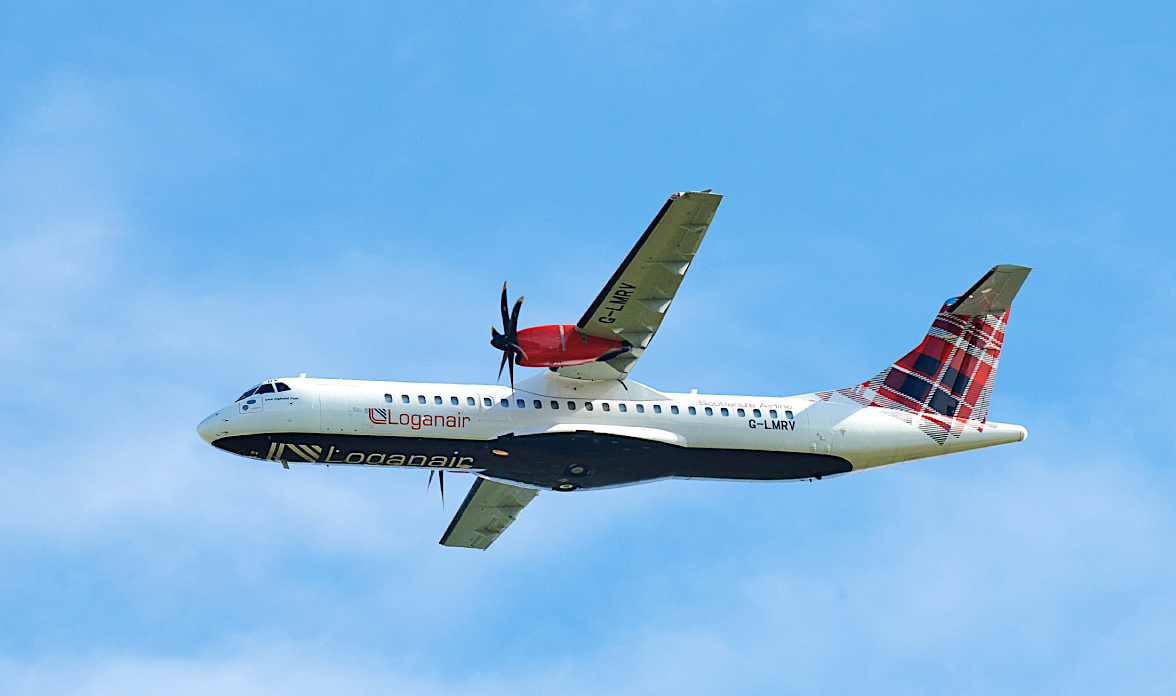
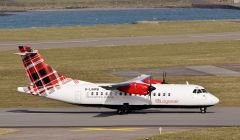
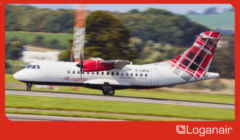
THE INTRODUCTION of an air departure tax (ADT) on international flights departing the Highlands and Islands is not expected to affect the viability of Loganair’s Sumburgh-Bergen service.
It comes after the Scottish Government announced that all flights between the Highlands and Islands and other Scottish airports – and from the region to a UK airport – will be exempt from the new tax when it is introduced next year.
Air departure tax will cover Scotland only and will replace the UK Government’s air passenger duty from 1 April 2027, which already features a Highlands and Islands exemption.
For the first time flights from elsewhere in Scotland to the Highlands and Islands will be exempt, and not just outbound services.
However, international flights from airports in the Highlands and Islands, including via connecting flights, will no longer be exempt.
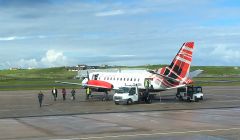
This has led to Dutch airline KLM saying the viability of its Inverness-Amsterdam route could be under threat.























Responding to a previous Scottish Government consultation, KLM said the removal of the exemption will “inevitably lead to a direct increase in ticket prices for passengers travelling from Inverness to any international destination”.
KLM estimates that there could be a £1.3 million annual financial impact, “resulting from a combination of decreased load factors and reduced yields”.
But it is understood that the viability of Shetland’s only international air link – Loganair’s summer Sumburgh-Bergen service – will not materially be affected given the much less passenger volume compared to Inverness-Amsterdam, which carried 98,000 people in 2025.
Responding to the government consultation prior to the ADT being confirmed, Loganair said the Highlands and Islands exemption is “fundamental to protecting lifeline connectivity”.
It said that removing it would “increase fares, suppress demand and undermine the viability of routes that already operate on thin margins”.
Help keep Shetland’s news open to everyone

Good local journalism takes time, care and people on the ground. Membership helps us keep reporting the stories that matter to Shetland — and keep them free for everyone to read. Members get a weekly newsletter created especially for them, local ads only, and can bookmark stories and join the conversation in the comments.
Loganair also said that it earned £3.97 profit per passenger in 2024/25, adding that an £8 ADT charge would “be more than double our margin”.
Although it is said an air departure tax would not make a material difference to the Sumburgh-Bergen route in terms of viability, the airline stated that it did not support the removal of international exemptions.
It also highlighted how Kirkwall-Edinburgh-Heathrow would be exempt, but Kirkwall-Edinburgh-Amsterdam would not, even though the first leg is identical.
Loganair also made the case for flights from UK airports to the Highlands and Islands to be exempt, saying it would be less confusing for passengers, but this was not included in the government’s decision.
The airline said there is “clear international precedent for using aviation tax policy to stimulate growth”.
“Ireland abolished its air travel tax in 2014 and saw sustained growth in passenger numbers and connectivity,” it wrote.
“Sweden removed its aviation tax in 2019 for similar reasons. Scotland should consider whether a lower ADT rate, or a targeted reduction for new or marginal routes, could support economic growth and improve long term revenue performance.
“Seasonal rates or tax holidays for new routes could also encourage airlines to take more risk, particularly on services that support tourism or regional development.”
Loganair also encouraged the government to ring-fence ADT revenue to support long-term funding of the air discount scheme and public service obligations.
Shetland’s transport partnership ZetTrans wrote in the consultation to say it “strongly supports” exemptions for passengers travelling from the Highlands and Islands to Scottish airports and the rest of the UK.
“Aviation is a lifeline mode for island and remote mainland communities, supporting access to health care, education, employment, markets and essential services,” it said.
“Applying ADT to these journeys would disproportionately impact communities with no realistic surface alternative and would be inconsistent with the equity rationale underpinning the exemption.”
It also welcomed the government’s proposal to extend the exemption to passengers flying from Scottish airports to the Highlands and Islands, saying it improves the viability of intra-Scotland routes and reduces total trip costs.
ZetTrans also said it “understands and accepts the subsidy-control and competition rationale” for excluding international flights, but it recommended ongoing monitoring of impacts.
Highlands and Islands Airports Ltd, which operates airports in the region and is owned by the Scottish Government, said in the consultation that the regional exemption is a “necessary policy measure”.
But it said it “strongly” disagreed with removing international flights from the equation, saying it could result in a tax or around £45 per return flight between Inverness and Amsterdam.
The Scottish Tourism Alliance however said the worry over the impact on Inverness international flights must be also balanced with concerns from the operator of Aberdeen airport that exemption from air passenger duty over the years has given Inverness Airport an unfair advantage.
The Air Departure Tax (Scotland) Act was passed by the Scottish Parliament in 2017.
But the implementation of ADT has been deferred since then due to concerns over whether the current Highlands and Islands exemption within air passenger duty complies with the UK Government’s subsidy control regime.
Former finance secretary Shona Robison said earlier this year that when introduced, ADT will increase the range of tax powers available to the Scottish Parliament and the proportion of the Scotland Government’s budget that is raised from devolved taxes.
Speaking earlier this week, current finance secretary Jenny Gilruth said introducing the levy will also pave the way for the introduction of a Scottish private jet tax from April 2028.
“A private jet tax will ensure those who contribute significantly higher emissions per person compared to commercial flights will pay more for the privilege,” she said.
Keep Shetland’s news open to everyone
Your membership helps us report the stories that matter to Shetland — and keep them free for everyone to read.