


‘A Meid athin da Twalmont’ – a new book to honour the precious and precarious mother tongue

THERE HAS been much debate recently as to whether Shaetlan is considered a language or a dialect, writes Alex Purbrick.
As a non-Shaetlan speaker I don’t have authority to put forward any argument as to which is most relevant or important.
But I know how much I love hearing diversity of dialects from the length and breadth of the archipelago that is the British Isles.
Whether it’s Doric, Geordie, Cornish or Glesca, the words that live within dialects contain the heart and spirit of the people who speak them, the last frontier of diversity in this increasingly homogenising global village that we now seem to live in.
And dialects seem to carry more diversity than language because they’re wilder and untameable perhaps, whereas a language tends to get categorised and formatted in ways that maybe it shouldn’t.



















To me, Shaetlan words are the organic breath of Shetland. They carry an intimacy of love for the land, its folk and the ecology.
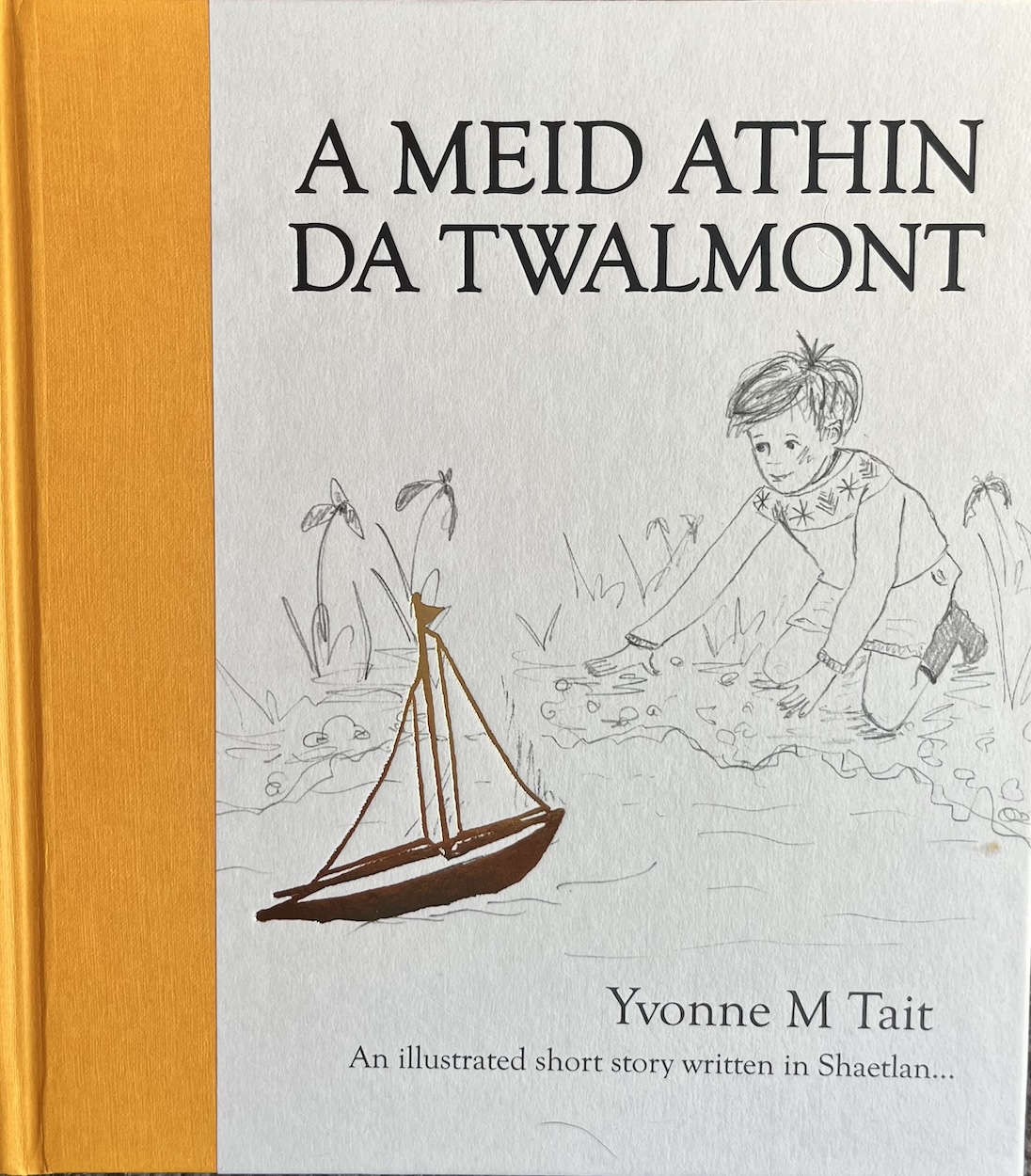
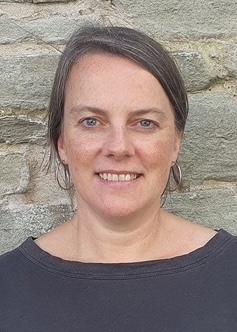
Which is why I felt honoured to be given a copy of A Meid athin da Twalmont, the latest book from award-winning Shetland writer Yvonne Tait.
The title translates as a marker within the year and is a beautiful short story of friendship, loss and intergenerational sharing written in Shaetlan.
It is centred around a peerie boy called Billy, who receives a model sailboat for his 10th birthday and sails it in the loch near his home where he meets Ivor, a local man. They start talking and Billy discovers that on the day that he was born, Ivor’s daughter, Sarah had drowned in the loch as a peerie lass.
This date is significant for them both and every year Billy and Ivor meet at the loch to share stories and talk about Sarah. This becomes a sad and happy day for them both, which is what the title is drawn from a meid athin da twalmont.
Help keep Shetland’s news open to everyone

Good local journalism takes time, care and people on the ground. Membership helps us keep reporting the stories that matter to Shetland — and keep them free for everyone to read. Members get a weekly newsletter created especially for them, local ads only, and can bookmark stories and join the conversation in the comments.
The story could be seen as too sad and almost depressing in the subject matter of loss, but Yvonne approaches this elemental human experience of death through her use of Shaetlan words to convey the intimacy of emotion to transcend grief and the power of intergenerational relationships.
Yvonne spoke about how she “wanted to convey in the story how it can often take the openness and directness of a child, to break down emotional barriers which we can hold up as adults”.
“Without Billy’s innocence, and perhaps naivety, he would never have approached Ivor to talk about Sarah, and Ivor’s journey through his grief would have been all the lonelier for it. The essence of the story is about not turning our backs on other people’s grief, and how small gestures of kindness within a community can mean so much.
“And Billy in turn finds solace in the conversations he has with Ivor and learns a bit about himself through Ivor’s wisdom. I think bairns are instinctively drawn to wise elders…and maybe older people, having had a lifetime to get to know themselves, can see the bairns for who they really are, and who they can become.”
Yvonne’s poetic manner of storytelling shines through in for example, Ivor’s description of his peerie lass, Sarah:
“Shö haed da fainliest, muckle, roond een, as bloo as da cornflooer, an dey shon as bricht an boannie as ony a hairst mön.”
Many of the Shaetlan words that Yvonne uses invoke nature and play a pivotal part in the interweaving of the story around Billy and Ivor’s sense of place and their friendship.
As Billy wanders to the loch Yvonne paints a picture of the tranquility of Shetland’s landscape. Da laeverick, tirricks, drummie bees, whaaps as well as the plethora of flowers; kattiklov (birds foot trefoil), grice ingans (vernal squill), ragget willie (ragged robin) and smora (clover).
Nature words are disappearing rapidly from everyday English language which is why it is so important they are kept alive in Shaetlan so that we may continue to honour these precious birds and flowers in our landscape.
Yvonne’s story is also a testament to nature writing in an age where digital technology threatens to swallow our linguistic connection to our land and naturescape.
She brings to the fore many Shaetlan words that are not in common, everyday use. A glossary at the back of the book provides a helpful guide for non Shaetlan speakers who may struggle with some more intricate words.
Yvonne says she hopes the book will be a “reference for folk wanting to learn Shaetlan and promote the use of so many different words bringin them into folk’s awareness and broader use”.
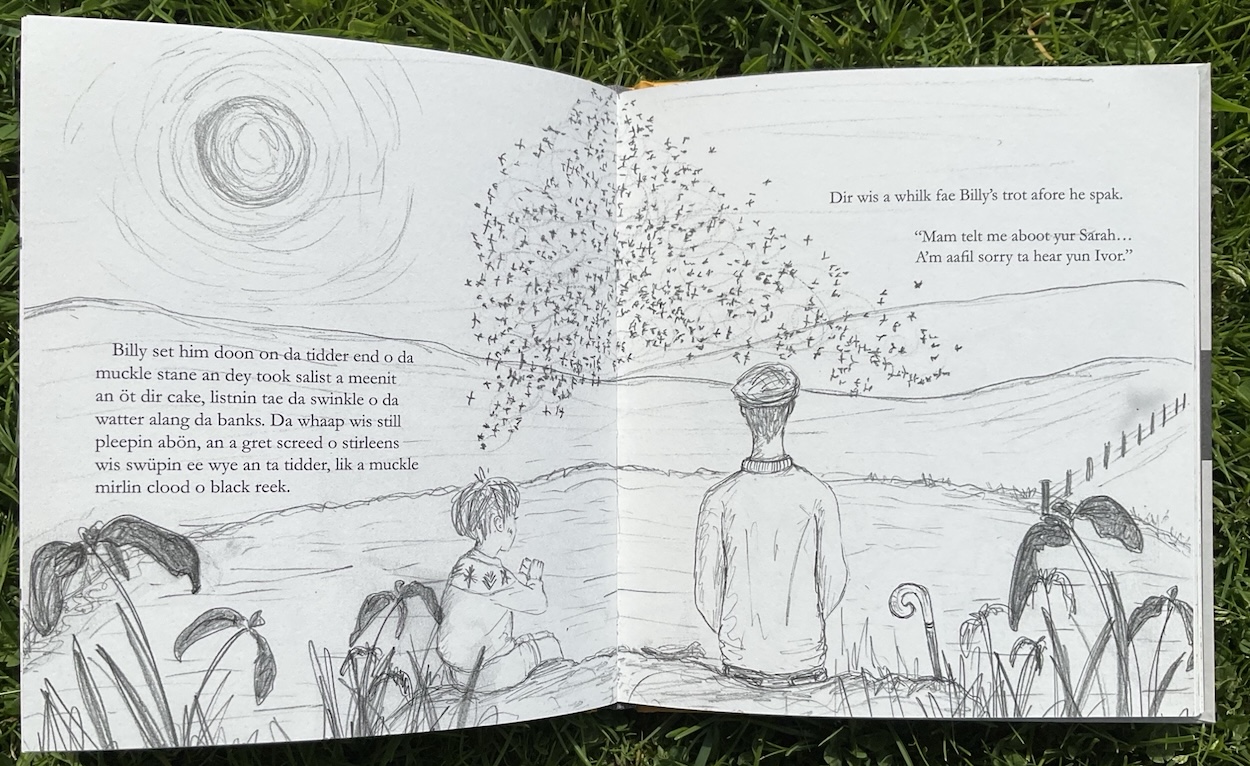
The simple but powerful pencil drawings throughout the book complement the story, allowing any reader who may struggle with translation to comprehensively understand the text.
Yvonne explained how she had never intended the story to be a book and wrote it as a submission for the Rhoda Bulter award in 2024 with some drawings to accompany it.
After winning the award, Shetland ForWirds commissioned local filmmaker Jonathon Bulter in 2024 to make an animated short film bringing the story to life through imagery and spoken word.
Yvonne expanded upon her original drawings and ended up illustrating the animation which was released on YouTube.
Winning the accolade of ‘Scots writer o the year’ in the Scots language awards in 2025 helped Yvonne receive the Scots language publication grant to put the book into print, enabling her to self-publish 500 copies in hardback, finest quality copy.
Although Yvonne does not describe the book as a bairns’ book, I can imagine grandparents reading it to grandbairns and it becoming a timeless, Shaetlan classic that young and old alike will enjoy for generations to come.
Most importantly Yvonne expressed how important it is that the book holds Shaetlan in high esteem.
“I want the book to honour our precious and precarious midder tongue and help keep it relevant and accessible. I hope that it will be a book for folk to cherish and enjoy for a variety of reasons.”
Yvonne will launch her book on Sunday 14 June at 11am at the Hymhus in Bigton with music from Jenny Keldie and Claire White, and at the Shetland Library on Wednesday 17 June at 6.30pm, where she will be joined by Bruce Eunson and Claire White.
Copies of the book will also be on sale at The Peerie Shop and The Shetland Bookshop.
Keep Shetland’s news open to everyone
Your membership helps us report the stories that matter to Shetland — and keep them free for everyone to read.