
Letters / Time to be more ambitious, more demanding and more forward-looking

I attended the SSEN consultation on Thursday night [27 November].
Many people there asked me for my views, and rightly so – it’s no secret that I’ve worked for over a decade across many different energy projects. Thank you to those who took the time to talk to me. I appreciated our conversations.
First, industry and history:
Shetland’s always been a landscape shaped by industry as well as nature. We’ve found ways to work with and respect nature. We’ve also found ways to make sure that industry has benefited our communities – with oil and gas, fishing and aquaculture.
Our islands are not a playground for people looking to “escape” to a quieter life. We need good jobs, secure livelihoods and a future for young folk and families.
Shetland’s an innovative place to work in, beautiful, resourceful and bustling: with our outstanding nature it’s a place to be proud of, to be welcomed into. We’re not remote, not isolated and not wrapped in cotton wool.



But there’s a difference between meaningful industry and industrialisation. We’re now in danger of crossing that line.
What I saw laid out on Thursday night is over-industrialisation: three substations, two ammonia plants, two subsea linking cables, one export cable from offshore east Shetland, three onshore wind farms, three floating offshore wind farms, one overhead connection network. And that’s not including any west of Shetland electrification of oil/gas developments or an extension of Viking energy.
That’s FIFTEEN new energy projects in total. I know of no other small community in the world being asked to absorb anything on that scale. This is an industrial stampede for purely commercial interests.
We do need industry. We need jobs for people who choose to live, work, bring up a family here. We must have a plan for the hundreds working at Sullom who face an uncertain future and we must find a way for Shetland to benefit from future energy opportunities.
















We need industry, but not at any cost.
Secondly, confidence:
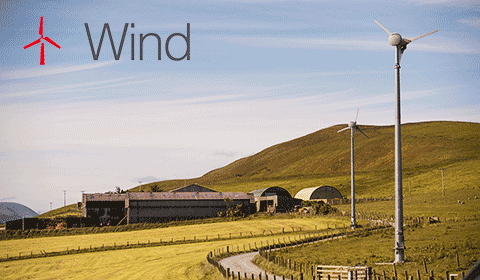
Shetland’s wind resources are some of the best in the world. Consistent, strong and reliable.
Burradale wind farm has the highest global capacity factor ever recorded. But we have offshore efficiency with an onshore price tag. Often our weather bears no resemblance to the rest of the country, which means that as Scotland electrifies, Shetland could be the perfect balancing point for an energy system increasingly reliant on weather-dependent renewables.
Energy companies know all of this. That’s why they’re knocking at our door. Just like they did in the 70s with the oil.
With confidence in our resources and our abilities must come clear, hard-headed demands. But first, a tale of two islands.
On my recent visit to the Faroe Islands I saw what genuine confidence looks like.
The Faroes have 100% community owned windfarms. All the profits go back into the islands – investing in innovation, grid and infrastructure. The windfarms are small, they’re dispersed and integrated with other tech – hydro, batteries, and solar. The local energy company SEV takes the responsibility to keep prices low and affordable. There’s no “fuel poverty” in the Faroes.
Compare that with Shetland: Viking is one of the largest onshore wind farms in Europe, privately owned, 103 turbines across the spine of Shetland, frequently curtailed (June 25, 78% of potential power curtailed), and 25% of our community is in fuel poverty.
The wind that creates profit for Viking energy strips Shetlanders of warmth in our homes.
Something doesn’t add up here.
The Faroe Islands would never allow this scale of industrialisation across their islands. They know their worth.
So must we.
Lastly, the demands:
We can’t just sit back and allow the over-industrialisation of Shetland to happen. Something as important as this demands that we try everything.
Yes, we need industry – but it must be on our terms.
It’s time for Shetland to find our confidence again: to stop underselling ourselves, mistaking platitudes for progress, and to be more ambitious, more demanding and more forward-looking.
That means:
- All onshore planning decisions devolved to Shetland – it should be Shetland that decides if this infrastructure goes ahead, and on what conditions.
- Planning consent tied to community equity ownership – community benefit payments alone are nowhere near enough; we must secure revenue.
- All new overhead lines must be buried – protecting our landscapes and communities.
- Fair local content in any approved project – local firms winning work, using our ports and quaysides. We have the capability; what we don’t have are the contracts.
- A legacy of affordable housing – any developer granted consent must deliver homes that are gifted back to the community, spread across the isles where the need is, not just in Lerwick.
- Demand a binding Just Transition Plan for SVT workforce – clear, funded pathways into new jobs, training and long-term opportunities in Shetland’s future energy economy
None of this is easy. But it is necessary.
Fifty-one years ago, Shetland faced another moment of “difficult but necessary” action: the Zetland County Council Act.
The late Jo Grimond MP stood up in Westminster to defend Shetland from a free-for-all in oil and gas. The ZCC Act 1974, passed into law by Labour ministers with Liberal support, gave our council powers to compulsorily purchase key sites at Sullom Voe, Sella Ness and Scatsta, and to keep local oil revenues in a special fund – ensuring that industrial development served the whole community, not just a fortunate few.
Grimond and the council leadership of the time were ambitious. They set an example by refusing to let Shetland be exploited by the oil rush. Above all, they had confidence in Shetland.
We need to find that confidence again.
If elected to the Scottish Parliament in May, I will work tirelessly with Shetland Islands Council and the wider leadership of our isles to get as many of these demands over the line as possible.
My argument is simple: the status quo isn’t working. The real risk to Shetland’s future is not change but more of the same – including our current Lib Dem representation in Holyrood.
We must carve out as much influence, and demand as much power, as we possibly can.
Shetland needs a seat at the table where the decisions are made.
Hannah Mary Goodlad
SNP candidate for the Scottish parliament elections