


Right for community councils to have their say on energy development, minister says

SCOTLAND’s energy minister says it is right that community councils “have their say” on concerns over plans for more energy infrastructure.
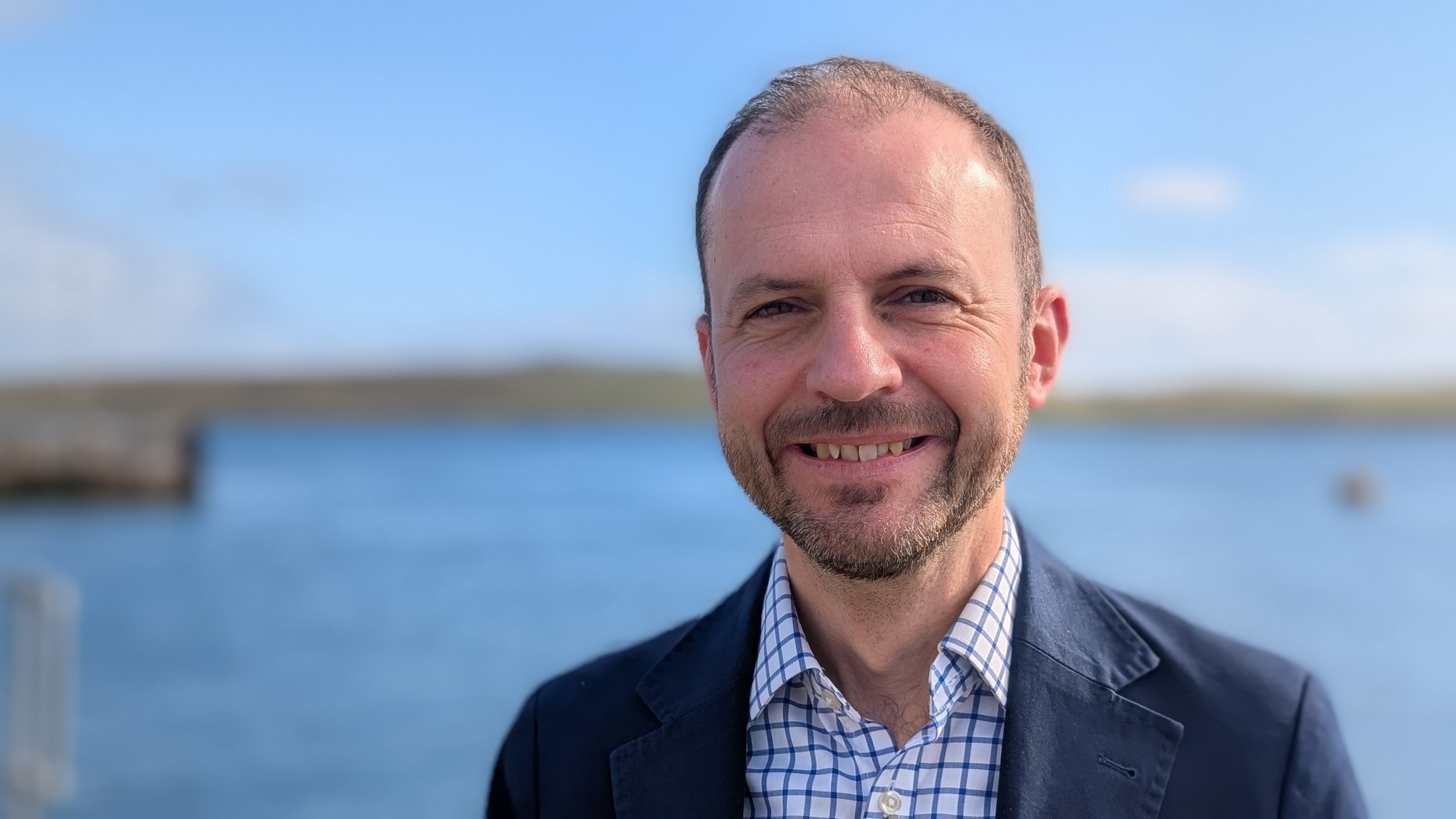
Speaking during a visit to Shetland this week, Stephen Gethins also said he can “sympathise that we need to get it right, in terms of that connection between people feeling the benefits”.
A public meeting is scheduled to take place in Lerwick next month which has been backed by Shetland’s community councils, and the isles’ two local parliamentarians are set to attend.
It is expected to call for an immediate stop to all energy projects “until a coherent plan and strategy are in place”.
It comes as more energy infrastructure is proposed in Shetland over the coming years, from substations and pylons to a second HVDC subsea link to the Scottish mainland and ammonia plants.
























August’s meeting echoes similar events held by community councils in other parts of Scotland, including the Highlands.
It is being held at the Islesburgh Community Centre on Saturday 22 August at 10.30am.
When asked by Shetland News if he sympathetic to the concerns, Gethins said it is right that community councils “engage and have their say”.
“There’s always things that can be done better, we know there’s elements of energy policy that haven’t been working for people,” he added.
But the MSP said Scotland is constrained by energy policy being reserved to the UK Government in Westminster.
He said levels of fuel poverty in places like Shetland shows how elements of policy are not working.
“That’s why we’ve called for devolution of energy policy so we can have more specific solutions,” Gethins added – although Westminster was quick to decline after the Scottish Parliament’s vote earlier this year to request energy policy be devolved.
Help keep Shetland’s news open to everyone

Good local journalism takes time, care and people on the ground. Membership helps us keep reporting the stories that matter to Shetland — and keep them free for everyone to read. Members get a weekly newsletter created especially for them, local ads only, and can bookmark stories and join the conversation in the comments.
“I’ve seen proposals around it, for example the Shetland tariff, but there are fundamental issues around the grid. Persistently people are picking up those issues around grid with me, and that’s something we need to look at more broadly.”
The energy minister highlighted though that the vote in the Scottish Parliament came while a previous Westminster administration was in place.
New prime minister Andy Burnham has “talked more about devolution, so let’s do something that matters to people”, Gethins, whose portfolio also covers external affairs, said.
“The UK is one of the most centralised countries in Europe,” he continued.
“Yes, there’s stuff we can do as a Scottish Government, there’s stuff that can be done at a community level – there’s community benefit, planning law – but there’s so much more that we need if we’re going to drive that offshore wind.”
He noted how some say Scotland has “won the natural lottery twice – once with hydrocarbons and oil and gas, now with renewables”.
“One of the biggest failures that we’ve seen in energy policy I think anywhere in Europe was that failure from the 1970s, and Shetland provides a really interesting case study on this, around not providing a futures fund for what was a finite resource.”
He said Norway invested in a “futures fund which is now worth 1.5 trillion”, while he pointed to the Shetland council’s own landmark move in the 1970s to secure greater financial benefit from oil and gas.
One area the Scottish Government does have leverage over is recommended guidelines for community benefit from onshore wind farms.
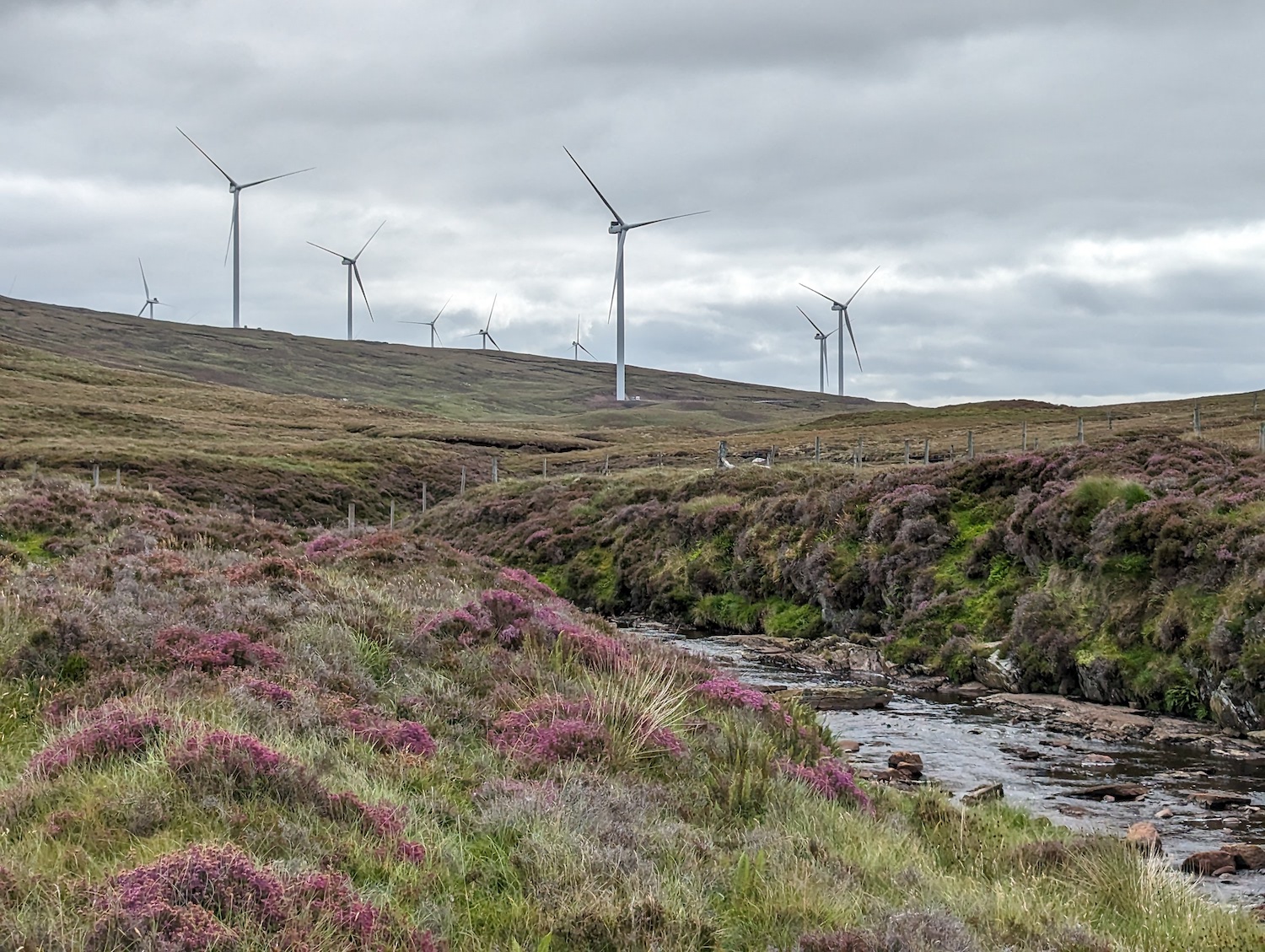
But its proposal to increase the long-standing guidance from £5,000 a year per megawatt to £6,000 has been criticised locally for not going far enough, with one election candidate calling it “laughable” in light of SSE’s 103-turbine Viking wind farm in Shetland’s central mainland.
“We want to see maximum community benefit,” Gethins said, “because for your energy sector to be successful you have to take communities with you.”
He said however that community benefit is “something on my desk” which he will need to consider.
Two offshore wind projects meanwhile are proposed to the east of Shetland, which have come through the government-backed ScotWind process.
A key concern locally is whether the developments can co-exist with fishing grounds.
When asked if they can live side by side, Gethins said it was “really important to get the balance right”.
“You want to continue to have a thriving fishing sector, and a thriving energy sector – it works elsewhere in Scotland, it works elsewhere in the world, but it’s about getting those planning decisions right,” he added.
Shetland Fishermen’s Association executive officer Daniel Lawson said the organisation was not aware of Gethins’ visit to the isles.
However, Lawson said he would “welcome any opportunity to explain to him why fishermen across fleet sectors feel trepidation over offshore wind farms and the inherent unfairness in the Scottish Government’s approach to their licensing”.
During Gethins’ visit to Shetland the Scottish Government also announced nearly £760,000 in funding for a proposed clean fuels hub at Sullom Voe Terminal in the transition away from fossil fuels.

One key decision in oil and gas on the horizon is the UK Government’s upcoming reconsideration of the licence for Rosebank to the north east of Shetland.
There appears to be something of softening in the Scottish Government’s stance on the project in recent years, particularly in light of geopolitical events affecting the price of oil.
“I think you need to look at energy security, how does it contribute to your overall energy security, but you also need to be cognisant of the climate emergency,” Gethins said when asked for the current stance on Rosebank.
He added that he has heard people in the Scottish Parliament question climate change, but he said “we know it’s having an impact” – highlighting recent wildfires in Europe and also in the Cairngorms.
During Gethins’ visit to Shetland it was also announced that community groups across Scotland are to receive further help to cut their energy bills and reduce carbon emissions, thanks to a £10 million investment over five years from the National Lottery Community Fund.
This should help to fund the installation of renewable technologies like heat pumps and solar panels, in addition to energy efficiency measures through the Scottish Government’s Community and Renewable Energy Scheme (CARES) community buildings fund.
CARES funding has helped the Scalloway Youth and Community Centre install a heat pump, solar panels and a battery, making the building more sustainable.
During his trip Gethins visited the likes of Sullom Voe Terminal, Mareel, Lerwick Port Authority and the Scalloway Museum.
A former professor of international relations at St Andrews University, the MSP said it was important to note where Shetland sits in the world, particularly in relation to the Nordic region.
Also on his itinerary was a trip to the Shetland Bus memorial in Scalloway, which honours the lives lost in the wartime operation between the isles and Norway.
“There’s no way right up to look at a globe,” Gethins said, adding that putting Shetland in the centre “gives you a different perspective”.
Keep Shetland’s news open to everyone
Your membership helps us report the stories that matter to Shetland — and keep them free for everyone to read.