‘I think it’s important to educate yourself’ – young people on voting, local politics and the future

IN THE weeks leading up to the Scottish parliamentary elections in May, politics felt like a never-ending point of discussion across Shetland, writes Maddison Reynolds.
The journalism student spoke to three young Shetlanders, 17-year-old first-time voter Olivia Macdonald, 23-year-old Skye Marriner and 27-year-old Jago Gibson to find out what “Gen Z” thinks about local politics.

Olivia MacDonald cast her first ever election vote in May and describes a recognisable daunting pressure. “I was slightly unsure on who to vote for which led to me being nervous for voting day,” she said.
“It took me a while to decide on what party to vote for and I never really got confident on my vote which meant that I spent a lot of time researching.”
The teenager said that matters which impact her currently, such as affordable travel and accessible sporting facilities were important for her. However, she was also concerned with how the new MSP would make decisions impacting her future, such managing the cost-of-living increases and housing.





















Like many young people, social media was where MacDonald sought to learn more about those vying for her vote.
“I found most of my information about candidates through social media, especially Facebook, however, this only enabled me to see a few of the 8 candidates, so my choices were minimal,” she said.
Online visibility played a key role in engaging with voters throughout the campaign. When scrolling through social media, particularly Facebook, it became more of a task to avoid content posted by some of the candidates than it was to seek it out.
For two particular candidates, the newly-elected Hannah Mary Goodlad of the SNP and Green candidate Alex Armitage, social media became the medium through which many people connected to their campaign messages.
However, the Anderson High School’s hustings event is where MacDonald solidified her decision on who to vote for.
Help keep Shetland’s news open to everyone

Good local journalism takes time, care and people on the ground. Membership helps us keep reporting the stories that matter to Shetland — and keep them free for everyone to read. Members get a weekly newsletter created especially for them, local ads only, and can bookmark stories and join the conversation in the comments.
“It allowed all the candidates to put out their views impacting young people, which let me see all the candidates share views that then specifically impacted me.”

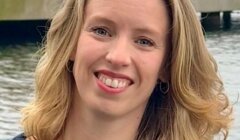
Skye Marriner made the move to Shetland from Edinburgh in March, just as the campaign began to gain momentum. With family in the isles, Marriner spent time in Shetland growing up, eventually moving in March.
She has had to come to terms with the fact that she may never own a home, an issue that those in her grandparents’ generation may not have had to contend with.
For Marriner, climate action has always been a key issue, having joined the Fridays for Future Scotland group when she was just 14. She was a keen participant in politics, taking part in peaceful protests, campaigning alongside Greta Thunberg at COP26 in Glasgow, and working for the National Union of Students (NUS) at Edinburgh College.
This passion for politics followed her up to Shetland, as she states, “the first thing I did was register to vote”. The election period was distinctively different here than it was on the mainland, however, with a prevalence in locality that was unfamiliar to Marriner.
“In Edinburgh, you’re discussing those wider educational systematic issues, human rights issues, these big topics that can feel so humungous to tackle. You don’t even know where to start because they’re just so much larger than you are.
“Whereas in Shetland, it definitely feels a little bit more bitesize. I feel a lot more connected to the issues up here.”
Marriner added that she was surprised at how frequently she saw candidates out and about.
“I think this is the first election where I had a candidate knock on my door, and that was really nice to see,” she said.
“I like to get my opinions straight from the people, as a source.”

For Jago Gibson, a string of national and global political events such as the 2014 independence referendum, Jeremy Corbyn’s prominence, and the 2016 US presidential election naturally drew him into an interest in politics. Like Marriner, he notes that partaking in activism and volunteering during his time at university spurred his political spark.
On what issues mattered the most to him this time around, he said: “They’re all important but I think to me it’ll just be the ones I’m most read up in and have been actively involved in that top the list; the cost-of-living crisis and growing inequality, tackling rising drug deaths, independence, and energy.”
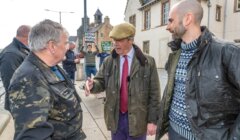
It wasn’t just local candidates who were prominent online; on 14 April, Reform UK leader Nigel Farage made a short visit to Shetland, however, its impact lingered online until the final vote on 7 May.
A viral interaction between Farage and Gibson erupted numerous discussions online, with some praising and others condemning his comments towards the politician.
In response to this, Gibson said: “Attention online is just that: online.”
“In person it’s led to a bunch of great interactions, especially from those that didn’t agree with what happened, where it led to some long conversations about why he was up here, why I felt the need to speak to him. They always started amicable and end amicable. It’s these types of conversations that make you feel pretty positive,” he added.
This sentiment rings true to all three youngsters about how speaking with other people, regardless of age, plays a part in their interest in politics.
For MacDonald, making sure she made the right decision for her and her community fuelled conversations with friends and fellow first-time voters at school.
Marriner feels that those around her were not as interested in the election as she was, but insists that being aware of the issues and forming opinions politically is important, even if people don’t gleefully agree with one another.
She said: “I think it’s important to educate yourself. Read people you don’t agree with. You need to be able to understand them to either solidify your opinion or shift it.”
And finally, Gibson posits: “Even though the world of social media is getting increasingly hateful, and it seems to be spilling out into the real world, we can maybe stem the tide here by actually talking to others in our community, not shouting at each other in Facebook comments.”
Note: Gibson would also like to “shout out to the guy that recognised me from the videos and forced a fiver in my hand to get myself a coffee at Bigton Bakery. Very kind of him but I’d like him to know his money was donated to a Scottish refugee charity.”
Keep Shetland’s news open to everyone
Your membership helps us report the stories that matter to Shetland — and keep them free for everyone to read.