

Business / Port authority ‘strongly opposes’ idea of cruise levy
Shetland Islands Council and Shetland Tourism Association also responded to the Scottish Government consultation

LERWICK Port Authority (LPA) says it “strongly opposes” the idea of a cruise ship levy – saying it could risk a “significant decline” in activity in the sector across Scotland.
The port’s cruise and marketing manager Melanie Henderson also said in a response to a Scottish Government consultation on a potential cruise levy that it is “unfair to target one specific type of visitor”, adding that it could negatively affect businesses from shipping agents to high street retailers.
Shetland Islands Council’s (SIC) economic development manager Tommy Coutts meanwhile said the local authority supports further investigation of the proposed levy – but he stressed the need to minimise negative impacts it could have on the industry.
Shetland Tourism Association also showed a preference towards a wider “point of entry” levy that goes beyond just cruise passengers.
The Scottish Government ran the consultation earlier this year to gather views on the idea of a levy on the cruise ship sector which could enable local authorities to bring in extra income.























It came after work to develop a visitor levy on overnight accommodation, which Shetland Islands Council chose last year not to adopt.
The Scottish Government said analysis had identified approximately 1,000 cruise visits to Scottish ports in 2024, with a combined passenger capacity of 1.2 million.
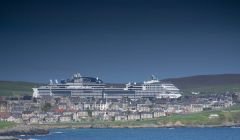
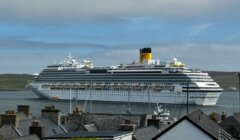
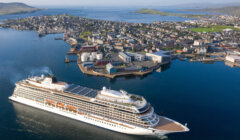
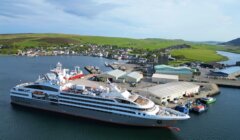
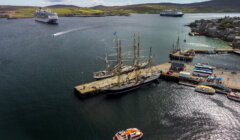
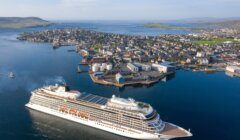
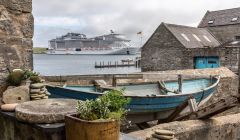
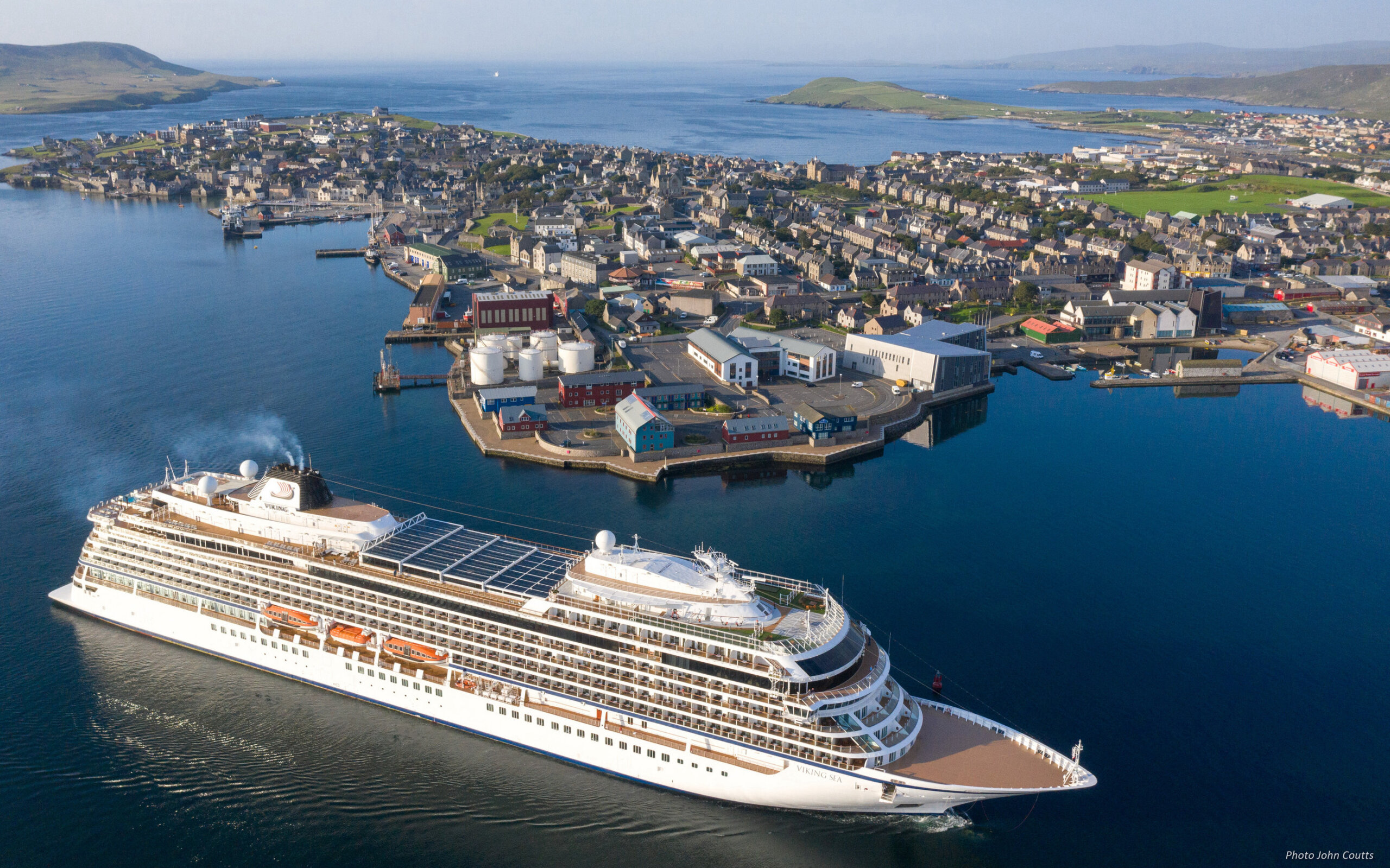
Lerwick Port Authority (LPA) hosts the majority of Shetland’s cruise calls, with nearly 150 planned this year.
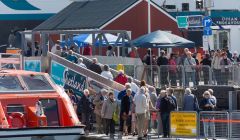
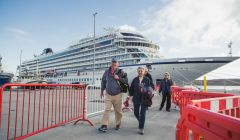
Locally cruise passengers tend to disembark their vessel to experience Lerwick or go on bus tours to other parts of Shetland.
Responding to the consultation, Henderson said the LPA “fundamentally” disagrees with the idea of a levy being applied to cruises.
She said it could act as a “clear and strong disincentive” to visiting cruise ships, and could undermine the business case for port infrastructure developments.
“This proposal also erodes years of relationship building which has taken place to attract cruise ships to Scotland,” she wrote.
Become a member of Shetland News
Henderson also said cruise taxation could affect the entire supply chain, from shipping agents and coach companies to tour guides and local businesses.
She said the LPA does not support the idea of local authorities having the power to create a cruise levy.
“It is entirely unwelcome to have the potential interference of the local authority setting taxation over our existing commercial rates, which could negatively impact our competitive position and put us at an unfair disadvantage within the Scottish marketplace,” Henderson said.
“Setting a nationally imposed levy does not tackle the complexity of why it might be needed in the first place. Without clarity on what the levy aims to achieve, a single, uniform tax risks being ineffective on all fronts.
“A one-size-fits-all approach does nothing to acknowledge the significant differences across port models in cities, the Highlands, and the islands, and may disproportionately impact lines operating on tight margins – potentially leading to fewer cruise calls, especially as Scotland is already considered an expensive cruise destination.”
Henderson highlighted that bookings for Lerwick are already in place through to 2029, but that the industry is “acutely price sensitive” and can make itinerary adjustments based on financial considerations.
She added that while the LPA disagrees with the proposed cruise levy, “for it to have the minimum negative impact the maximum rate of any cruise levy must be set at a national level to ensure consistency, fairness, transparency, and predictability across Scotland”.
Henderson also said that any spend from a potential cruise levy should be ringfenced for use in immediate port communities and sites most visited by cruise passengers.
She suggested investment in infrastructure like public toilets, roads, active travel, car parks and pavements.
Meanwhile SIC economic development manager Tommy Coutts said the council is “wholly supportive” of the principle of local authorities receiving enhanced and discretionary revenue raising powers which are “suitable for local circumstances”.
But he warned that a cruise ship levy would need to bring benefits to local visitor economies while also minimising negative impacts such as on the attractiveness of Scottish ports as a cruise destination.
“Ultimately, the goal of such a levy should be to generate sustainable income for investment, with the aim of ensuring that local areas remain attractive places to visit, that infrastructure is fit-for-purpose and suitable for the local area, that any harmful effects can be mitigated, that visitor capacity is well managed, and that the visitor experience is enhanced,” Coutts wrote.
He added that the SIC supported further investigation, but on the “proviso that any subsequent legislation was suitably designed in partnership with stakeholders to bring benefits to local visitor economies (and visitors) and proportionate to the particular needs of local areas”.
The SIC’s view is that if a cruise levy is introduced it should be based on the number of passengers.
“It is logical to conclude that if the levy is premised on addressing visitor needs and impacts, the levy should both be drawn from that source of those impacts, and then invested in services and facilities which are used by those visitors,” Coutts wrote.
“The primary basis for the charge being the number of passengers to disembark from a ship in the local area would have the effect of linking levy generation directly to actual ‘on-the-ground’ visits, infrastructure usage and demand on services and facilities.
“However, it is accepted that drawbacks of this model may include the lack of predictability in how much revenue would be raised, potential difficulties in collection, including in smaller rural ports, and greater challenges in administration – therefore, a charge based on the number of passengers on board a ship may be the next most equitable, and most readily achievable, option.”
Coutts added that revenue generated by such a levy should be used to fund facilities, infrastructure and services that “support the cruise industry, the visitor economy at large and the communities hosting cruise tourism”.
He also highlighted that during the initial consultation on the Visitor Levy (Scotland) Act, the three Scottish island councils expressed a view that a wider point of entry levy should be explored given that an overnight accommodation one would not be suitable for these areas.
Coutts did however say it was an “error” that a full islands impact assessment on the act was not deemed to be required given the levy is a discretionary power.
“Given the differences in the visitor economies of the islands compared to mainland areas, it is unavoidable that the levy would be proportionately less effective in raising revenue in island areas,” he said.
“The failure to take this into account when developing the legislation currently means that, if the island local authorities are seeking to raise revenue for investment in visitor services, the only option is to enact discretionary powers which are demonstrably unsuitable for local circumstances.”
He said the SIC would seek to progress discussions and investigations into the possible introduction of a point of entry mechanism for the island authorities, “to ensure that revenue raising powers are equitably available to all local authorities for investment and improvements”.
The Shetland Tourism Association meanwhile said its preference was for a point of entry levy which applies to all visitors, including those on cruise ships.
It said this would provide a “fair and consistent” mechanism to ensure all visitors contribute to the services and infrastructure they use.
Its consultation response said that “while cruise tourism makes an important contribution to the local economy – with Lerwick accounting for a significant share of passenger and crew spending at Scottish ports – the scale and seasonal concentration of these visits place increasing pressure on Shetland’s infrastructure, fragile environment, cultural heritage, and the daily lives of island communities”.
“These pressures require active management and investment to ensure that tourism continues to be a positive force for Shetland’s residents and its economy,” the association said.
“A point of entry levy would allow for a more equitable and straightforward approach, ensuring all visitors make a fair contribution without placing additional burdens on local businesses or residents.”
The tourism association said a cruise levy would be the “second-best option” if a point of entry mechanism was not introduced.
The association said the levy being decided on locally would enable “productive dialogue” between the council, port operators and tourism partners.
“Through collaboration, a locally agreed levy rate could be set that meaningfully contributes to the cost of infrastructure and services,” it wrote.
The Scottish Government said the 200-plus consultation responses will provide a “valuable evidence base” when developing the policy and engaging with key stakeholders.
It comes after a well-attended event in Lerwick last week called Cruise Forward – Maximising Shetland’s Potential.
Themes covered during the day included future cruise tourism trends and how to strengthen Shetland’s visitor offer.
The event partners were Shetland Islands Council, Lerwick Port Authority, Highlands and Islands Enterprise, VisitScotland and Business Gateway Shetland.
Become a member of Shetland News
Shetland News is asking its readers to consider paying for membership to get additional perks:
- Removal of third-party ads;
- Bookmark posts to read later;
- Exclusive curated weekly newsletter;
- Hide membership messages;
- Comments open for discussion.
If you appreciate what we do and feel strongly about impartial local journalism, then please become a member of Shetland News by either making a single payment, or setting up a monthly, quarterly or yearly subscription.