

Viewpoint / Fish Holm approval raises serious questions for Shetland’s fishermen
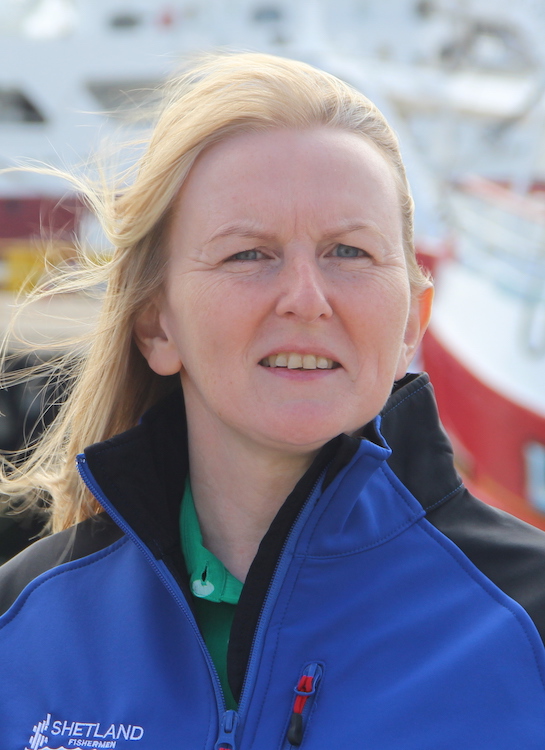
In this Viewpoint piece, Shetland Fishermen’s Association’s Sheila Keith criticises the SIC’s decision to approve the large salmon farm

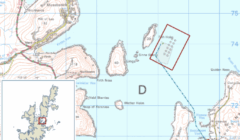
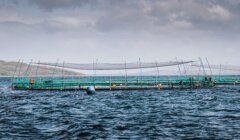
SHETLAND Fishermen’s Association has expressed serious concern at the process that led Shetland Islands Council to approve Scottish Sea Farms’ planning application for a new salmon farm at Fish Holm.
The decision will displace established scallop and creel fishermen from productive grounds they have depended on for decades, and it raises wider questions about how inshore fishing interests are being weighed against expanding aquaculture across the UK.
In Shetland, as in many coastal regions, local authorities and development agencies actively promote start ups, self employment and rural enterprise. They champion the importance of small businesses and community based industries.
Yet when it comes to marine planning, these principles appear to fall away. Instead of safeguarding longstanding local fishing businesses, the Fish Holm decision prioritises a multinational operator whose economic contribution to the islands would have been similar had the development been placed in a less sensitive location. Although the application was presented as an extension of an existing site, that site had never been developed.





















In reality, it should have been treated as a new application, requiring full assessment of the entire footprint and its impact on fishing grounds.
Instead, Scottish Sea Farms was able to take advantage of a weakness in the planning system: because the proposal was processed as an extension, the true scale of the development, and the effective removal of the whole site from active fishing, was never properly examined.
A major development has now been approved without the level of scrutiny that such a significant loss of fishing ground should have triggered.
Scottish Sea Farms is a major corporate player. Its investment in Shetland is welcome, but it does not rely on occupying this specific patch of seabed. The same cannot be said for the fishermen who now face long term financial loss for as long as the site remains in place. These are family run operations that underpin the social and economic fabric of rural Shetland.
The decision also sets a worrying precedent. Both Scottish Sea Farms and Cooke Aquaculture have already discussed further large scale developments with the SFA, all proposed on highly valuable and priority fishing grounds. Following the approval of Fish Holm, fishermen fear their concerns will be taken even less seriously.
One of the companies has shown more willingness to engage constructively than the other, but whether this results in meaningful change remains to be seen. What fishermen observe repeatedly is that, regardless of the strength of evidence, large enterprises are given priority. Even the promised scrutiny of job numbers and economic claims seems to diminish when multinational interests are involved.
Crucially, all of the economic benefits associated with salmon farming could still be achieved without placing farms on top of the most productive fishing grounds.
The contrast with the Western Isles is striking. In a similar case, Comhairle nan Eilean Siar showed the backbone to stand firmly with their indigenous inshore fishing industry, recognising the long term value of protecting traditional livelihoods over short term corporate expansion.
Their decision demonstrated that coastal councils can defend their communities when displacement is evidenced. It is deeply disappointing that Shetland’s fishermen were not afforded the same level of support.
It is acknowledged that scallop dredging has an impact on the seabed, but in Shetland this activity is tightly managed and confined to long established grounds. Crucially, grounds suitable for dredging make up less than 5.45 per cent of Shetland’s inshore area, and not all of that area is productive.
The footprint of fishing is therefore far smaller, transparent and far more predictable than the expanding and long lasting pressures associated with intensive aquaculture. This makes the council’s decision particularly disappointing given Shetland’s longstanding leadership in inshore fisheries management.
For more than 25 years, Shetland Islands Council has supported shellfish fishermen through the Shetland Shellfish Management Organisation, widely regarded as the UK’s most successful example of local fisheries governance.
It is therefore disheartening that, after a quarter century of collaborative effort, fishermen are now being pushed off some of the most valuable grounds in the islands. If this continues, the fleet risks becoming unsustainable not because of poor management or overfishing, but because the grounds it relies on are being allocated to other industries.
Scottish Sea Farms was fully aware that Fish Holm is an active fishing area. The company met with SFA members, reviewed evidence and was told clearly that the site is heavily worked and vital to the scallop fleet. Despite this, it pressed ahead, offering mitigations that do not withstand scrutiny.

Reducing the site footprint does not change the fact that it sits directly on top of productive grounds. The relinquished sites offered as compensation are of little or no value to scallop fishermen. Presenting them as meaningful mitigation is misleading and does nothing to offset the real economic harm.
The reality is straightforward. Fishermen will be displaced, and the loss will be felt immediately and for many years to come.
Across Shetland, fishing grounds are being steadily eroded by marine developments including aquaculture, cables, pipelines, marine protected areas and voluntary closures. Each development may appear small in isolation, but the cumulative effect is profound.
Fishermen are being squeezed into ever smaller areas, and displacement is becoming a defining pressure on the inshore fleet. While local agencies champion entrepreneurship and rural self employment on land, at sea they are presiding over the gradual removal of the very resource base that sustains one of Shetland’s oldest and most important industries. Some economic policies even explicitly prioritise aquaculture expansion.
“While local agencies champion entrepreneurship and rural self employment on land, at sea they are presiding over the gradual removal of the very resource base that sustains one of Shetland’s oldest and most important industries.”
The result is a quiet form of displacement that echoes the dynamics of the land clearances, not through violence, but through the steady erosion of the ability of people to work the grounds they have relied on for generations.
The SFA is not opposed to salmon farming. Aquaculture has a place in Shetland’s economy and in the UK’s seafood sector. However, it must be developed responsibly, with proper spatial planning and genuine respect for other marine users.
There are locations where salmon farms can be placed without destroying valuable fishing grounds. Fish Holm was not one of them.